Introduction
Contrary to the old saying "blind as a bat," bats can see quite well—but in pitch-black caves and midnight forests, most insect-hunting bats navigate and catch tiny mosquitoes in midair using biological sonar called !
An important word to know in this book is (ek-oh-loh-KAY-shuhn). Echolocation means: Locating objects by emitting high-pitched sound waves and listening to the returning echoes. Learning about Echolocation helps us understand how Echo-Location in Bats fits into Animal Behavior & Working Animals.
Key Features
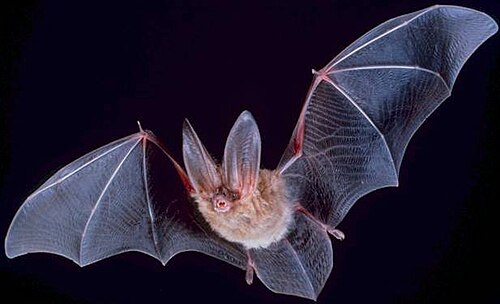
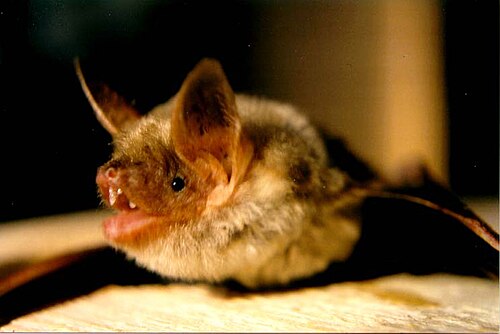
Bats are the only mammals capable of true sustained flight. Their wings are actually modified hands with elongated finger bones connected by a thin, elastic skin membrane (), and their large sculpted ears are shaped like satellite dishes.
Scientists and explorers also look closely at (UL-truh-sownd), which means: High-frequency sound waves above 20,000 Hertz—pitched higher than the upper limit of human hearing. These special traits make Echo-Location in Bats easy to spot and study.
How It Works
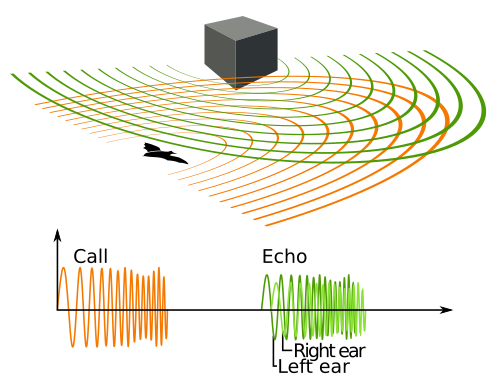
A hunting microbat emits rapid, high-pitched ultrasonic chirps from its larynx (voice box)—too high for human ears to hear. When those sound waves hit a flying moth or tree branch, the echoes bounce back. By measuring the time delay and pitch shift, the bat’s brain builds a 3D sound map!
Here is another helpful term: (puh-TAY-jee-uhm). It means: The thin, flexible membrane of skin stretched between a bat’s elongated finger bones to form its wing. Step by step, and Patagium work together in nature.
In Our World
A single little brown bat can catch up to 1,000 mosquitoes in a single hour! Across the world, over 1,400 bat species protect farm crops from insect pests, pollinate night-blooming desert cacti and agave, and disperse tropical fruit seeds.
Understanding how Echo-Location in Bats works in our world also involves (UL-truh-sownd): High-frequency sound waves above 20,000 Hertz—pitched higher than the upper limit of human hearing. Even when surrounding conditions shift across seasons or regions, the interaction between , Ultrasound, and helps sustain balance and resilience in the wider environment.
Amazing Facts
Amazing Fact #1: As a bat closes in on a flying insect, it speeds up its calls to 200 chirps per second—called a "feeding buzz"!
Amazing Fact #2: Just before shouting an ultrasonic call, tiny muscles in a bat’s middle ear disconnect for a millisecond so the bat doesn’t deafen itself.
Amazing Fact #3: Bracken Cave in Texas is the summer home to 15 million Mexican free-tailed bats that eat over 100 tons of insects every single night!
Read & Review
Let's review what we discovered about Echo-Location in Bats! In this book, we explored how , , and connect to Animal Behavior & Working Animals.
Key Question #1: Why can’t humans usually hear the calls of a hunting bat? Answer: The calls are ultrasonic—pitched higher than human ears can detect. Most bat echolocation calls range from 20 kHz to over 100 kHz, above human hearing.
Key Question #2: What is a bat’s wing actually made of anatomically? Answer: Elongated finger bones covered by a flexible skin membrane. The scientific order for bats, Chiroptera, means "hand-wing."