Introduction
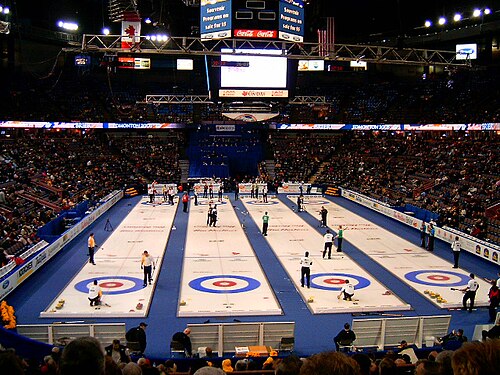
Nicknamed "Chess on Ice," the Winter Olympic sport of Curling combines precision physics, team communication, and furious broom-sweeping as players slide 19-kilogram (42-pound) polished granite stones down a sheet of toward a bullseye target!
A foundational concept in this investigation is (pronounced thuh hows), which refers to: The 12-foot bullseye target of four concentric painted rings at each end of the curling ice sheet. Every part of Curling within Lesser-Known Sports builds upon this essential concept.
At the Grade 4 level of Sports & Entertainment (Lesser-Known Sports), researchers compare structure, function, and environmental context to see how , , and shape measurable outcomes.
Key Features
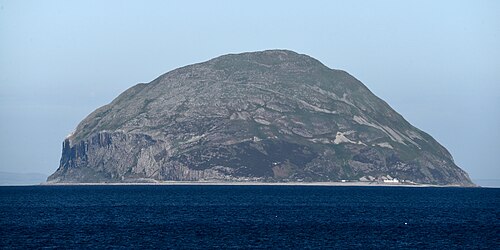
Curling originated on frozen lochs and ponds in 16th-century Scotland. Today, virtually every Olympic curling stone on Earth is quarried from rare, ultra-dense granite found on a single tiny volcanic island off the coast of Scotland called Ailsa Craig (or Trefor granite in Wales), because this granite does not crack when colliding on wet ice!
To analyze these defining traits accurately, specialists examine (PEB-uhld eys): Curling ice sprayed with fine water droplets that freeze into tiny bumps, reducing surface contact so heavy granite stones glide smoothly. Alongside (The 12-foot bullseye target of four concentric painted rings at each end of the curling ice sheet.), these specialized characteristics set Curling apart within Lesser-Known Sports.
Field Observation & Evidence: Researchers studying Curling observe how physical form matches function in Sports & Entertainment. Each observable feature provides a clear advantage that supports stability, survival, or performance across changing conditions.
How It Works
A curling team has four players: the Lead, Second, Third (Vice-), and the captain called the Skip, who stands at the bullseye target () calling strategy. Notice the bottom of a curling stone: it isn’t flat—it is hollowed out like the rim of a coffee mug so only a narrow circular ring (the running band) touches the ice! Furthermore, the curling ice is sprayed with tiny water droplets that freeze into microscopic pebbles. When two teammates furiously sweep the ice in front of the moving stone with brooms, the friction momentarily warms the ice pebbles by a fraction of a degree, creating a microscopic film of water that lets the stone glide up to 3 meters (10 feet) farther and curl less!
This step-by-step process relies on (pronounced skip), defined as: The captain of a curling team who stands in , holds the broom as a target, and calls the strategy and sweeping commands. Each stage of the process prepares the way for the next phase to unfold.
Cause-and-Effect Balance: When conditions remain balanced, and interact inside the to keep the system running smoothly. If any single link in this sequence is disrupted, the entire pace of activity shifts.
In Our World
Curling is famous around the world for the "Spirit of Curling"—an unwritten code of honor in which players call their own fouls if their broom accidentally touches a moving stone, and never cheer an opponent’s mistake!
Understanding how Curling functions in real environments also involves (PEB-uhld eys): Curling ice sprayed with fine water droplets that freeze into tiny bumps, reducing surface contact so heavy granite stones glide smoothly. Even when surrounding conditions shift across seasons or regions, the interaction between , Pebbled Ice, and helps sustain balance and resilience in the wider environment.
Global & Practical Significance: Sweeping polishes and slightly warms the tops, decreasing friction so the stone slides farther and curls less. Furthermore, Every shot in an 8- or 10-end curling match sets up multi-stone geometric angles and defensive guards.
Amazing Facts
1. Remarkable Scale & Numbers: Furious broom-sweeping in front of a moving curling stone warms the just enough to reduce friction—making the 42-pound granite stone travel up to 10 feet farther! This discovery highlights why is central to understanding Curling.
2. Extraordinary Adaptation & Design: Look closely at a curling player’s two shoes: one shoe has a slippery Teflon "slider" sole for gliding across the ice, while the other shoe has a sticky rubber "gripper" sole for pushing off! Specialized conditions involving make these adaptations possible.
3. Surprising Scientific & Historical Record: Almost all Olympic curling stones are carved from blue hone granite found on one uninhabited Scottish island named Ailsa Craig! Over time, processes linked to leave a lasting mark across Lesser-Known Sports.
Read & Review
Chapter Synthesis: Throughout this investigation of Curling in Sports & Entertainment (Lesser-Known Sports), we examined its core foundations, defining traits, step-by-step mechanisms, and real-world connections using key terms like , , and .
Academic Vocabulary Review: • (thuh hows): The 12-foot bullseye target of four concentric painted rings at each end of the curling ice sheet. • (PEB-uhld eys): Curling ice sprayed with fine water droplets that freeze into tiny bumps, reducing surface contact so heavy granite stones glide smoothly. • (skip): The captain of a curling team who stands in the House, holds the broom as a target, and calls the strategy and sweeping commands.
Critical Thinking Check: (1) How does sweeping the ice in front of a sliding curling stone with brooms actually change the stone’s path? — Sweeping friction briefly warms the ice pebbles, reducing friction so the stone travels farther and straighter. (2) Why is Curling often nicknamed "Chess on Ice"? — Teams use deep strategy—placing guard stones, curling around blockers, and knocking out opponent stones to leave their rocks closest to the center ("the button").