Introduction
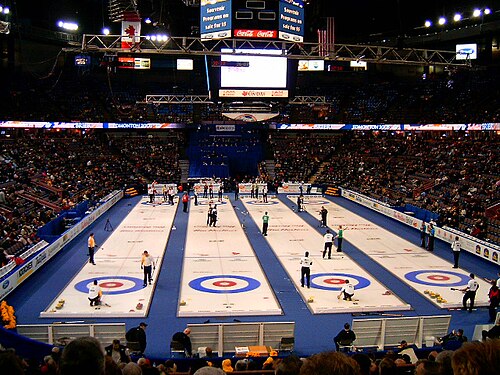
Nicknamed "Chess on Ice," the Winter Olympic sport of Curling combines precision physics, team communication, and furious broom-sweeping as players slide 19-kilogram (42-pound) polished granite stones down a sheet of toward a bullseye target!
An important word to know in this book is (thuh hows). The House means: The 12-foot bullseye target of four concentric painted rings at each end of the curling ice sheet. Learning about The House helps us understand how Curling fits into Lesser-Known Sports.

Key Features
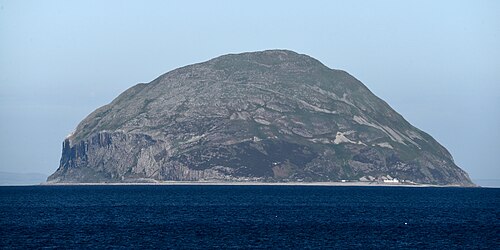
Curling originated on frozen lochs and ponds in 16th-century Scotland. Today, virtually every Olympic curling stone on Earth is quarried from rare, ultra-dense granite found on a single tiny volcanic island off the coast of Scotland called Ailsa Craig (or Trefor granite in Wales), because this granite does not crack when colliding on wet ice!
Scientists and explorers also look closely at (PEB-uhld eys), which means: Curling ice sprayed with fine water droplets that freeze into tiny bumps, reducing surface contact so heavy granite stones glide smoothly. These special traits make Curling easy to spot and study.
How It Works
A curling team has four players: the Lead, Second, Third (Vice-), and the captain called the Skip, who stands at the bullseye target () calling strategy. Notice the bottom of a curling stone: it isn’t flat—it is hollowed out like the rim of a coffee mug so only a narrow circular ring (the running band) touches the ice! Furthermore, the curling ice is sprayed with tiny water droplets that freeze into microscopic pebbles. When two teammates furiously sweep the ice in front of the moving stone with brooms, the friction momentarily warms the ice pebbles by a fraction of a degree, creating a microscopic film of water that lets the stone glide up to 3 meters (10 feet) farther and curl less!
Here is another helpful term: (skip). It means: The captain of a curling team who stands in , holds the broom as a target, and calls the strategy and sweeping commands. Step by step, The House and Skip work together in nature.
In Our World
Curling is famous around the world for the "Spirit of Curling"—an unwritten code of honor in which players call their own fouls if their broom accidentally touches a moving stone, and never cheer an opponent’s mistake!
Understanding how Curling works in our world also involves (PEB-uhld eys): Curling ice sprayed with fine water droplets that freeze into tiny bumps, reducing surface contact so heavy granite stones glide smoothly. Even when surrounding conditions shift across seasons or regions, the interaction between , Pebbled Ice, and helps sustain balance and resilience in the wider environment.
Amazing Facts
Amazing Fact #1: Furious broom-sweeping in front of a moving curling stone warms the just enough to reduce friction—making the 42-pound granite stone travel up to 10 feet farther!
Amazing Fact #2: Look closely at a curling player’s two shoes: one shoe has a slippery Teflon "slider" sole for gliding across the ice, while the other shoe has a sticky rubber "gripper" sole for pushing off!
Amazing Fact #3: Almost all Olympic curling stones are carved from blue hone granite found on one uninhabited Scottish island named Ailsa Craig!
Read & Review
Let's review what we discovered about Curling! In this book, we explored how , , and connect to Lesser-Known Sports.
Key Question #1: How does sweeping the ice in front of a sliding curling stone with brooms actually change the stone’s path? Answer: Sweeping friction briefly warms the ice pebbles, reducing friction so the stone travels farther and straighter. Sweeping polishes and slightly warms the tops, decreasing friction so the stone slides farther and curls less.
Key Question #2: Why is Curling often nicknamed "Chess on Ice"? Answer: Teams use deep strategy—placing guard stones, curling around blockers, and knocking out opponent stones to leave their rocks closest to the center ("the button"). Every shot in an 8- or 10-end curling match sets up multi-stone geometric angles and defensive guards.