Introduction
In colonial America, there were no factories or department stores! Every horseshoe, iron nail, wooden barrel, candle, and pair of shoes had to be crafted by hand by skilled artisans called tradespeople—and teenagers learned these professions not in college, but as apprentices.
A foundational concept in this investigation is (pronounced KOO-per), which refers to: A skilled craftsperson who makes wooden barrels, casks, buckets, and tobacco hogsheads out of wooden staves and hoops. Every part of Colonial Trades: Blacksmiths & Coopers within Colonial Times & Jamestown builds upon this essential concept.
In Grade 5 advanced nonfiction inquiry across History (American & Virginia) (Colonial Times & Jamestown), synthesizing primary evidence around , , and reveals how complex systems operate and adapt over time.
Key Features
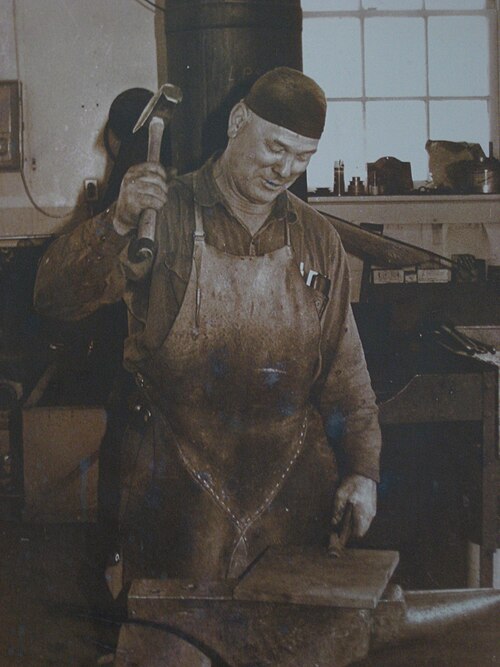
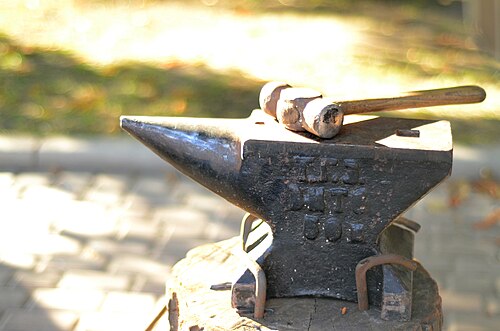
Two of the most indispensable colonial trades were the blacksmith and the . The blacksmith worked at a glowing coal using leather bellows, heavy tongs, a hammer, and a steel anvil to shape red-hot wrought iron into plowshares, axes, cooking pots, hinges, and nails.
To analyze these defining traits accurately, specialists examine (uh-PREN-tis): A young person bound by contract to work for a master artisan for several years to learn a skilled trade. Alongside (A skilled craftsperson who makes wooden barrels, casks, buckets, and tobacco hogsheads out of wooden staves and hoops.), these specialized characteristics set Colonial Trades: Blacksmiths & Coopers apart within Colonial Times & Jamestown.
Field Observation & Evidence: Researchers studying Colonial Trades: Blacksmiths & Coopers observe how physical form matches function in History (American & Virginia). Each observable feature provides a clear advantage that supports stability, survival, or performance across changing conditions.
How It Works
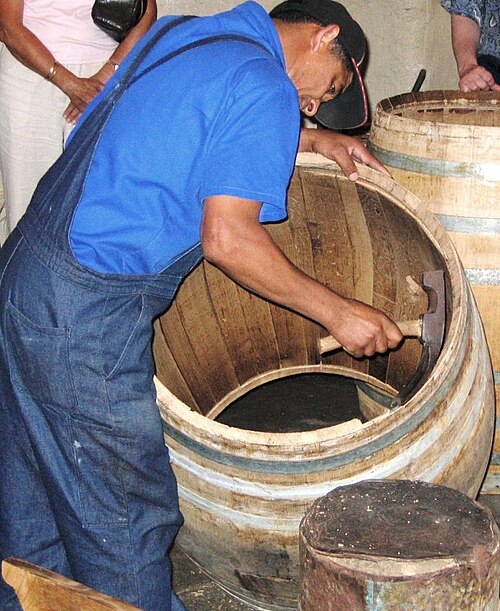
Meanwhile, the was the container maker of the colonial world! Before cardboard boxes or plastic jugs existed, everything—flour, salted pork, tobacco hogsheads, gunpowder, and water—was shipped inside watertight wooden barrels. Without using a single nail or drop of glue, a cooper shaped curved oak staves and squeezed them tightly together with iron or hickory hoops!
This step-by-step process relies on (pronounced forj), defined as: A blacksmith’s hearth where coal or charcoal is fanned with bellows to heat iron until it glows red-hot and malleable. Each stage of the process prepares the way for the next phase to unfold.
Cause-and-Effect Balance: When conditions remain balanced, and interact inside the to keep the system running smoothly. If any single link in this sequence is disrupted, the entire pace of activity shifts.
In Our World
Other vital colonial trades included the silversmith, wheelwright, printer, apothecary (pharmacist/doctor), and milliner (hat and clothing maker). Around age 12 to 14, a young person signed an apprenticeship contract to work for a Master Craftsman for 4 to 7 years in exchange for room, board, and trade secrets before becoming a wage-earning Journeyman.
Understanding how Colonial Trades: Blacksmiths & Coopers functions in real environments also involves (uh-PREN-tis): A young person bound by contract to work for a master artisan for several years to learn a skilled trade. Even when surrounding conditions shift across seasons or regions, the interaction between , Apprentice, and helps sustain balance and resilience in the wider environment.
Global & Practical Significance: Coopers manufactured the wooden barrels and hogsheads that held nearly all dry and liquid cargo in colonial trade. Furthermore, The guild-style system progressed from to Journeyman to Master Craftsman.
Amazing Facts
1. Remarkable Scale & Numbers: A skilled colonial could build a wooden barrel out of curved oak staves and hoops so tightly fitted that it held liquid without a single nail or drop of glue! This discovery highlights why Cooper is central to understanding Colonial Trades: Blacksmiths & Coopers.
2. Extraordinary Adaptation & Design: In colonial Virginia, giant barrels called "hogsheads" packed with tobacco weighed up to 450 kilograms (1,000 pounds) and were rolled down "rolling roads" to river docks! Specialized conditions involving make these adaptations possible.
3. Surprising Scientific & Historical Record: Every single iron nail in a colonial house had to be hammered out four-sided by hand at a blacksmith’s ! Over time, processes linked to Forge leave a lasting mark across Colonial Times & Jamestown.
Read & Review
Chapter Synthesis: Throughout this investigation of Colonial Trades: Blacksmiths & Coopers in History (American & Virginia) (Colonial Times & Jamestown), we examined its core foundations, defining traits, step-by-step mechanisms, and real-world connections using key terms like , , and .
Academic Vocabulary Review: • (KOO-per): A skilled craftsperson who makes wooden barrels, casks, buckets, and tobacco hogsheads out of wooden staves and hoops. • (uh-PREN-tis): A young person bound by contract to work for a master artisan for several years to learn a skilled trade. • (forj): A blacksmith’s hearth where coal or charcoal is fanned with bellows to heat iron until it glows red-hot and malleable.
Critical Thinking Check: (1) What did a colonial make, and why was that trade so important? — Wooden barrels, casks, and buckets—which were the primary shipping and storage containers for food, water, and tobacco. (2) How did a young person in colonial times typically learn a skilled trade like blacksmithing or printing? — By serving for 4 to 7 years as an under a Master Craftsman.