Introduction
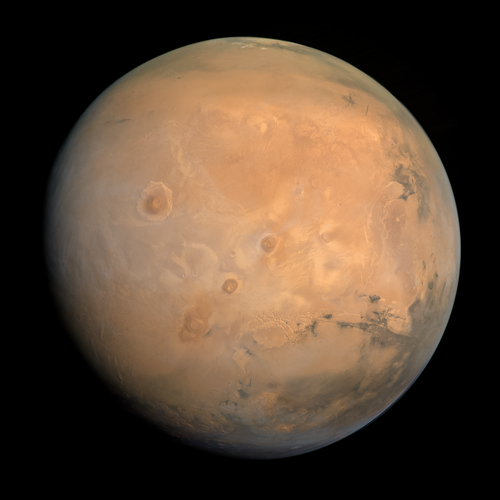
Fourth from the Sun, Mars is a cold, rocky world known as the "Red Planet." Although Mars is only about half the diameter of Earth, it boasts the tallest volcano and the deepest canyon in our entire Solar System—and robotic rovers are exploring its ancient riverbeds right now!
A foundational concept in this investigation is (pronounced EYE-ern OK-syde), which refers to: A reddish-orange mineral compound (rust) formed when iron combines with oxygen, giving Mars its red color. Every part of A Tour of Mars within Space & Astronomy builds upon this essential concept.
In Grade 5 advanced nonfiction inquiry across Science & Technology (Space & Astronomy), synthesizing primary evidence around , , and reveals how complex systems operate and adapt over time.
Key Features
Why is Mars red? Its soil is rich in —the exact same chemical as rust! Mars has a thin atmosphere made of 95% carbon dioxide, two tiny potato-shaped moons named Phobos and Deimos, and polar ice caps made of frozen water and dry ice.
To analyze these defining traits accurately, specialists examine (sol): One solar day on Mars, lasting 24 hours, 39 minutes, and 35 seconds. Alongside (A reddish-orange mineral compound (rust) formed when iron combines with oxygen, giving Mars its red color.), these specialized characteristics set A Tour of Mars apart within Space & Astronomy.
Field Observation & Evidence: Researchers studying A Tour of Mars observe how physical form matches function in Science & Technology. Each observable feature provides a clear advantage that supports stability, survival, or performance across changing conditions.
How It Works
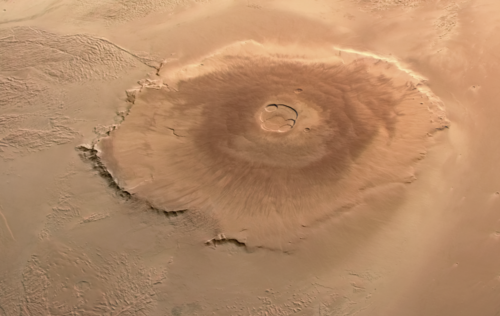
Because Mars is farther from the Sun than Earth, a Martian year lasts 687 Earth days, though a Martian day (called a "") is 24 hours and 39 minutes—almost identical to ours! Olympus Mons is a giant shield volcano on Mars standing 21.9 kilometers (72,000 feet) high—three times taller than Mount Everest—while Valles Marineris is a canyon system long enough to stretch from New York to Los Angeles.
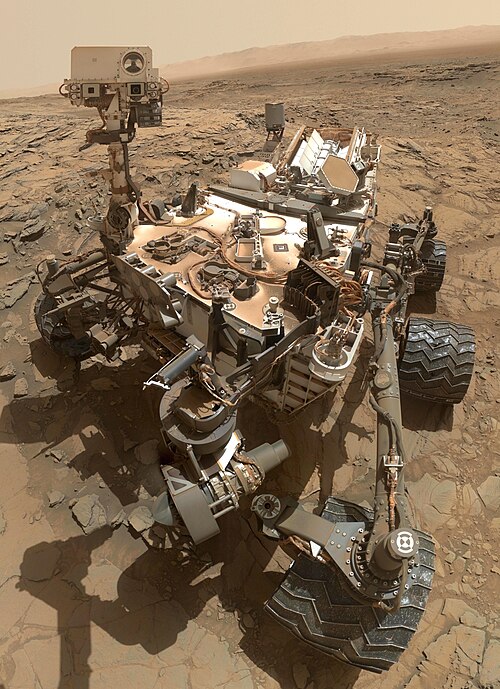
This step-by-step process relies on (pronounced ROH-ver), defined as: A wheeled robotic spacecraft engineered to drive across the surface of another planet or moon and analyze rocks. Each stage of the process prepares the way for the next phase to unfold.
Cause-and-Effect Balance: When conditions remain balanced, and interact inside the to keep the system running smoothly. If any single link in this sequence is disrupted, the entire pace of activity shifts.
In Our World
NASA rovers like Curiosity and Perseverance (along with the Ingenuity helicopter) have discovered rounded pebbles, clay minerals, and dried-up river deltas in Jezero Crater, proving that liquid water lakes and rivers flowed across Mars billions of years ago!
Understanding how A Tour of Mars functions in real environments also involves (sol): One solar day on Mars, lasting 24 hours, 39 minutes, and 35 seconds. Even when surrounding conditions shift across seasons or regions, the interaction between , Sol, and helps sustain balance and resilience in the wider environment.
Global & Practical Significance: Iron minerals in Martian rocks oxidized over billions of years into reddish dust. Furthermore, Olympus Mons is a giant shield volcano towering nearly 22 kilometers (13.6 miles) high.
Amazing Facts
1. Remarkable Scale & Numbers: Mars is the only planet in the Universe known to be inhabited entirely by robots (including NASA’s Curiosity and Perseverance rovers)! This discovery highlights why is central to understanding A Tour of Mars.
2. Extraordinary Adaptation & Design: Sunsets on Mars actually look bluish-gray because fine red Martian dust scatters blue light around the Sun’s disk. Specialized conditions involving make these adaptations possible.
3. Surprising Scientific & Historical Record: In 2021, NASA’s 1.8-kilogram Ingenuity Mars Helicopter made the first powered, controlled flight on another planet! Over time, processes linked to leave a lasting mark across Space & Astronomy.
Read & Review
Chapter Synthesis: Throughout this investigation of A Tour of Mars in Science & Technology (Space & Astronomy), we examined its core foundations, defining traits, step-by-step mechanisms, and real-world connections using key terms like , , and .
Academic Vocabulary Review: • (EYE-ern OK-syde): A reddish-orange mineral compound (rust) formed when iron combines with oxygen, giving Mars its red color. • (sol): One solar day on Mars, lasting 24 hours, 39 minutes, and 35 seconds. • (ROH-ver): A wheeled robotic spacecraft engineered to drive across the surface of another planet or moon and analyze rocks.
Critical Thinking Check: (1) What gives the surface of Mars its rusty reddish-orange color? — (rust) dust covering its rocks and soil. (2) What is Olympus Mons on Mars? — The tallest volcano in the Solar System—three times higher than Mount Everest.