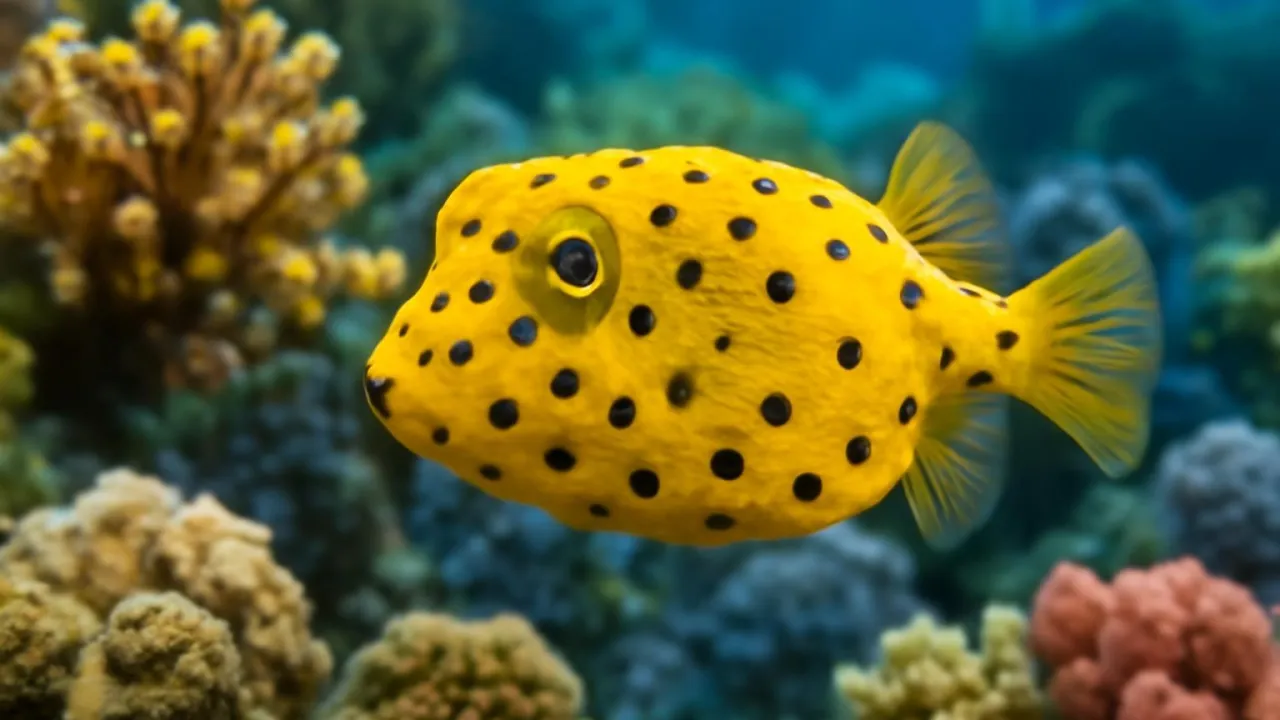
The yellow boxfish can release a poison when scared to protect itself!
✨ Word Sparks (Grade 2 Glossary)
Tap 🔊 to hear
predator
An animal that hunts other animals
coral
Colorful sea animals that build reefs
algae
Tiny plants that grow in water
🪝
Have you ever seen a fish that looks like a bright yellow box?
1
Bright Yellow Box Shape
The yellow boxfish has a bright yellow body with black spots. It looks like a small box when it swims. Its fins help it move slowly but well. This shape helps it stay safe from .
2
Warm Coral Reef Home
This fish lives in warm waters near reefs in the Indo-Pacific Ocean. It hides among rocks and coral to stay safe. The reef gives it food and shelter. It loves this colorful underwater neighborhood.
3
Eating Tiny Plants and Animals
The yellow boxfish eats and small animals like sponges and tiny shrimp. It uses its small mouth to pick food from the reef. Eating helps it grow big and strong. It is an important part of the reef food chain.
1. What helps the yellow boxfish swim slowly but well?
2. What does the yellow boxfish eat?
🤯 Mind-Blowing Fact • Grade 3
The yellow boxfish’s skin toxin can poison water and protect it from enemies!
✨ Word Sparks (Grade 3 Glossary)
Tap 🔊 to hear
adaptation
A body change that helps survival
predator
An animal that hunts others
invertebrate
An animal without a backbone
🪝
Did you know the yellow boxfish looks like a bright yellow cube swimming in coral reefs?
1
Unique Box Shape and Color
The yellow boxfish has a hard, box-like body covered with bright yellow skin and black spots. This shape helps protect it from by making it harder to swallow. Its bright color warns other fish that it might be toxic. This is an example of to survive.
2
Coral Reef Habitat
Yellow boxfish live in warm, shallow coral reefs across the Indo-Pacific region. They use coral and rocks to hide from and look for food. The reef provides shelter and nutrients needed for their survival. This habitat is full of life and colors.
3
Diet and Feeding
These fish eat algae, sponges, and small found on the reef. They use their small mouths to pick food carefully. Eating algae helps keep the reef healthy by controlling plant growth. Their diet makes them important in the reef’s food web.
4
Defense and Survival
When threatened, the yellow boxfish can release a toxic substance from its skin to scare away. This chemical defense is rare among fish. Its boxy shape also makes it difficult for predators to bite. These features increase its chances of survival.
1. Why does the yellow boxfish have a bright yellow color?
2. What does the yellow boxfish do when scared?
🤯 Mind-Blowing Fact • Grade 4
The yellow boxfish’s toxin can poison water enough to protect it from hungry predators!
✨ Word Sparks (Grade 4 Glossary)
Tap 🔊 to hear
ecosystem
A community of living things and their home
toxin
A poison made by animals or plants
invertebrate
An animal without a backbone
🪝
How does a bright yellow, box-shaped fish survive in the colorful coral reef?
1
Shape and Warning Color
The yellow boxfish’s hard, boxy body shape helps protect it from predators by making it difficult to swallow, while its bright yellow color serves as a warning sign that it may be toxic. This combination of shape and color is an effective defense mechanism in its reef , helping it avoid being eaten.
2
Role in the Coral Reef Ecosystem
Living in warm, shallow coral reefs of the Indo-Pacific, the yellow boxfish plays a key role by eating algae and small , which helps keep the reef balanced and healthy. Its feeding habits prevent algae overgrowth, supporting coral survival and the overall food web by regulating populations.
3
Defense Mechanisms and Survival
When threatened, the yellow boxfish releases a poisonous from its skin that can deter predators and even harm other fish nearby. This chemical defense, combined with its tough body shape, increases its chances of survival in a competitive environment full of predators and helps maintain reef biodiversity.
4
Geographic Distribution and Human Impact
The yellow boxfish is found throughout the tropical Indo-Pacific Ocean, including reefs near Australia and Japan. Human activities like coral reef damage, pollution, and climate change threaten its habitat, making conservation efforts important to protect this unique species and the delicate it supports.
1. What helps the yellow boxfish warn predators to stay away?
2. Why is the yellow boxfish important to the coral reef?
🤯 Mind-Blowing Fact • Grade 5
The yellow boxfish’s toxin can kill other fish in the water, making it a powerful chemical defender!
✨ Word Sparks (Grade 5 Glossary)
Tap 🔊 to hear
carapace
A hard shell that protects the body
aposematism
Bright colors that warn of danger
ostracitoxin
A poison made by the yellow boxfish
🪝
What makes the yellow boxfish’s cube-shaped body and toxin so effective in coral reefs?
1
Scientific Classification and Physical Traits
The yellow boxfish, Ostracion cubicus, belongs to the family Ostraciidae and is known for its rigid, box-like that provides structural protection. This species can grow up to 18 inches (45 centimeters) in length and displays bright yellow coloration with black spots, signaling its toxicity to potential predators.
2
Physiological Mechanics and Defense
Its body is covered by fused bony plates forming a hard shell that limits flexibility but offers excellent defense. When stressed, the yellow boxfish secretes a potent toxin called from its skin, which can be lethal to other fish in the surrounding water, deterring predation effectively.
3
Ecological Role and Conservation Status
In coral reef ecosystems across the Indo-Pacific, this species helps regulate algae and invertebrate populations, maintaining reef health. However, habitat degradation from pollution and coral bleaching poses threats, making conservation efforts vital to preserve its natural environment and biodiversity.
4
Botanical and Zoological Surprises
Interestingly, the yellow boxfish’s bright warning coloration is an example of , a biological signal shared across many species to deter predators. Its toxin’s chemical properties have been studied for potential biomedical applications, highlighting the importance of preserving marine biodiversity.
5
Quantitative Comparisons and Adaptations
Compared to other reef fish, the yellow boxfish swims relatively slowly at about 1 mile per hour (1.6 kilometers per hour) but compensates with its toxin and armor. It thrives in water temperatures ranging from 72 to 82 degrees Fahrenheit (22 to 28 degrees Celsius) and prefers shallow depths up to 50 feet (15 meters). Its slow speed is balanced by strong chemical and physical defenses.