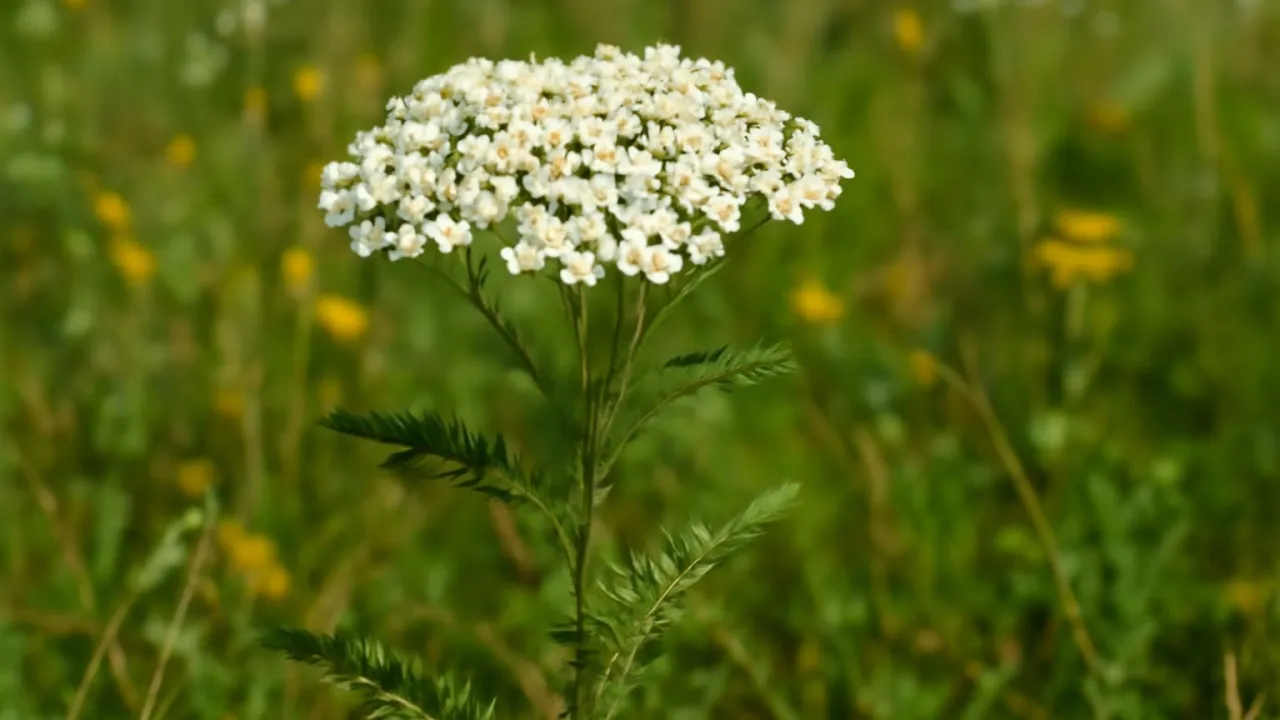
Yarrow’s tiny flowers have been used as medicine for hundreds of years!
✨ Word Sparks (Grade 2 Glossary)
Tap 🔊 to hear
cluster
A group of things close together
meadow
A field with lots of grass and flowers
wound
A cut or hurt on your skin
🪝
Have you ever seen tiny white flowers that help heal cuts?
1
What Yarrow Looks Like
Yarrow has small white flowers that grow in flat . Its leaves are green and feathery, and the plant stands tall in sunny places. These flowers attract insects that help the plant grow new seeds.
2
Where Yarrow Grows
Yarrow grows in fields, , and along roadsides. It likes full sun and dry soil, and it can grow up to three feet tall. The plant spreads its seeds by wind and animals that brush past it.
3
Yarrow’s Special Power
People use yarrow to help cuts heal quickly. It can stop bleeding fast because it has special plant parts that help close. Yarrow has been used for many years as a natural medicine.
Yarrow’s bitter taste helps protect it from animals that want to eat it!
✨ Word Sparks (Grade 3 Glossary)
Tap 🔊 to hear
pollination
When pollen moves to help plants make seeds
camouflage
How plants hide by blending with surroundings
adaptation
A change that helps plants survive better
🪝
Did you know yarrow uses tiny white flowers to protect itself and heal wounds?
1
Yarrow’s Appearance
Yarrow has clusters of small white flowers that attract pollinators like bees. Its feathery leaves help the plant blend into grassy areas for . The plant grows up to three feet tall in sunny habitats.
2
Where Yarrow Lives
Yarrow thrives in temperate regions across North America and Eurasia. It grows in meadows, fields, and roadsides where sunlight is plentiful. This habitat provides the nutrients and water yarrow needs to survive.
3
How Yarrow Protects Itself
Yarrow’s feathery leaves reduce water loss during dry weather, an important . Its flowers attract pollinators that help with reproduction through . The plant’s bitter taste deters predators from eating it.
4
Yarrow’s Healing Power
People use yarrow to stop bleeding and heal wounds because it contains special chemicals. These chemicals help blood clot faster and fight infection. Yarrow has been used for centuries in herbal medicine for its healing properties.
Yarrow’s dense roots help stop soil from washing away during heavy rains!
✨ Word Sparks (Grade 4 Glossary)
Tap 🔊 to hear
pollinator
An animal that helps plants make seeds
erosion
When soil washes away by water or wind
inflammation
When skin gets red and swollen from injury
🪝
How does yarrow’s tiny white flowers help it survive in many places?
1
Yarrow’s Appearance and Adaptations
Yarrow produces flat clusters of small white flowers that attract many , which helps the plant reproduce effectively. Its finely divided, feathery leaves reduce water loss and provide camouflage, allowing it to survive in dry, sunny environments. These adaptations help yarrow thrive in a variety of temperate ecosystems across North America and Eurasia.
2
Yarrow’s Role in Ecosystems
Yarrow serves as an important food source for some insects and provides nectar for like bees and butterflies. It also plays a role in soil health by helping prevent with its dense root system. Humans have used yarrow in agriculture and herbal medicine, showing its ecological and cultural significance.
3
How Yarrow Grows and Spreads
Yarrow grows best in full sun and well-drained soils, often colonizing disturbed areas such as roadsides and meadows. Its seeds spread by wind and animals, allowing the plant to expand its range. The plant’s growth cycle includes flowering in summer followed by seed production, ensuring its survival year after year.
4
Yarrow’s Healing Properties
Yarrow contains chemical compounds that help stop bleeding and reduce , making it valuable in traditional medicine. Its use dates back to ancient times, where it was applied to wounds to promote healing. These properties make yarrow a natural remedy still appreciated today.
Yarrow’s bioactive chemicals help blood clot faster, making it a natural healer for wounds!
✨ Word Sparks (Grade 5 Glossary)
Tap 🔊 to hear
transpiration
How plants lose water through their leaves
bioactive
A chemical that affects living things
rhizome
A root that grows sideways underground
🪝
Did you know yarrow is a medicinal flower with a rich scientific and cultural history?
1
Scientific Classification and Distribution
Yarrow, scientifically named Achillea millefolium, belongs to the Asteraceae family, which includes daisies and sunflowers. It is native to temperate regions of North America, Europe, and Asia, thriving in diverse habitats such as grasslands, meadows, and disturbed soils. Its widespread distribution is due to its adaptability to various soil types and climates.
2
Physiological Adaptations and Mechanics
Yarrow’s finely divided, feathery leaves minimize water loss through , an important adaptation for survival in dry environments. The plant produces numerous small flowers arranged in flat-topped clusters called corymbs, which efficiently attract pollinators for reproduction. Additionally, yarrow contains compounds like flavonoids and tannins that contribute to its medicinal properties.
3
Ecological and Cultural Importance
Ecologically, yarrow supports pollinators such as bees and butterflies, playing a vital role in local food webs. Its dense root system stabilizes soil and prevents erosion, benefiting ecosystems and agriculture. Historically, yarrow has been used in traditional medicine worldwide for wound healing and anti-inflammatory effects, highlighting its cultural significance.
4
Medicinal Chemistry and Conservation
The plant’s chemical constituents, including alkaloids and essential oils, promote blood clotting and reduce inflammation, making yarrow valuable in herbal remedies. Conservation efforts focus on preserving native populations amid habitat loss and overharvesting. Sustainable harvesting practices ensure yarrow remains available for medicinal and ecological uses.
5
Quantitative Comparisons and Growth
Yarrow typically grows between 1 and 3 feet tall (30 to 90 centimeters) and can spread widely through and seed dispersal. Its flowers bloom during summer months, attracting a variety of pollinators. Compared to other medicinal plants, yarrow’s growth rate and drought tolerance make it especially resilient in temperate climates.