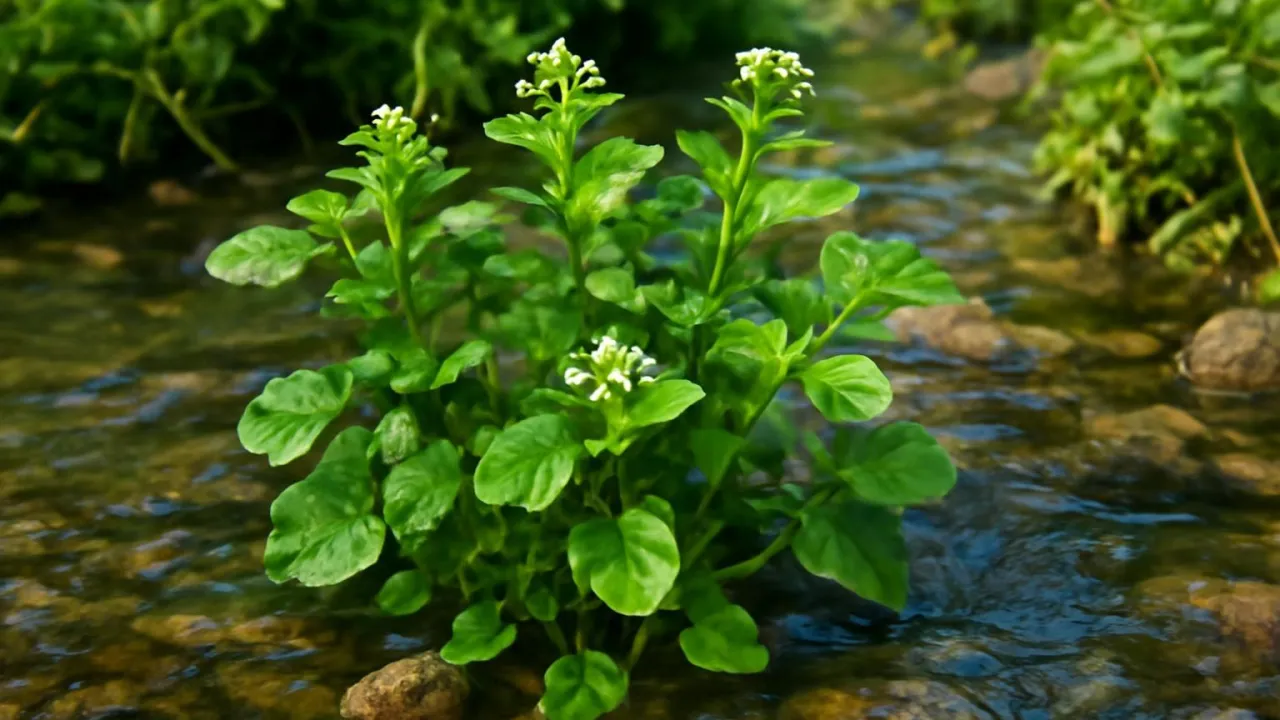
Watercress is one of the oldest plants people have eaten for health benefits.
✨ Word Sparks (Grade 2 Glossary)
Tap 🔊 to hear
stream
A small river with flowing water
sunlight
Light that comes from the sun to help plants grow
vitamins
Healthy parts in food that help your body grow strong
🪝
Have you ever tasted a plant that grows in water and is spicy?
1
What Watercress Looks Like
Watercress has small, round green leaves that grow in bunches near water. Its stems are thin and float on water surfaces. The leaves have a spicy taste that makes salads tasty and fresh.
2
Where Watercress Grows
Watercress grows in clean, slow-moving and ponds with fresh water. It needs to grow well but can also grow in partly shaded areas near water. It is found in many parts of the world where water is clean.
3
Why People Eat It
People eat watercress because it is crunchy and healthy with . It grows fast and adds a peppery flavor to many dishes. It also helps keep the body strong and is often used in salads and sandwiches.
1. What kind of water does watercress need to grow?
2. Why do people like to eat watercress?
🤯 Mind-Blowing Fact • Grade 3
Watercress’s spicy flavor is a natural defense against animals that want to eat it.
✨ Word Sparks (Grade 3 Glossary)
Tap 🔊 to hear
camouflage
How plants or animals hide to stay safe
pollination
When insects help plants make seeds
nutrients
Food that helps plants grow strong
🪝
Did you know watercress uses its spicy leaves to protect itself from animals?
1
Watercress Appearance and Taste
Watercress has small, round leaves that grow in clusters above the water surface. Its leaves taste peppery, which helps protect the plant from hungry predators. The stems float on water and help the plant spread quickly. This spicy flavor is a natural defense.
2
Where Watercress Grows
Watercress grows in freshwater streams and ponds where the water is clean and cool. It needs sunlight but can also survive in partly shaded areas. This plant adapts well to wet environments by growing roots underwater to get . It thrives best in temperate climates worldwide.
3
How Watercress Survives
Watercress uses its roots to absorb from water and soil, helping it grow fast. Its floating stems allow it to spread over water surfaces and avoid drowning. The spicy taste acts as by keeping animals from eating it. This adaptation helps watercress survive in busy ecosystems.
4
Watercress and Pollination
Watercress produces small white flowers that attract insects for . Pollination helps the plant make seeds to grow new plants in other places. This process supports the watercress population and keeps the ecosystem balanced. Insects and watercress have a helpful relationship.
Watercress helps clean water by absorbing extra nutrients, improving stream health.
✨ Word Sparks (Grade 4 Glossary)
Tap 🔊 to hear
ecosystem
A community of plants and animals living together
habitat
The natural home where a plant or animal lives
pollution
Dirty or harmful things in the environment
🪝
How does watercress’s spicy taste affect its role in the ecosystem?
1
Watercress’s Habitat and Growth
Watercress grows in clean, slow-moving freshwater streams and ponds, mainly in temperate regions worldwide. It requires cool water and partial sunlight to thrive, making it well adapted to wet environments. The plant’s roots absorb nutrients from the water, supporting its rapid growth and spread. Because it grows quickly, watercress can cover large areas in its .
2
Spicy Flavor and Survival
The peppery flavor of watercress acts as a natural defense mechanism, deterring many herbivores from eating it. This spicy taste helps watercress survive in where many animals compete for food. By protecting itself, watercress maintains its population and supports the food web by providing shelter for small aquatic animals. Its flavor also influences which animals interact with it.
3
Ecosystem Roles and Human Impact
Watercress plays an important role in freshwater food webs by providing food and for insects and small fish. It also helps filter water by absorbing nutrients, improving water quality. Humans cultivate watercress for food and medicine, but and habitat loss threaten wild populations. Conservation efforts focus on protecting clean waterways to preserve watercress habitats.
4
Geographic Distribution and Adaptations
Watercress is native to Europe and Asia but now grows worldwide in temperate climates. Its ability to grow both submerged and partially above water allows it to adapt to changing water levels. This flexibility helps watercress survive floods and droughts better than many aquatic plants. Its growth pattern supports biodiversity in freshwater .
1. Why does watercress’s spicy taste help it survive?
2. How do humans affect watercress habitats?
🤯 Mind-Blowing Fact • Grade 5
Watercress can double its size in less than two weeks when growing in clean, nutrient-rich water.
✨ Word Sparks (Grade 5 Glossary)
Tap 🔊 to hear
glucosinolates
Natural chemicals that give plants a spicy taste and protect them
biofiltration
Plants cleaning water by absorbing harmful nutrients and chemicals
perennial
A plant that lives and grows for many years
🪝
What makes watercress a unique aquatic plant with important ecological and nutritional roles?
1
Scientific Classification and Description
Watercress, scientifically named Nasturtium officinale, belongs to the Brassicaceae family, which includes mustard and cabbage plants. It is a fast-growing, aquatic plant that thrives in clean, flowing freshwater environments. The plant typically reaches heights of 6 to 12 inches, with pinnately compound leaves and hollow stems that float on water surfaces. Its small white flowers bloom in clusters during spring and summer, aiding reproduction.
2
Physiological Adaptations and Growth Mechanisms
Watercress has specialized roots that absorb dissolved nutrients directly from water and sediment, supporting rapid growth. Its hollow, buoyant stems allow it to float partially submerged, maximizing sunlight exposure for photosynthesis. The plant's peppery flavor comes from , chemical compounds that deter herbivores and pathogens. This chemical defense, combined with its ability to thrive in variable water conditions, makes watercress highly adaptable.
3
Ecological Importance and Conservation Challenges
In freshwater ecosystems, watercress contributes to biodiversity by providing habitat and food for aquatic insects and small fish species. It also plays a role in by absorbing excess nutrients, reducing eutrophication risks. However, watercress populations face threats from water pollution, habitat destruction, and invasive species. Conservation efforts emphasize maintaining clean waterways and monitoring watercress beds to preserve ecological balance.
4
Historical and Nutritional Significance
Humans have consumed watercress for thousands of years due to its high vitamin and mineral content, including vitamins A, C, and K. Historically, watercress was valued for medicinal properties and was cultivated in ancient civilizations. Modern studies confirm its antioxidant benefits and potential to support cardiovascular health. Its rapid growth and nutrient density make it a valuable crop for sustainable agriculture.
5
Quantitative Comparisons and Growth Conditions
Watercress can grow up to 12 inches tall in nutrient-rich waters with temperatures between 50 and 70 degrees Fahrenheit. It spreads quickly, sometimes doubling its biomass in less than two weeks under ideal conditions. Compared to other leafy greens, watercress contains higher concentrations of certain antioxidants and minerals. Its growth rate and nutritional profile make it a unique plant in both natural and cultivated environments.