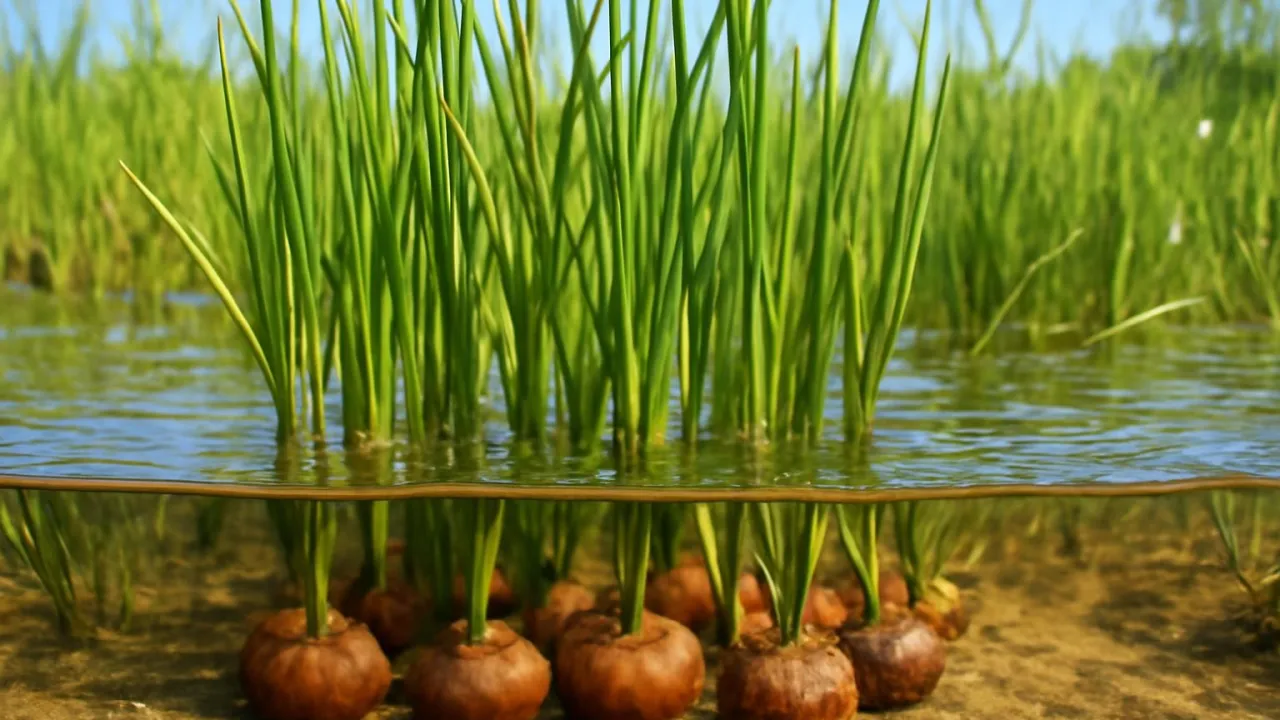
Water chestnuts produce crunchy tubers underwater that stay fresh and sweet when cooked!
✨ Word Sparks (Grade 2 Glossary)
Tap 🔊 to hear
tuber
A thick, crunchy root that stores food
photosynthesis
How plants use sunlight to make food
wetlands
Land covered with water, like ponds or swamps
🪝
Have you ever wondered how some vegetables grow underwater?
1
Water Chestnut’s Crunchy Tuber
Water chestnuts grow underwater as crunchy that people enjoy eating in many dishes. They have a sweet, fresh taste and a crisp texture. The tubers grow beneath the muddy pond floor where they soak up nutrients.
2
Green Stems Reach the Sun
The plant sends tall, thin green stems above the water to soak up sunlight for . These stems look like grass and help the plant make food. The stems grow up to three feet tall in sunny, shallow water.
3
Where Water Chestnuts Live
Water chestnuts are native to freshwater in Asia but now grow in warm ponds worldwide. They prefer shallow water with plenty of sunlight and soft mud. Fish and frogs often live nearby in these watery homes.
1. What part of the water chestnut grows underwater?
2. Why do the stems grow above water?
🤯 Mind-Blowing Fact • Grade 3
Water chestnuts help clean pond water while feeding many animals and people!
✨ Word Sparks (Grade 3 Glossary)
Tap 🔊 to hear
adaptation
A special trait that helps survival
photosynthesis
Plants making food from sunlight
ecosystem
A community of living and nonliving things
🪝
Did you know water chestnuts have a special way to survive underwater?
1
Crunchy Tubers Underwater
Water chestnuts produce edible tubers beneath the muddy pond floor. These tubers store nutrients and remain crisp even after cooking. This helps them survive underwater and stay tasty for animals and people.
2
Tall Green Stems and Photosynthesis
The plant’s tall green stems rise above the water surface to absorb sunlight for . This process creates energy to grow and produce tubers. The stems also help the plant breathe by exchanging gases with the air.
3
Habitat and Ecosystem Role
Water chestnuts thrive in freshwater wetlands, ponds, and slow-moving rivers. They provide shelter and food for fish and insects. Their presence helps keep water clean by filtering nutrients from the soil.
4
Survival and Adaptations
Water chestnuts use like tough tubers and air-filled stems to survive underwater. Their tubers resist predators by being hard and crunchy. The plant’s structure also helps it stay anchored in soft mud.
2. What helps water chestnuts stay anchored in mud?
🤯 Mind-Blowing Fact • Grade 4
Water chestnuts improve water quality while feeding many animals and people worldwide!
✨ Word Sparks (Grade 4 Glossary)
Tap 🔊 to hear
invasive
A plant that spreads too much and harms nature
nutrients
Food that plants and animals need to grow
buoyant
Able to float or stay up in water or air
🪝
How do water chestnuts shape their watery world and help other creatures?
1
Water Chestnut’s Growth and Habitat
Water chestnuts grow in freshwater wetlands mainly across Asia but have spread worldwide due to human cultivation. They thrive in shallow water with soft, nutrient-rich mud that supports their tuber development. The plant’s tall stems rise above water to absorb sunlight and exchange gases, enabling healthy growth and reproduction.
2
Role in Ecosystems and Food Webs
These plants provide vital shelter and food for aquatic animals like fish and insects, creating a balanced ecosystem. Their crunchy tubers are eaten by humans and some wildlife, linking them to food webs. Water chestnuts also help filter water by absorbing excess , improving water quality and preventing harmful algae growth.
3
Adaptations for Survival
Water chestnuts have tough, crunchy tubers that resist many predators, allowing them to survive underwater. Their stems contain air spaces to stay and exchange gases efficiently. This adaptation helps them live in muddy, oxygen-poor environments where other plants struggle to grow and reproduce.
4
Human Impact and Cultivation
Humans have cultivated water chestnuts for centuries, spreading them beyond their native range. Farming methods include shallow pond planting and careful harvesting to protect wetlands. However, in some regions, water chestnuts can become , disrupting local ecosystems if not managed properly and threatening native species.
1. Why are water chestnuts important in food webs?
2. What helps water chestnuts survive in muddy water?
🤯 Mind-Blowing Fact • Grade 5
Water chestnuts use special air channels in stems to breathe underwater in muddy wetlands!
✨ Word Sparks (Grade 5 Glossary)
Tap 🔊 to hear
aerenchyma
Plant tissue with air spaces for underwater breathing
perennial
A plant that lives for many years
eutrophication
Too many nutrients causing water to grow algae
🪝
What makes the water chestnut a remarkable aquatic plant with global importance?
1
Taxonomy and Scientific Context
Water chestnut, scientifically named Eleocharis dulcis, belongs to the Cyperaceae family, commonly known as the sedge family. It is a aquatic plant native to freshwater wetlands of Asia, especially China and Southeast Asia. Its classification highlights its unique adaptations among aquatic monocots, distinguishing it from true chestnuts which are trees.
2
Physiological Mechanics and Adaptations
The plant produces edible tubers that grow underwater in anaerobic, muddy soils, storing starch and nutrients essential for survival. Its hollow stems contain tissue that facilitates oxygen transport from air to submerged roots, enabling respiration in oxygen-poor environments. This physiological adaptation allows it to thrive in flooded habitats where many plants cannot survive.
3
Ecological Role and Conservation
Water chestnuts contribute to wetland ecosystems by providing habitat and food for aquatic fauna, including fish and invertebrates. They also improve water quality by absorbing excess nutrients, reducing . While cultivated extensively for food, wild populations face habitat loss from wetland drainage, making conservation efforts important for biodiversity.
4
Agricultural History and Human Use
Humans have cultivated water chestnuts for over 3,000 years, especially in China, where they are a dietary staple and cultural symbol. Traditional farming involves planting tubers in shallow flooded fields, harvesting after growth cycles lasting about six months. Their crunchy texture and sweet flavor make them popular in Asian and global cuisines.
5
Quantitative Comparisons and Facts
Water chestnut plants can reach heights of up to 3 feet (1 meter), while their tubers typically weigh 1 to 2 ounces (30 to 60 grams). They grow best in water temperatures between 68 and 86 degrees Fahrenheit (20 to 30 degrees Celsius). Compared to other aquatic plants, their rapid tuber growth cycle of about six months supports high yields for farmers.