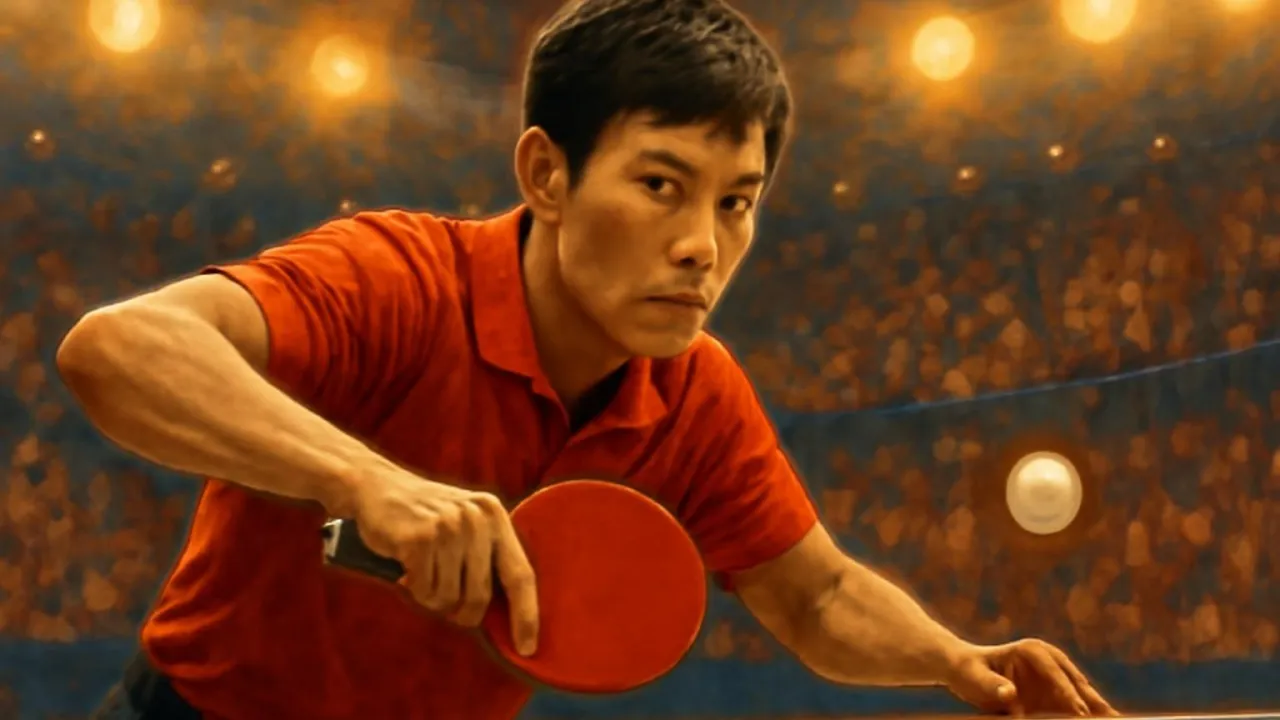
Wang Hao’s penhold grip made his backhand super strong!
✨ Word Sparks (Grade 2 Glossary)
Tap 🔊 to hear
grip
The way you hold something
tournament
A big sports contest
coach
A person who helps you learn
🪝
Can you imagine spinning a ball so fast it zooms across a table?
1
Curious About Ping Pong
Wang Hao was always curious about how to control the ball. He watched older players and tried to copy their moves. He practiced with a paddle every day after school.
2
Hard Work Pays Off
Wang Hao trained with his and learned new tricks. He worked hard to make his hands and feet move together. He never gave up, even when it was hard.
3
Winning for His Country
Wang Hao played for China in huge . He won many medals and made his team proud. His special penhold made him famous.
Wang Hao is the only male player to reach three Olympic singles finals in a row!
✨ Word Sparks (Grade 3 Glossary)
Tap 🔊 to hear
penhold
A way to hold the paddle like a pen
reflexes
How fast you react to things
legacy
What you leave behind for others
🪝
What if you could send a ball spinning so fast, your opponent could barely see it?
1
Learning the Penhold Way
As a young boy, Wang Hao watched table tennis champions play with quick hands and sharp eyes. He became fascinated by the grip, which let him control the paddle with amazing skill. Every day, he practiced his grip and learned new spins. His curiosity turned into a passion for mastering table tennis.
2
Training Hard for Success
Wang Hao trained for hours, focusing on footwork, , and mental focus. His coach taught him to use his grip for powerful backhand shots. Even when he lost games, Wang Hao studied his mistakes and tried again. His perseverance helped him become one of China’s top players.
3
Reaching the World Stage
Wang Hao’s skills took him to international tournaments, where he faced the world’s best. He used his signature backhand to win fast rallies and surprise his opponents. In the Olympics, Wang Hao earned three silver medals for his country. His sportsmanship and teamwork inspired fans everywhere.
4
Changing the Game
Wang Hao’s unique style made the grip popular again. Young players watched his matches to learn new techniques and strategies. He showed that hard work, creativity, and respect could lead to greatness. Wang Hao’s lives on in the world of table tennis.
Wang Hao’s backhand was so famous, it was called a 'secret weapon' by commentators!
✨ Word Sparks (Grade 4 Glossary)
Tap 🔊 to hear
discipline
Working hard and following rules
innovative
Doing something in a new way
champion
A person who wins big contests
🪝
Have you ever wondered how one player can change the way millions play a sport?
1
A Young Star’s Spark
When Wang Hao first picked up a table tennis paddle, he was captivated by the speed and excitement of the game. He quickly became fascinated by the penhold grip, a unique way of holding the paddle that allowed for creative spins and fast attacks. Inspired by watching Chinese , Wang Hao practiced for hours every day, determined to master the skills that made his heroes famous.
2
Rising Through the Ranks
Wang Hao’s dedication and set him apart from other young players, and coaches quickly noticed his talent. He worked tirelessly to improve his footwork, reaction time, and mental focus, often reviewing his matches to learn from every mistake. His powerful penhold backhand became his trademark shot, surprising opponents with its speed and accuracy. By his teenage years, Wang Hao was competing in national tournaments and earning a place on China’s elite team.
3
Olympic Glory and World Championships
On the world stage, Wang Hao faced legendary opponents in the Olympics and World Championships, often under intense pressure. He reached the Olympic singles finals three consecutive times—an achievement no other male player has matched. Although he earned silver medals each time, Wang Hao also helped China win team gold and became a World . His sportsmanship and determination inspired fans and teammates alike.
4
A Lasting Impact on Table Tennis
Wang Hao’s use of the penhold grip brought new excitement to the sport and influenced a new generation of players. Young athletes studied his matches to learn advanced techniques and strategies, hoping to follow in his footsteps. Even after retiring, Wang Hao continued to coach and promote table tennis, sharing his knowledge and passion. His legacy is celebrated in China and around the world.
1. Why did Wang Hao’s backhand surprise his opponents?
2. What did Wang Hao do after retiring?
🤯 Mind-Blowing Fact • Grade 5
Wang Hao is the only man to reach three Olympic singles finals in a row, earning silver each time and team gold in 2008.
✨ Word Sparks (Grade 5 Glossary)
Tap 🔊 to hear
biomechanics
How our bodies move in sports
adapt
Change to fit new situations
perseverance
Never giving up, even when it’s hard
🪝
What does it take to become a legend in a sport where every millisecond counts?
1
Early Curiosity and the Penhold Spark
Long before stadiums echoed his name, Wang Hao was a curious child mesmerized by the speed and strategy of table tennis. He gravitated toward the penhold grip, a traditional Chinese technique that allowed for a unique blend of wrist flexibility and rapid-fire backhand shots. Inspired by legendary players, Wang Hao dedicated countless hours to experimenting with spins, footwork drills, and fast-paced practice rallies. His relentless curiosity and willingness to try new approaches set the foundation for his future success.
2
Relentless Training and Technical Mastery
Wang Hao’s rise through China’s fiercely competitive table tennis system was fueled by disciplined training and a deep understanding of . His daily regimen included precision footwork, split-second reflex drills, and mental visualization exercises to anticipate opponents’ moves. Under the guidance of expert coaches, Wang Hao refined his penhold backhand into a near-unbeatable weapon, capable of generating both speed and deceptive spin. This technical mastery made him a formidable contender on the international stage.
3
Olympic Battles and Global Recognition
Wang Hao’s career reached its zenith between 2004 and 2012, when he competed in three consecutive Olympic Games. He earned silver medals in the men’s singles at Athens 2004, Beijing 2008, and London 2012—an unprecedented feat for any male table tennis player. In addition, he helped China secure gold in the team event and captured multiple World Championship titles. Wang Hao’s matches were renowned for their intensity, strategic depth, and his remarkable ability to under pressure.
4
Innovating the Game and Inspiring Generations
Beyond his medal count, Wang Hao’s influence extended to the evolution of table tennis technique and training. His innovative penhold backhand inspired a resurgence of interest in the grip, prompting young athletes worldwide to study his matches for tactical insights. Wang Hao’s sportsmanship, humility in both victory and defeat, and commitment to teamwork made him a role model for aspiring players. He demonstrated that true greatness is measured not only by wins, but by the positive impact left on others.
5
Legacy as a Champion and Mentor
After retiring from competition, Wang Hao transitioned to coaching and leadership roles within China’s national table tennis program. He shared his expertise with the next generation, emphasizing discipline, creativity, and respect for the sport’s traditions. Wang Hao’s legacy is defined by his record-setting achievements, his technical innovations, and his dedication to helping others excel. Today, his story continues to inspire young athletes to pursue excellence with passion and .