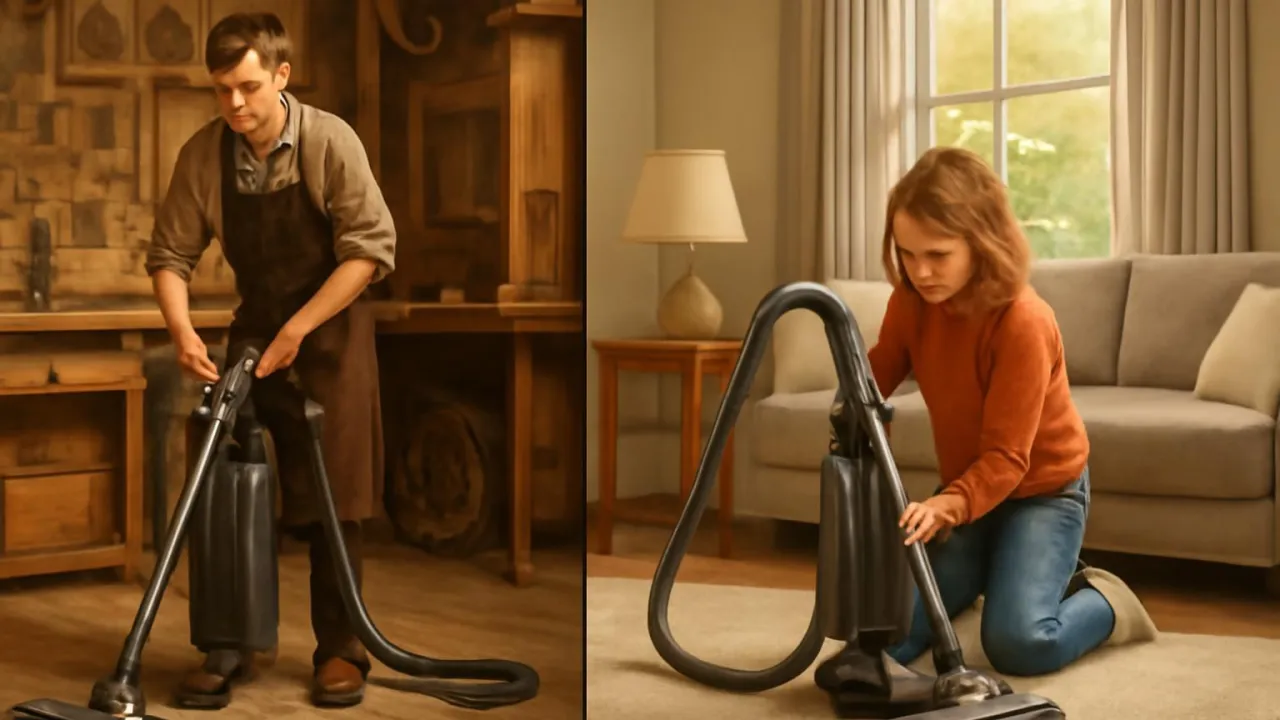
Have you ever watched a vacuum gobble up cookie crumbs?
1
The Sucking Sound
Vacuum cleaners make a loud whooshing noise, and they pull air in fast. When you turn one on, you can feel the strong wind. The machine uses to grab dust and dirt. It makes cleaning the floor much easier.
2
How It Works
The vacuum has a hose and a spinning brush. The brush helps lift dirt off the carpet, and the hose sucks it up. All the dirt goes into a bag or . People push the vacuum around to clean every spot.
3
From Big to Small
Long ago, vacuums were huge and needed help to move. Today, many are small enough to carry or even drive themselves. Vacuums help keep homes, schools, and stores tidy every day.
The very first vacuum cleaner was powered by a gasoline engine and parked outside the house!
✨ Word Sparks (Grade 3 Glossary)
Tap 🔊 to hear
suction
Pulling air and dirt inside
filter
A part that traps dirt
motor
The machine’s spinning power part
🪝
What if a machine could slurp up every speck of dust in your room?
1
A Roaring Helper
When you switch on a vacuum cleaner, you hear a powerful roar. The machine creates by spinning a fan inside, which pulls air and dirt into a chamber. This clever use of air pressure makes cleaning fast and easy. People use vacuums on carpets, floors, and even in cars.
2
How Suction Works
The vacuum cleaner uses a to spin a fan, lowering the air pressure inside. This difference in pressure causes air from the room to rush in, carrying dust and crumbs with it. The dirt is trapped in a or bag, while the clean air is blown back out. This process is called air .
3
From Giant to Handy
The first vacuum cleaners were invented over a hundred years ago. Early vacuums were so big that they had to be pulled by horses and parked outside homes! Today, vacuums come in many shapes and sizes, including small handhelds and smart robot cleaners. Modern designs use lightweight materials and powerful .
4
Changing How We Clean
Vacuum cleaners have changed the way people clean their homes and public spaces. They help stop dust from building up, which keeps the air healthier. Vacuums are used in houses, schools, offices, and even airplanes. This invention saves time and makes cleaning much more fun.
Modern HEPA filters in vacuums can trap particles as tiny as 0.3 microns!
✨ Word Sparks (Grade 4 Glossary)
Tap 🔊 to hear
cyclonic
Spinning air to separate dust
allergen
Tiny things that cause sneezing
HEPA filter
Special filter that traps tiny dust
🪝
Imagine a roaring machine that could pull dust right out of the air—how does it work?
1
The Science of Suction
A vacuum cleaner works by creating a difference in air pressure using an electric motor and a spinning fan. When the air pressure inside the vacuum drops, air from the room rushes in to fill the space, carrying dust and debris with it. The dirt is separated from the air by filters or chambers, which trap even tiny particles. This process makes vacuum cleaners powerful tools for removing dust from carpets, floors, and furniture.
2
From Enormous to Everyday
The first motor-powered vacuum was invented in 1901 by Hubert Cecil Booth in London, England. Booth’s original machine was so large it had to be pulled by horses and used long hoses to reach inside buildings. Over time, inventors made vacuums lighter, smaller, and more efficient, adding features like disposable bags and rotating brushes. Today, there are upright, canister, handheld, and robotic vacuum cleaners.
3
Impact on Health and Homes
Vacuum cleaners changed how people cleaned their homes and workplaces, making it possible to remove more dust and than ever before. By trapping dust in filters, vacuums help improve indoor air quality and reduce allergic reactions. Hospitals, schools, and airplanes all rely on vacuum cleaners to keep spaces clean and safe. The invention also made cleaning much faster and less tiring.
4
A Global Cleaning Revolution
Vacuum cleaners quickly spread around the world, becoming a symbol of modern, healthy living. Companies in many countries developed new designs, such as bagless vacuums and smart robot cleaners. Today’s vacuums use advanced motors, , and sensors to clean better and save energy. The vacuum cleaner’s story shows how engineering can solve everyday problems in creative ways.
The world’s most powerful commercial vacuum cleaner can lift a bowling ball with its suction!
✨ Word Sparks (Grade 5 Glossary)
Tap 🔊 to hear
cyclonic separation
Spinning air to separate dust and dirt
centrifugal force
Force that pushes things outward when spinning
autonomous
Able to work by itself
🪝
What if you could design a machine that could pull invisible dust right out of the air—how would you make it work?
1
Engineering the Power of Suction
Vacuum cleaners harness the physics of air pressure, using a high-speed electric motor to spin a fan and create a partial vacuum inside the machine. This low-pressure zone causes atmospheric air—and everything suspended in it, such as dust, dirt, and allergens—to rush into the intake nozzle. The air and debris are drawn through a series of filters or cyclonic chambers, which separate particles from the airflow. The cleaned air is then expelled, while the collected debris remains trapped in a bag or bin. This engineering marvel allows for efficient removal of even the smallest particles from carpets, floors, and furniture.
2
From Giant Machines to Smart Robots
The first motor-powered vacuum cleaner was invented by British engineer Hubert Cecil Booth in 1901, and his original design was so massive it had to be transported by horse-drawn carriage. Over time, inventors like James Murray Spangler and companies such as Hoover revolutionized vacuum technology by introducing portable, upright models and disposable filter bags. Today’s vacuums range from compact handhelds to robots equipped with sensors and artificial intelligence for mapping and cleaning rooms independently.
3
Physics and Filters: How Vacuums Trap Dust
Modern vacuum cleaners often use , which spins incoming air at high speeds to fling dust and debris outward by . High-Efficiency Particulate Air (HEPA) filters, capable of trapping particles as small as 0.3 microns, are now standard in many models. These advanced filters are crucial for improving indoor air quality, especially for people with allergies or asthma. The combination of powerful suction, rotating brushes, and precise filtration allows vacuums to remove deeply embedded dirt and microscopic allergens from a wide variety of surfaces.
4
A Revolution in Global Cleaning Habits
The invention and spread of vacuum cleaners transformed cleaning routines in homes, schools, hospitals, and public transportation worldwide. By making deep cleaning faster, more effective, and less physically demanding, vacuums contributed to better health and hygiene in modern society. The global vacuum cleaner market now includes innovations such as cordless designs, smart scheduling, and even self-emptying dust bins. These advancements reflect ongoing efforts to make cleaning more convenient, sustainable, and accessible to people everywhere.
5
Looking to the Future: Sustainability and Smart Technology
As environmental awareness grows, engineers are developing vacuum cleaners with energy-efficient motors, recyclable materials, and washable filters to reduce waste. Some modern robotic vacuums use machine learning to optimize cleaning paths and avoid obstacles, while others connect to smartphones for remote control and scheduling. The continued evolution of vacuum technology demonstrates how inventive thinking and scientific principles can improve everyday life, making homes cleaner and healthier for generations to come.