🧬 HUMAN BODY
🧬 Vesica Urinaria • Lower Urinary System
VA Science & Health SOL 1.1, 3.1, 4.2, 5.1 (Cells, Organs & Body Systems)
Urinary Bladder
Your Stretchy Water-Balloon Tank With Brain Sensors
Grade 4 • Expanding • 202 words
🩺 Body System & LocationPelvic Cavity • Cradled Safely Behind the Pubic Bone
🔬 Size / Cell CountWalnut-sized empty • Expands comfortably to hold 1.5–2 cups (400–500 mL)
⚙️ Core JobCollects urine continuously from kidneys and releases it on your command
⚡ Body SuperpowerShape-shifting umbrella cells stretch flat so the tank expands over 10-fold
🤯 Mind-Blowing Fact • Grade 1
When empty, your bladder shrinks down to the size of a walnut, then stretches smoothly to the size of a grapefruit!
✨ Word Sparks (Grade 1 Glossary)
Tap 🔊 to hear
Bladder
Stretchy muscular bag that holds urine safely
Sensors
Tiny nerves that feel stretching and tell brain
Muscle
Body tissue that squeezes and relaxes smoothly
🪝
Why don't your kidneys drip pee all day long while you play tag?
1
A Stretchy Little Balloon
Low down in your belly, behind your hip bones, sits a stretchy muscular bag. When empty, it is crinkled up like a deflated balloon! Meet your urinary .
2
Filling Drop by Drop
All day long, tiny drops of pee slide down from your kidneys into this tank. Soft folds smooth out as your grows round like a pear.
3
Ding-Dong! Bathroom Time!
Tiny stretch in the wall send a polite tap up to your brain: 'Time to go!' When you sit on the toilet, a door opens wide.
1. How does your brain know when it is time to take a bathroom break?
2. What happens to your urinary bladder right after you finish peeing?
🤯 Mind-Blowing Fact • Grade 2
Astronauts floating in zero gravity in space still feel the exact same bathroom signal because bladder nerves measure wall stretch, not weight!
✨ Word Sparks (Grade 2 Glossary)
Tap 🔊 to hear
Rugae
Soft inner folds that flatten when stretching
Sphincter
Ring-shaped muscle that opens and closes tightly
Urethra
Exit tube carrying urine out of body
🪝
How do two muscular 'gatekeepers' make sure your bladder opens only when you are ready?
1
Wrinkles Called Rugae
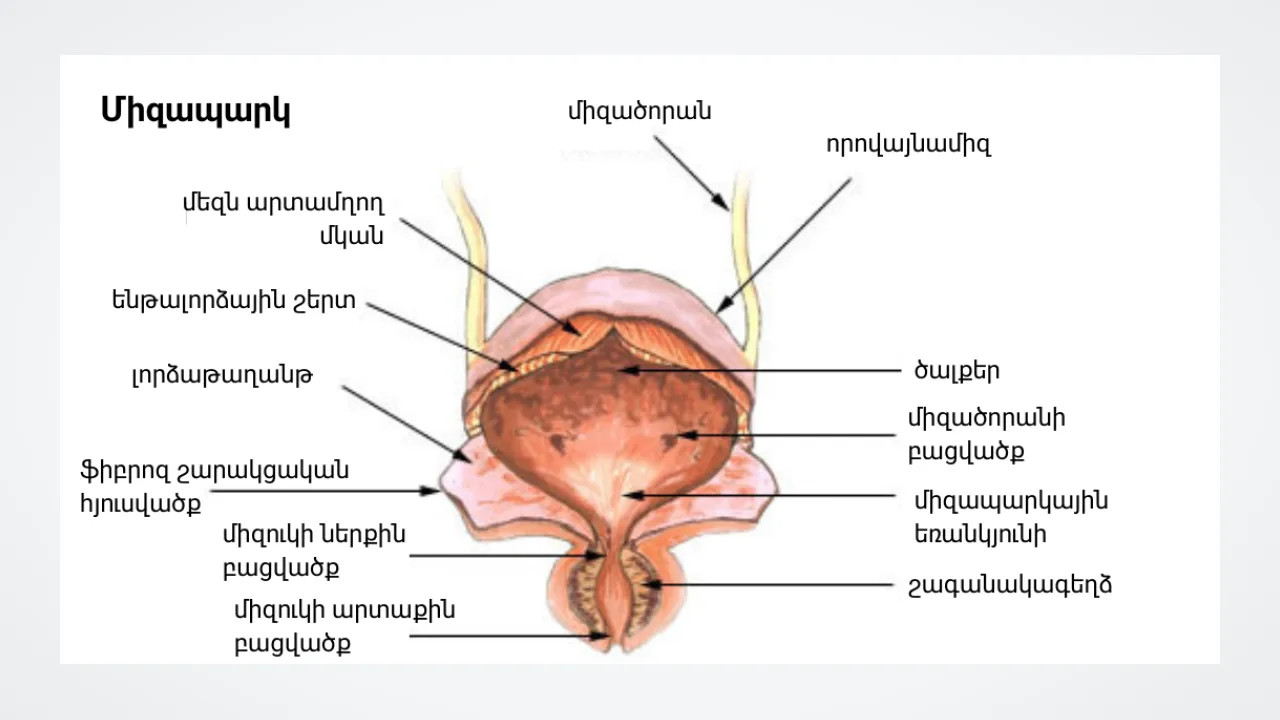
Imagine an accordion that unfolds smoothly as music plays! Inside an empty urinary bladder, the inner wall is gathered into soft wrinkles called . As urine trickles in through two ureter tubes from your kidneys, those wrinkles flatten out so pressure stays comfy.
2
Two Smart Gatekeepers
At the bottom exit—a tube called the —stand two ring-shaped muscles. The inner ring works automatically without you thinking. The outer ring listens to your brain so you stay in charge!
3
Listening to Your Body
Usually, your brain gets its first polite 'getting half-full!' message around one cup of liquid, giving you plenty of time to walk to the restroom.
1. Why can astronauts in weightless outer space still tell when their bladder is full?
2. Which ring-shaped muscle lets YOU choose the right moment to use the toilet?
🤯 Mind-Blowing Fact • Grade 3
Special 'umbrella cells' lining your bladder actually change shape—puffing up like round pillows when empty and stretching wide and flat like pancakes when full!
✨ Word Sparks (Grade 3 Glossary)
Tap 🔊 to hear
Detrusor
Woven smooth muscle wall of the bladder
Epithelium
Protective sheet of cells lining body surfaces
Valve
Flap or doorway letting liquid flow one way
🪝
What keeps salty urine inside your bladder from soaking backward through the bladder wall—or flowing up when you do a handstand?
1
One-Way Slanted Entrances
Try doing a cartwheel or hanging upside down on playground bars—not a single drop of urine flows backward into your kidneys! Why? Because the two ureters tunnel into the back of your bladder at a clever slanted angle. As the bladder fills, rising fluid gently presses those slanted tunnels shut like natural one-way flap .
2
Waterproof Umbrella Cells
Lining the inside of the bladder is a special tissue found nowhere else outside the urinary tract: transitional ! Its top layer features plump, dome-shaped 'umbrella cells' that flatten out like pancakes as the bladder expands and form a super-tight waterproof seal so wastes cannot leak back into your bloodstream.
3
The Detrusor Muscle Basket
Surrounding that waterproof lining is a woven basket of smooth muscle called the muscle. While filling, it stays relaxed; during bathroom breaks, it squeezes evenly from three directions at once!
4
Healthy Bathroom Habits
Going promptly when your brain signals—instead of holding it for hours—keeps your bladder muscle and kidneys happy and germ-free.
1. What stops urine from flowing backward up into your kidneys when you do a handstand?
2. Why does the bladder need waterproof 'umbrella cells' lining its inner wall?
🤯 Mind-Blowing Fact • Grade 4
Stiff microscopic protein shields called uroplakins tile the inside of your bladder like tiny armor plates, making it one of the most leak-proof barriers in all of nature!
✨ Word Sparks (Grade 4 Glossary)
Tap 🔊 to hear
Urothelium
Stretchy, waterproof cell lining of urinary organs
Trigone
Smooth triangular funnel zone on bladder floor
Mechanoreceptors
Sensory nerve endings that detect physical stretching
🪝
How can a hollow organ expand to ten times its empty volume while keeping internal pressure remarkably low until you reach a restroom?
1
Urothelium and Armored Plaques
Zoom in on the inner lining of the urinary bladder—the —and witness one of biology's greatest shape-shifting acts. When empty, this transitional epithelium stacks five to seven cell layers deep inside folded rugae. As urine arrives at roughly one milliliter per minute, folded reserve membrane tucked inside superficial umbrella cells unfurls like origami! Stiff protein plates called uroplakins armor the surface, blocking urea, ammonia, and potassium from diffusing across despite steep concentration gradients.
2
The Smooth Trigone Triangle
Down on the floor of the bladder sits a smooth, triangular patch called the , marked by the two angled ureteral openings at its upper corners and the internal urethral orifice at its bottom point. Unlike the rest of the crinkled wall, the trigone stays smooth so it acts as a clean funnel during emptying.
3
High Compliance and Stretch Receptors
Three interwoven layers of detrusor smooth muscle relax actively under sympathetic nerve signals during filling, giving the bladder high 'compliance'—meaning volume climbs to 200 milliliters with almost zero pressure jump! Around 200 to 250 milliliters, begin firing gently; by 400 to 500 milliliters, insistent signals urge a trip to the restroom.
4
Teamwork of Two Nervous Systems
Once you consciously relax your skeletal external urethral sphincter, parasympathetic nerves contract the detrusor muscle and open the internal sphincter for complete, effortless emptying.
1. How do umbrella cells expand their surface area so dramatically without ripping open?
2. What are the three corners of the smooth 'trigone' region at the base of the bladder?
🤯 Mind-Blowing Fact • Grade 5
Pediatric doctors can estimate a growing kid's healthy bladder capacity in ounces simply by adding 2 to the child's age in years!
✨ Word Sparks (Grade 5 Glossary)
Tap 🔊 to hear
Uroplakin
Crystalline protein forming waterproof bladder armor plates
Micturition
Medical term for coordinated bladder emptying
Exocytosis
Fusing internal tiny sacs to expand membrane
🪝
How does a tiny command hub in your brainstem flip your urinary bladder instantaneously from passive, low-pressure storage to coordinated muscular expulsion?
1
Pelvic Anatomy and Viscoelastic Compliance
Nestled subperitoneally on the muscular pelvic floor directly behind the pubic symphysis, the urinary bladder (vesica urinaria) transitions seamlessly from a collapsed tetrahedral sac when empty to an ovoid reservoir holding 400 to 600 milliliters in healthy adults (and roughly `(age in years + 2) × 30 mL` in growing children!). Its wall marries three interwoven layers of detrusor smooth muscle—inner longitudinal, middle circular, and outer longitudinal—with an extracellular matrix rich in coiled elastin and collagen III.
2
Uroplakin Plaques and Vesicle Trafficking
Urine osmolarity can swing from 50 to 1,200 mOsm/L while blood plasma stays near 290 mOsm/L. To prevent toxic back-diffusion of urea and ions, binucleated apical 'umbrella' cells of the transitional urothelium assemble crystalline hexamers of proteins across 90 percent of their luminal surface, linked by ultra-tight junctions. During filling, mechanical tension triggers of discoidal fusiform vesicles, expanding apical membrane area effortlessly; upon voiding, endocytosis folds those plaques neatly back inside.
3
The Guarding Reflex During Storage
Throughout 99 percent of your day, sympathetic fibers from T11–L2 (via the hypogastric nerve) release norepinephrine: beta-3 adrenergic receptors relax the detrusor dome while alpha-1 receptors constrict the smooth-muscle internal urethral sphincter. Simultaneously, somatic motor neurons in the pudendal nerve keep the striated external urethral sphincter tonically contracted.
4
Barrington's Pontine Micturition Center
Discovered by British physiologist Frederick Barrington in 1921, the pontine center (PMC) in the brainstem acts as a master neural toggle switch! When pelvic stretch afferents signal fullness AND your prefrontal cortex judges the setting appropriate, the PMC inhibits sympathetic/pudendal guarding while firing sacral parasympathetic (S2–S4) acetylcholine signals to contract the detrusor.
5
Maturation of Neural Control
In infants, urination runs as an automatic spinal reflex; as myelinated pathways between the frontal lobe and brainstem mature in early childhood, humans gain voluntary mastery over this elegant biological switch.