1. How long did the 1621 autumn harvest meal in Plymouth last?
2. Which president proclaimed Thanksgiving a national holiday in 1863?
🤯 Mind-Blowing Fact • Grade 2
Potatoes and pumpkin pie were not on the 1621 Plymouth menu because settlers had no ovens, butter, or potatoes yet!
✨ Word Sparks (Grade 2 Glossary)
Tap 🔊 to hear
proclaim
To announce something important to everyone officially
settler
A person who builds a home somewhere new
tradition
A special custom passed down over time
🪝
How did early autumn harvest celebrations grow into a holiday across all fifty states?
1
Giving Thanks Long Ago
Crisp autumn leaves crunch underfoot as baskets overflow with golden corn and orange pumpkins. Native American nations held harvest celebrations of gratitude for centuries before European ships ever arrived. In December 1619, English at Berkeley Hundred along Virginia's James River also held a quiet prayer day of thanksgiving.
2
The 1621 Plymouth Harvest
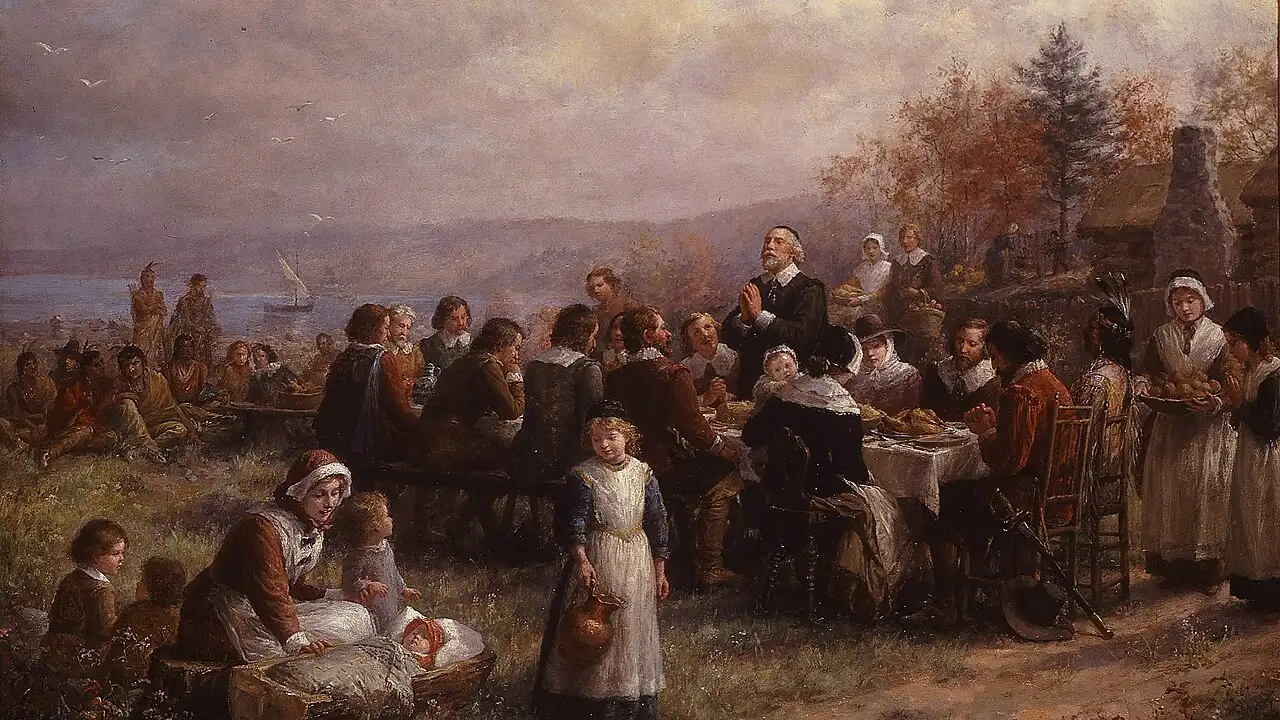
Two years later in Plymouth, Massachusetts, the Pilgrims brought in their first successful crop of corn. Wampanoag leader Massasoit and about ninety Wampanoag men joined the fifty-three surviving colonists for a three-day harvest gathering.
3
Becoming a National Holiday
For decades, writer Sarah Josepha Hale wrote letters asking presidents for one shared Thanksgiving date. In 1863, President Abraham Lincoln finally proclaimed a national day of thanks each November.
1. Who wrote letters for years asking presidents to make Thanksgiving a national holiday?
2. Where in Virginia did English settlers hold an early prayer day of thanksgiving in 1619?
🤯 Mind-Blowing Fact • Grade 3
Sarah Josepha Hale, who campaigned for thirty-six years to create a national Thanksgiving holiday, also wrote the famous nursery rhyme 'Mary Had a Little Lamb'!
✨ Word Sparks (Grade 3 Glossary)
Tap 🔊 to hear
venison
Meat that comes from a deer
fertilizer
Nutrients added to soil to help plants grow
campaign
Organized effort working toward an important goal
🪝
What foods were actually served in 1621, and how did a magazine editor unite the country around one November Thursday?
1
Indigenous Harvest Traditions
Long before European sails appeared on the Atlantic horizon, Indigenous peoples across North America celebrated seasonal harvests with music, games, and gratitude. Among the Wampanoag of New England, giving thanks for water, forests, and crops happened throughout every season of the year.
2
Early Virginia and Plymouth Gatherings
In December 1619, thirty-eight English colonists landed at Berkeley Hundred in Virginia and pledged an annual day of prayerful thanksgiving—without a big feast. Two autumns later in 1621, Plymouth colonists celebrated their first harvest after Tisquantum, a Patuxet man, taught them to plant corn with fish .
3
What Was on the 1621 Table?
Sachem Ousamequin, known as Massasoit, arrived with ninety Wampanoag men carrying five deer to roast over open fires. Together they ate , wild waterfowl, flint corn porridge, beans, squash, and shellfish.
4
Sarah Hale's Letter Campaign
Different states celebrated thanksgiving on different days until writer Sarah Josepha Hale campaigned for thirty-six years. In October 1863, President Abraham Lincoln declared a national Thanksgiving to help unite Americans, and Congress set the fourth Thursday of November in 1941.
1. What meat did Massasoit and the Wampanoag men bring to share at the 1621 gathering?
2. How did Tisquantum help the Plymouth colonists grow a strong corn crop?
🤯 Mind-Blowing Fact • Grade 4
Only one brief paragraph written by Plymouth colonist Edward Winslow in December 1621 survives as a firsthand eyewitness description of that famous three-day autumn harvest!
✨ Word Sparks (Grade 4 Glossary)
Tap 🔊 to hear
sachem
A respected paramount leader of Algonquian nations
diplomacy
Building peaceful agreements and alliances between groups
charter
An official written document granting rights and rules
🪝
Why does American Thanksgiving trace its roots to Indigenous traditions, a Virginia river landing, a New England alliance, and a Civil War proclamation?
1
Deep Roots of Seasonal Gratitude
Step onto the frosty banks of Virginia's James River on December 4, 1619, where Captain John Woodlief knelt with fellow passengers of the ship Margaret at Berkeley Hundred. Their instructed that the date of their safe arrival should be kept yearly as a solemn day of thanksgiving, marking one of the earliest recorded English thanksgiving observances in North America alongside centuries-old Indigenous harvest ceremonies.
2
Diplomacy and Survival in 1621 Plymouth
Farther north in Plymouth Colony, half of the Mayflower passengers had perished during the brutal winter of 1620–1621. Survival depended on a diplomatic treaty forged with Ousamequin (Massasoit), paramount of the Wampanoag confederacy, and agricultural guidance from Tisquantum, who demonstrated companion planting of maize, climbing beans, and broad-leafed squash—the 'Three Sisters.'
3
Primary Clues from Plymouth
Only two eyewitness accounts describe the autumn 1621 event, including a short letter by colonist Edward Winslow. Winslow recorded that Governor William Bradford sent four men 'fowling' for wild ducks, geese, and possibly wild turkeys, while ninety Wampanoag guests arrived with five deer for three days of outdoor feasting and skill games.
4
Forging One National Date
Presidents George Washington, John Adams, and James Madison issued occasional thanksgiving proclamations, yet states chose separate autumn dates. Magazine editor Sarah Josepha Hale wrote tirelessly to five presidents until Abraham Lincoln issued his October 3, 1863 proclamation amid the Civil War, and in December 1941 Congress permanently anchored the federal holiday on November's fourth Thursday.
1. Which three crops formed the 'Three Sisters' agricultural system shared by Indigenous farmers?
2. In what year did Congress pass a law permanently fixing Thanksgiving on the fourth Thursday of November?
🤯 Mind-Blowing Fact • Grade 5
On October 3, 1789, President George Washington issued the very first U.S. presidential Thanksgiving proclamation to give thanks for the newly ratified Constitution!
✨ Word Sparks (Grade 5 Glossary)
Tap 🔊 to hear
primary source
Firsthand historical record written during the event
mutual-defense
An agreement where allies protect each other
sovereignty
The authority of a nation to govern itself
🪝
How do primary historical letters, Indigenous perspectives, and nineteenth-century civic leadership reveal the full story behind America's Thanksgiving holiday?
1
Converging Traditions of Giving Thanks
Picture smoky woodfires drifting over Plymouth's timber cottages in autumn 1621 while wild geese honk overhead along the Cape Cod flyway. Long before European colonization, Eastern Woodland nations—including the Wampanoag in New England and the Powhatan paramountcy in Virginia—observed recurring ceremonies honoring fresh water, wild berries, green corn, and autumn harvests. European newcomers brought two distinct traditions of their own: solemn days of fasting and prayer after safe voyages, such as the December 4, 1619 service at Berkeley Hundred in Charles City County, Virginia, and lively rural English harvest festivals.
2
Alliance and Ecology at Patuxet
When the Mayflower anchored in late 1620, colonists built Plymouth atop Patuxet, a Wampanoag village devastated years earlier by European-introduced epidemics. Facing regional rivals, Wampanoag Sachem Ousamequin negotiated a treaty with Plymouth in March 1621. Tisquantum, a Patuxet survivor who spoke English after years of captivity abroad, taught the settlers to mound native flint corn fertilized with river herring alongside nitrogen-fixing beans and moisture-retaining squash.
3
Reading the Primary Record
Historians reconstruct the autumn 1621 gathering primarily from Edward Winslow's 1622 book Mourt's Relation and William Bradford's later history Of Plymouth Plantation. Neither author called the three-day harvest celebration 'Thanksgiving.' Winslow noted that ninety Wampanoag men outnumbered the fifty-three English survivors nearly two to one, contributing five venison carcasses to join roasted waterfowl, eels, clams, cornmeal samp, and wild plums.
4
Lincoln, Hale, and National Unification
During the American Revolution, the Continental Congress declared national days of thanksgiving in 1777 after the Battle of Saratoga, and George Washington issued the first presidential proclamation on October 3, 1789. However, nationwide observance remained irregular until author Sarah Josepha Hale petitioned governors and presidents for thirty-six years. Persuaded by Hale's September 1863 letter just months after Gettysburg, Abraham Lincoln proclaimed the final Thursday of November a national day to 'heal the wounds of the nation.'
5
Modern Reflection and Shared Civic Memory
In December 1941, Congress passed a joint resolution establishing the fourth Thursday of November as the permanent federal date. Today, millions of Americans gather to celebrate gratitude and service, while many Native Americans also honor the history, resilience, and enduring of Indigenous nations.