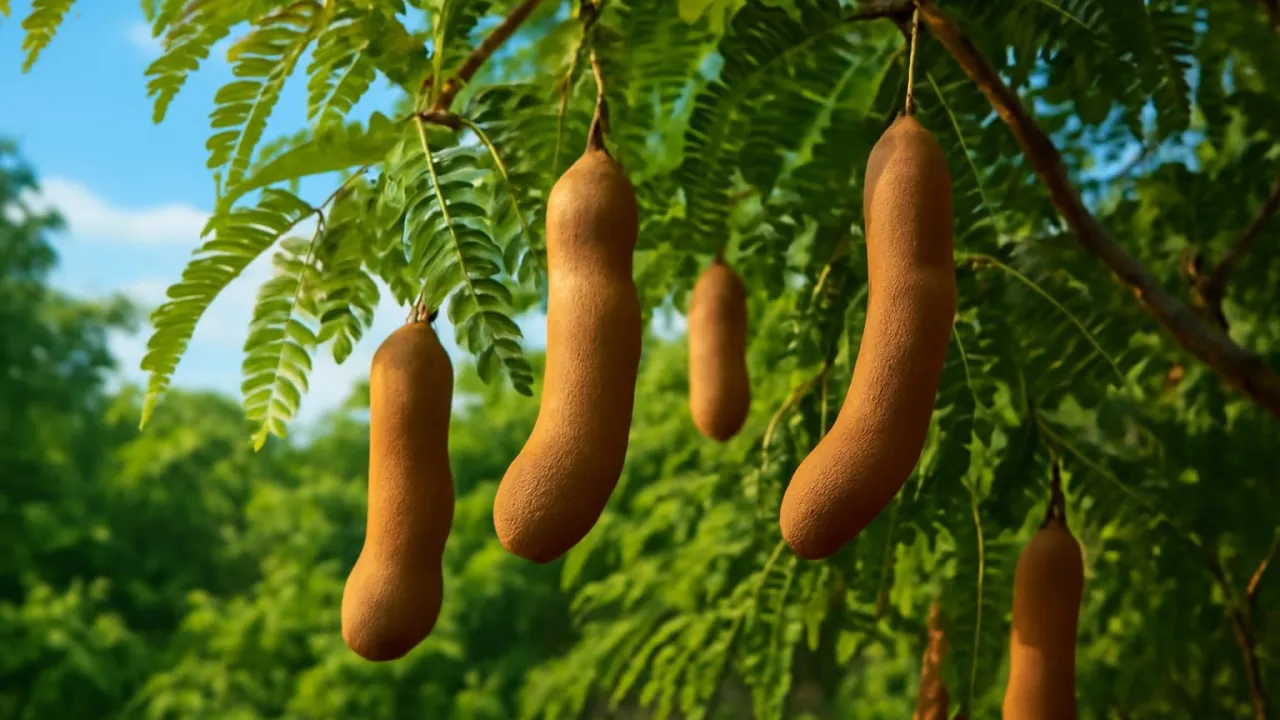
Tamarind pods harden to protect seeds until animals help spread them far away.
✨ Word Sparks (Grade 3 Glossary)
Tap 🔊 to hear
pollination
When pollen moves to help make seeds
pulp
Soft, juicy part inside fruit
adaptation
A change that helps plants survive
🪝
Did you know tamarind fruit grows inside hard pods that protect it?
1
Tamarind Tree and Habitat
The tamarind tree thrives in tropical climates with warm weather and sunlight. It can grow up to eighty feet tall, with dense green leaves. The tree produces long brown pods that protect the fruit inside. These pods help the fruit survive until it is ripe.
2
Fruit Features and Flavor
Inside each pod, the tamarind fruit has a sticky that tastes tangy and sweet. This flavor comes from natural acids and sugars working together. Animals and humans enjoy eating the fruit because of its unique taste. The sticky pulp also helps the seeds stick to the ground for growth.
3
Pollination and Growth
Tamarind flowers attract pollinators like bees and butterflies with their bright colors. helps the tree produce seeds inside the pods. After pollination, the pods grow and harden to protect the seeds. This helps the tree survive in its environment.
4
Ecosystem Role
Tamarind trees provide food and shelter for many animals in tropical forests. Birds, monkeys, and insects rely on the fruit and leaves for nourishment. The tree also helps improve soil by adding nutrients when leaves fall. This makes tamarind important in its ecosystem.
Tamarind trees form important partnerships with animals that help spread their seeds far across tropical forests.
✨ Word Sparks (Grade 4 Glossary)
Tap 🔊 to hear
symbiotic
A helpful relationship between two living things
dispersal
The spreading of seeds to new places
pollination
Transfer of pollen to make seeds grow
🪝
How does the tamarind tree help animals and people in tropical forests?
1
Tamarind's Tropical Home
Tamarind trees grow best in tropical regions with warm temperatures and plenty of sunlight, which support their growth. These trees can reach heights of up to eighty feet, allowing them to compete for sunlight in dense forests. Their brown pods develop after by bees and butterflies, protecting the seeds inside from predators and harsh weather. This adaptation ensures the seeds have a better chance to grow into new trees.
2
Fruit Flavor and Uses
The tamarind fruit inside the pods has a unique tangy and sweet flavor that people use in many dishes and drinks worldwide. This flavor results from natural acids and sugars that balance each other, making tamarind popular in cooking and traditional medicine. The sticky pulp clings to seeds, helping them attach to soil when animals drop the pods. This process aids seed , which is crucial for the tree’s reproduction.
3
Ecosystem Role and Relationships
Tamarind trees provide food and shelter for various animals, including birds, monkeys, and insects, which rely on the fruit and leaves for nutrition. These animals help spread tamarind seeds by carrying pods to new locations, creating a relationship between the tree and wildlife. Additionally, fallen leaves enrich the soil with nutrients, supporting other plants in the ecosystem. Human cultivation of tamarind also impacts agriculture by providing a valuable fruit crop.
4
Geographic Distribution
Originally native to tropical Africa, tamarind trees have spread to Asia, the Caribbean, and parts of Latin America due to human cultivation. They thrive in warm climates with well-drained soils and moderate rainfall. Tamarind’s adaptability to different tropical environments makes it an important fruit tree globally. Its widespread growth supports diverse ecosystems and local economies.
1. What helps tamarind seeds spread to new places?
2. Where did tamarind originally grow?
🤯 Mind-Blowing Fact • Grade 5
Tamarind trees can live over 200 years and produce fruit that supports entire ecosystems and human cultures.
✨ Word Sparks (Grade 5 Glossary)
Tap 🔊 to hear
Fabaceae
The plant family that includes beans and tamarind
pinnate
Leaves shaped like feathers with many small leaflets
mutualistic
A relationship where both species benefit
🪝
What makes the tamarind tree a vital species in tropical ecosystems and human culture?
1
Scientific Classification and Origin
Tamarindus indica belongs to the family, commonly known as the legume family, which includes many important trees and shrubs. Native to tropical Africa, tamarind has been cultivated for thousands of years and spread across Asia, the Caribbean, and Latin America. Its ability to thrive in diverse tropical environments demonstrates remarkable ecological adaptability. The tree’s long lifespan and large size make it a dominant species in many tropical forests.
2
Physiological Adaptations and Fruit Mechanics
Tamarind trees grow up to eighty feet tall with leaves that reduce water loss in hot climates. Their flowers attract pollinators such as bees and butterflies, facilitating cross-pollination essential for genetic diversity. The fruit develops inside hard, brown pods that protect seeds from predation and environmental stress. The sticky pulp inside contains organic acids like tartaric acid, which gives tamarind its characteristic tangy flavor and aids in seed dispersal by enticing animals.
3
Ecological Importance and Seed Dispersal
Tamarind trees play a critical role in tropical ecosystems by providing food and habitat for various animals including birds, primates, and insects. These animals act as seed dispersers, carrying tamarind pods away from the parent tree, which reduces competition and promotes forest regeneration. Additionally, fallen tamarind leaves contribute organic matter that enriches soil fertility, supporting plant biodiversity. This relationship enhances ecosystem stability and productivity.
4
Conservation and Human Uses
While tamarind is widely cultivated for its edible fruit, habitat loss due to deforestation threatens wild populations in some regions. Conservation efforts focus on sustainable harvesting and protecting natural forests. Tamarind fruit is used extensively in culinary traditions worldwide, from chutneys and sauces to beverages, and also has applications in traditional medicine. Its economic value supports local communities and promotes agroforestry practices that conserve biodiversity.
5
Quantitative Comparisons and Growth Conditions
Tamarind trees can live for over 200 years and reach heights up to 80 feet (24 meters), with trunks measuring several feet in diameter. They prefer well-drained soils with moderate rainfall between 30 and 50 inches (750–1,270 mm) annually and full sun exposure. The fruit matures in about six to nine months after flowering and contains seeds averaging 1 to 2 centimeters in length. These precise growth parameters allow tamarind to flourish in tropical climates worldwide.