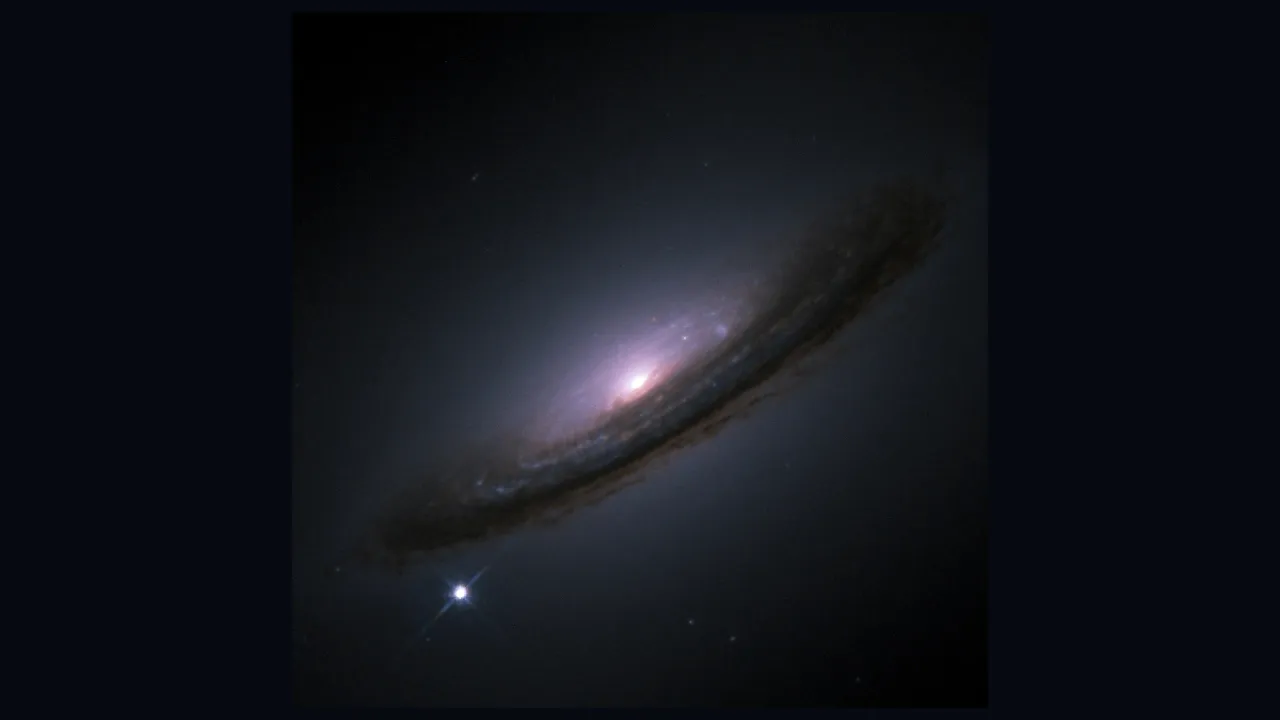
1. Can our own yellow Sun ever explode as a supernova?
2. What amazing gift do supernova explosions scatter across space?
🤯 Mind-Blowing Fact • Grade 2
Shockwaves from the Crab Nebula supernova are STILL racing outward nearly 1,000 years later at over three million miles per hour!
✨ Word Sparks (Grade 2 Glossary)
Tap 🔊 to hear
guest star
Ancient name for a sudden bright supernova
shockwave
Fast-moving blast wave pushing outward through space
nebula
Giant glowing cloud of space gas and dust
🪝
What did people in the year 1054 think when a brand-new 'guest star' shone brightly in broad daylight?
1
The Daylight Guest Star
Nearly a thousand years ago in July 1054, skywatchers in China, Japan, the Middle East, and Native American lands gasped! A dazzling '' popped out in Taurus, shining so brightly people saw it in broad daylight for 23 days. Today, telescopes pointing at that exact spot see the colorful, tangled Crab !
2
Out of Fuel in a Split Second
Giant stars weighing more than eight Suns burn hot and fast. Once their center turns to solid iron, fusion stops instantly! The star's outer layers slam inward, bounce off the ultra-hard core, and blast outward at millions of miles per hour.
3
Cosmic Recycling
Expanding supernova clouds stir nearby space gas, helping brand-new stars and rocky planets form!
1. What glowing cloud sits today in the spot where people saw a daylight supernova in 1054?
2. Which heavy metal builds up in a giant star's core right before it collapses and explodes?
🤯 Mind-Blowing Fact • Grade 3
As astronomer Carl Sagan famously shared, the nitrogen in our DNA, the calcium in our teeth, and the iron in our blood were all forged inside collapsing stars—we are made of star-stuff!
✨ Word Sparks (Grade 3 Glossary)
Tap 🔊 to hear
supergiant
Monster star many times heavier than our Sun
implosion
Violent inward collapse before an outward blast
remnant
Glowing cloud or core left after explosion
🪝
Why does building an iron core spell instant doom for even the biggest supergiant star?
1
Layers Like a Cosmic Onion
Near the end of its life, a massive star looks like a giant fiery onion inside! Hydrogen fuses in an outer shell, followed by deeper layers of helium, carbon, neon, oxygen, and silicon—all surrounding a dead ball of iron ash at the very center.
2
The One-Second Implosion
Squeezing lighter atoms releases heat that holds the star up, whereas squeezing iron actually SOAKS UP energy! Once that iron core passes 1.44 solar masses, it collapses inward in a fraction of a second. Rebounding shockwaves blow the entire star apart at up to 20,000 miles per second!
3
Two Ways to Go Boom
Besides giant collapsing , a second kind of supernova—Type Ia—erupts when a tiny white dwarf steals too much gas from a partner star and blows itself completely to smithereens!
4
What Stays Behind
While a white dwarf explosion leaves empty space inside an expanding cloud, a massive star's blast leaves behind either a city-sized neutron star or a black hole.
1. Why does fusion stop helping hold up a star once its core turns to iron?
2. What are the two possible compact objects left behind after a massive supergiant explodes?
🤯 Mind-Blowing Fact • Grade 4
Every week, robotic sky surveys like the Zwicky Transient Facility and Vera C. Rubin Observatory spot hundreds of new supernovae popping off in distant galaxies!
✨ Word Sparks (Grade 4 Glossary)
Tap 🔊 to hear
isotopes
Versions of an element with different neutron counts
Large Magellanic Cloud
Companion dwarf galaxy orbiting our Milky Way
spectra
Rainbow light barcodes revealing chemical elements
🪝
Why did ghostly underground detectors on Earth catch Supernova 1987A three hours BEFORE any telescope saw its flash of light?
1
Thermonuclear vs. Core-Collapse
Astronomers classify supernovae by their chemical fingerprints (): Type Ia blasts show zero hydrogen because they arise from bare carbon-oxygen white dwarfs detonating entirely, whereas Type II (and stripped Type Ib/Ic) blasts mark the violent core collapse of short-lived stars exceeding eight solar masses.
2
Ninety-Nine Percent Neutrinos!
Surprisingly, visible starlight makes up less than one percent of a core-collapse supernova's true energy! Ninety-nine percent blasts outward as an invisible tsunami of ghostly particles called neutrinos, forged when protons and electrons crush into neutrons. Reviving the stalled shockwave, those neutrinos help rip the star apart.
3
The Neutrino Early Warning of SN 1987A
On February 23, 1987, a blue supergiant exploded 168,000 light-years away in the —the closest naked-eye supernova since Johannes Kepler's in 1604! Underground water tanks in Japan, the U.S., and Russia caught two dozen neutrinos three full hours BEFORE light escaped, because neutrinos zipped straight through the star's outer layers while light waited for the shockwave to break the surface!
4
Triggering Our Solar System's Birth
Meteorite prove a nearby supernova shockwave compressed our Sun's ancient gas cloud 4.6 billion years ago, jump-starting the birth of Earth!
1. What carries away 99 percent of the total energy in a core-collapse supernova?
2. Why did neutrinos from Supernova 1987A reach Earth three hours ahead of its visible flash?
🤯 Mind-Blowing Fact • Grade 5
Astrophysicists invented a playful unit called a 'foe'—short for '[ten to the] Fifty-One Ergs' ($10^{44}$ joules)—specifically to measure the kinetic punch of one supernova!
✨ Word Sparks (Grade 5 Glossary)
Tap 🔊 to hear
photodisintegration
Shattering atomic nuclei with intense gamma rays
nickel-56
Radioactive isotope powering a supernova's multi-week glow
parallax
Apparent shift proving how far away stars sit
🪝
How did historic 'new stars' watched by Tycho Brahe and Johannes Kepler shatter ancient beliefs that the heavens never change?
1
Shattering Crystal Spheres: SN 1572 & SN 1604
For nearly two thousand years, Aristotelian cosmology taught that the starry heavens beyond the Moon were eternal and unchanging. When Danish astronomer Tycho Brahe measured zero for the blazing 'stella nova' of 1572 in Cassiopeia—followed by Johannes Kepler's 1604 supernova in Ophiuchus—they proved stars truly die far beyond the planets. Yet our Milky Way hasn't hosted a naked-eye supernova since 1604, as thick galactic dust hides roughly two explosions per century.
2
Photodisintegration and Neutrino-Driven Revival
Inside a $>8 M_\odot$ star, silicon burning builds a degenerate iron-56 core in barely twenty-four hours! Once core temperatures hit $5 \times 10^9$ K, high-energy gamma photons shatter iron nuclei () alongside electron capture, triggering a 0.25-second free-fall implosion. Rebounding off nuclear-density matter at $70,000 \text{ km/s}$, the outward shock initially stalls—until turbulent 3D neutrino heating revives the blast ($\sim 10^{44}$ joules of kinetic energy, or 1 'foe'!).
3
Radioactive Nickel-56 Glow
Why does a supernova blaze brighter than billions of stars for weeks instead of fading as its fireball expands and cools? Explosive silicon fusion right behind the shockwave synthesizes enormous quantities of doubly magic, unstable , whose sequential radioactive beta-plus decay into cobalt-56 (6-day half-life) and stable iron-56 (77-day half-life) continuously heats the expanding ejecta with trapped gamma rays!
4
James Webb Discovers the Missing Neutron Star
For 37 years following Supernova 1987A's historic neutrino burst, thick cryogenic dust clouds hid whatever compact remnant lay at its heart. In February 2024, medium-resolution infrared spectrographs aboard the James Webb Space Telescope finally pierced that dust shroud, pinpointing narrow emission lines of five-times-ionized argon right at the explosion center—unmistakably illuminated by a hot newborn cooling neutron star!
5
Galactic Cosmic-Ray Accelerators
Bouncing repeatedly across magnetic shock fronts via diffusive Fermi acceleration inside remnants like Cassiopeia A and Tycho's Supernova, protons reach relativistic energies while dispersing newly forged oxygen, silicon, calcium, and iron into molecular clouds that birth next-generation planetary systems.