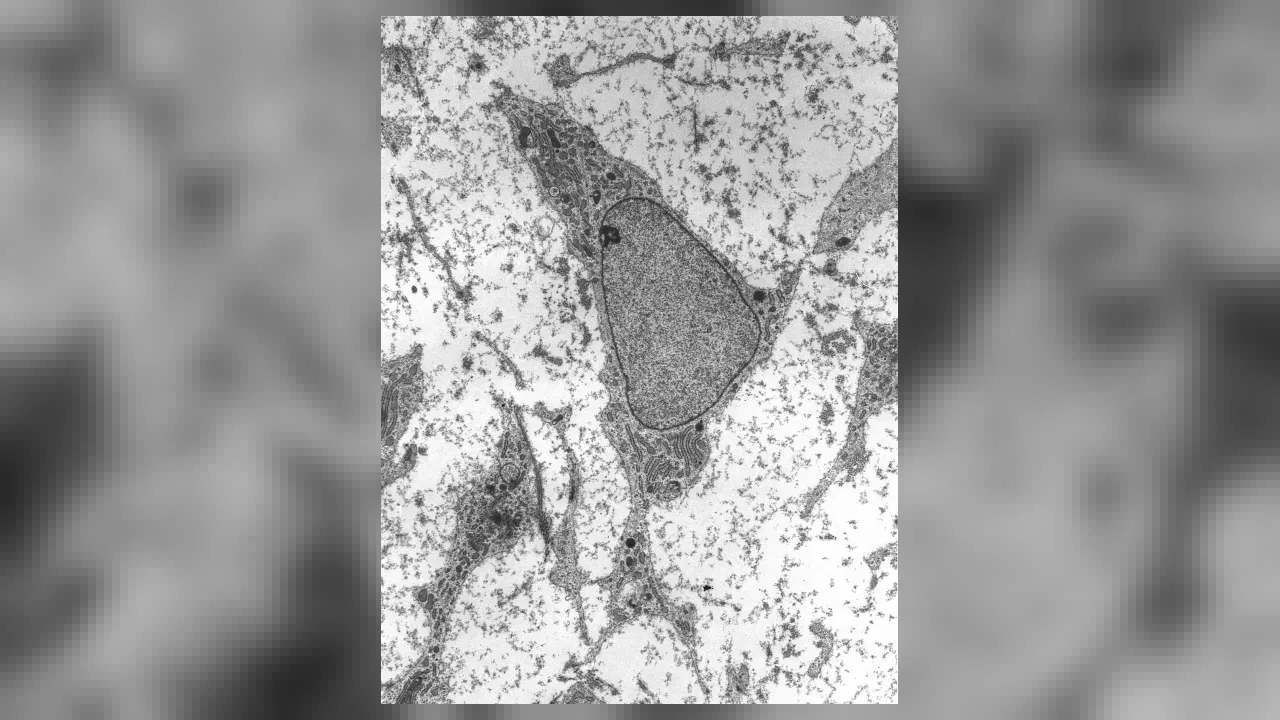
1. What makes a stem cell different from regular body cells?
2. Where do many blood-making stem cells hide inside you?
🤯 Mind-Blowing Fact • Grade 2
Scientists won a Nobel Prize for discovering how to rewind ordinary adult skin cells back into master stem cells!
✨ Word Sparks (Grade 2 Glossary)
Tap 🔊 to hear
Transform
To change completely into a new form
Specialized
Trained to do one specific helpful job
Tissue
A group of matching cells working together
🪝
How can your body build over two hundred different kinds of cells from one starting team?
1
Starter Cells With Superpowers
Imagine a plain lump of clay that can be shaped into a cup, a star, or a toy car! Stem cells work like living clay inside your body. Unlike muscle or nerve cells that already picked one job, stem cells have not chosen yet.
2
Two Special Tricks
Every stem cell knows two amazing tricks. First, it can split to make more stem cells so your body never runs out. Second, when chemical signals arrive, it can into a worker like a red blood cell or bone builder!
3
Hidden Repair Crews
Even grown-ups carry adult stem cells tucked inside bone marrow, skin, and muscles. Whenever you exercise hard or scrape an elbow, those quiet repair crews wake up and build fresh replacement .
1. Why are stem cells compared to a plain lump of modeling clay?
2. How does your body avoid running out of stem cells?
🤯 Mind-Blowing Fact • Grade 3
Tiny freshwater animals called planarian flatworms have so many powerful stem cells that a tiny piece can regrow an entire new head in a week!
✨ Word Sparks (Grade 3 Glossary)
Tap 🔊 to hear
Self-renewal
Dividing to make more matching stem cells
Differentiation
Process where stem cells become specialized workers
Pluripotent
Able to become any body cell type
🪝
How does an undecided stem cell know whether to turn into a beating heart cell or a sturdy bone cell?
1
Over Two Hundred Jobs
Picture a school full of students choosing future careers! Your human body runs on more than two hundred specialized cell types, from stretchy muscle cells to branching brain neurons. Every single one of them originally came from stem cells.
2
Self-Renewal and Differentiation
Biologists identify stem cells by two signature abilities. means a stem cell divides to make fresh copies of itself for years. happens when chemical messages tell a stem cell to switch on specific genes and become a worker cell.
3
Early Builders vs. Tissue Crews
Before birth, early embryonic stem cells are , meaning they can become any cell type in the whole body! Later on, kids and adults rely on tissue-specific stem cells, which handle neighborhood repairs inside places like skin and bone marrow.
4
Helping Patients Heal
Doctors have used healthy bone marrow stem cell transplants for decades to help patients rebuild strong blood and immune systems. Today, scientists are studying ways to grow replacement eye, heart, and cartilage tissues safely in labs!
1. What do scientists call the process of a stem cell turning into a specialized worker cell?
2. What does it mean when a stem cell is pluripotent?
🤯 Mind-Blowing Fact • Grade 4
One tiny thimbleful of healthy red bone marrow holds stem cells capable of rebuilding a person's entire blood and immune supply!
✨ Word Sparks (Grade 4 Glossary)
Tap 🔊 to hear
Multipotent
Able to become several related cell types
Niche
Protective home pocket keeping stem cells healthy
Hematopoietic
Relating to stem cells that build blood
🪝
If every cell in your body carries the exact same DNA book, why can stem cells still transform while skin cells stay skin cells?
1
Same Library, Open Chapters
Open a nerve cell and a bone cell, and you will find the exact same twenty thousand genes inside both nuclei. Mature worker cells lock away most chapters of that DNA library, reading only the instructions for their one career. Stem cells keep far more chapters unlocked, waiting for neighborhood chemical cues before committing through differentiation.
2
Levels of Stem Cell Power
Not all stem cells hold identical range. Early pluripotent stem cells can generate every tissue from beating heart muscle to insulin-making pancreas cells. By contrast, adult stem cells living in cozy pockets called are usually . For example, stem cells inside red bone marrow generate red blood cells, platelets, and white blood cells, but they do not normally build brain tissue.
3
Asymmetric Division
How do stem cell avoid emptying out over eighty years of human life? Often, a stem cell divides asymmetrically: one daughter cell stays nestled in the niche as a fresh stem cell, while its twin steps out to multiply and differentiate into millions of replacement tissue cells.
4
Rewinding the Cellular Clock
In 2006, Japanese researcher Shinya Yamanaka amazed the scientific world by adding just four gene-regulating proteins to ordinary adult skin cells. Those mature cells rewound into induced pluripotent stem cells, giving doctors a way to study diseases in petri dishes using a patient's own cells!
1. What do hematopoietic stem cells in red bone marrow build?
2. What did Shinya Yamanaka discover in 2006?
🤯 Mind-Blowing Fact • Grade 5
Lab-grown stem cells actually feel their surroundings—placing multipotent marrow stem cells on a rigid bone-stiff surface nudges them to become bone cells, while a squishy brain-soft gel nudges them toward nerve cells!
✨ Word Sparks (Grade 5 Glossary)
Tap 🔊 to hear
Totipotent
Able to form every body and support cell
iPSC
Adult cell reprogrammed back into pluripotent state
Organoid
Tiny 3D lab-grown model of an organ
🪝
How did scientists prove that a mature skin cell's fate isn't permanent, unlocking miniature 'organoids' grown in laboratory dishes?
1
The Hierarchy of Cellular Potency
Every specialized cell in your body—from photoreceptor rods in the retina to osteoblasts sculpting bone—traces its ancestry to undifferentiated stem cells. Biologists classify stem cells along a hierarchy of potency. A fertilized zygote is , capable of generating an entire organism plus placental support tissues. Days later, inner blastocyst cells become pluripotent, able to differentiate into any of the three embryonic germ layers—ectoderm, mesoderm, and endoderm—that form over two hundred somatic cell types.
2
Adult Niches and Homeostasis
Throughout childhood and adulthood, multipotent stem cells reside within specialized microenvironments called niches that balance quiescence with rapid repair. Inside intestinal crypts, fast-cycling stem cells resurface the gut lining twice a week; inside red bone marrow, hematopoietic stem cells manufacture roughly two hundred billion red blood cells plus billions of leukocytes and platelets daily through asymmetric self-renewal.
3
Epigenetic Locks and Signals
When surrounding cells release signaling molecules such as growth factors, stem cells remodel their chromatin. Epigenetic tags silence unneeded gene networks while activating transcription factors that guide differentiation—even sensing physical stiffness, as mesenchymal stem cells grown on soft gels favor nerve pathways whereas stiff bone-like surfaces nudge them toward bone formation!
4
Till, McCulloch, and Yamanaka's Breakthroughs
Stem cell science took quantitative shape in 1961 when Canadian researchers James Till and Ernest McCulloch proved single bone marrow cells could regenerate entire blood lineages. Forty-five years later, Shinya Yamanaka introduced four transcription factors—Oct4, Sox2, Klf4, and c-Myc—into mature fibroblasts, erasing their epigenetic locks to create induced pluripotent stem cells () and earning a 2012 Nobel Prize.
5
Organoids and Regenerative Medicine
Today, bioengineers coax patient-derived into millimeter-sized 3D '' that mimic miniature beating hearts, kidneys, or retinas in dishes. These living models let scientists test medicines safely and pioneer cell therapies aimed at repairing damaged corneas, spinal cords, and insulin-producing pancreatic islets.