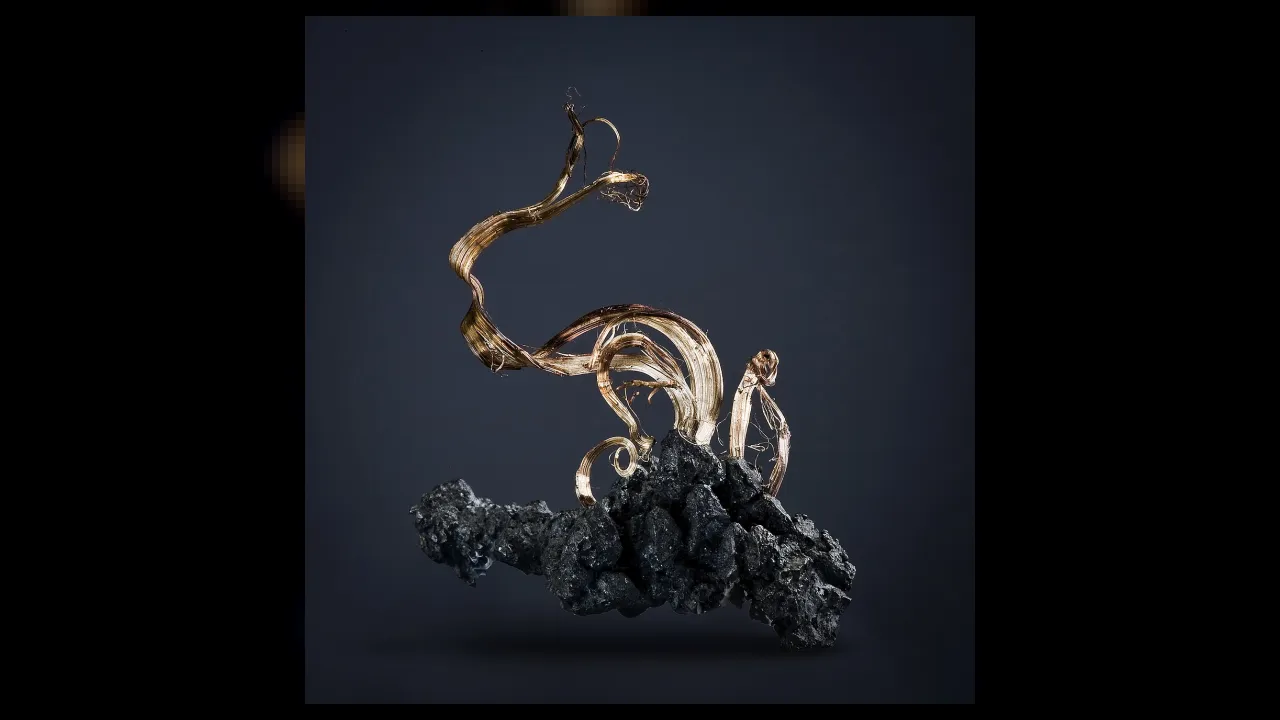
1. What cool natural shape can pure silver grow into inside rock pockets?
2. Why is a thin layer of silver put on the back of fine glass mirrors?
🤯 Mind-Blowing Fact • Grade 2
In 1859 in Nevada, prospectors realized the annoying 'heavy blue mud' clogging their gold pans was actually the Comstock Lode—America's richest silver discovery!
✨ Word Sparks (Grade 2 Glossary)
Tap 🔊 to hear
acanthite
A dark gray silver-and-sulfur ore mineral
galena
Heavy silver-gray cubes of lead-silver ore
solar panel
Rooftop plate that turns sunlight into electricity
🪝
Why does a shiny silver spoon turn dark gray over time while gold stays bright?
1
Tarnish: A Dark Disguise
Leave a bright silver coin out in the air for months and a dark gray or black coat creeps across it. Unlike gold, silver reacts with tiny traces of sulfur gas in the air—forming a dark film called tarnish!
2
Treasure Disguised as Mud
Because silver loves sulfur so much, most silver underground hides inside dark gray sulfide minerals like or shiny lead cubes called . Early Nevada gold miners threw away tons of heavy 'blue-gray mud' before realizing it was super-rich silver ore!
3
Champion of Electricity
Out of every metal on Earth, silver carries electricity and heat the fastest—powering on sunny rooftops everywhere!
1. Why does bright silver slowly turn dark gray or black (tarnish) in open air?
2. Which modern clean-energy invention uses silver paste to carry electricity fast?
🤯 Mind-Blowing Fact • Grade 3
The South American country of Argentina gets its name directly from 'argentum,' the Latin word for silver!
✨ Word Sparks (Grade 3 Glossary)
Tap 🔊 to hear
argentum
The ancient Latin word meaning shining silver
by-product
Extra useful material recovered while making another
antibacterial
Helping stop harmful germs and bacteria
🪝
How did mountains of silver ore shape world coins, photography, and clean electronics?
1
Symbol Ag From Ancient Latin
Check the periodic table for silver and you won't see 'Si'—you will see 'Ag,' short for the Latin word ',' meaning 'shining white'! In fact, South America's country Argentina ('Land of Silver') was named by explorers searching for legendary Andean silver mountains.
2
Primary Ores and By-Product Partners
Occasionally geologists find stunning fern-shaped branches or curling wires of pure native silver (hardness 2.5 to 3). Far more often, silver is extracted from dark silver sulfide (acanthite, Ag2S) or recovered as a valuable partner when smelting copper, gold, zinc, and lead ores.
3
Capturing History in Photographs
Before digital cameras existed, every black-and-white photograph and movie film strip relied on microscopic crystals of silver salts that darkened instantly wherever light touched them!
4
Germ-Fighting Super Metal
Tiny silver ions naturally block harmful bacteria from growing, so hospitals weave microscopic silver into special wound bandages and surgical tools.
1. Why is silver's chemical symbol 'Ag' on the periodic table?
2. How did silver compounds help record history before digital cameras were invented?
🤯 Mind-Blowing Fact • Grade 4
Nevada earned its official state nickname—'The Silver State'—after miners discovered the giant Comstock Lode silver-and-gold veins beneath Virginia City in 1859!
✨ Word Sparks (Grade 4 Glossary)
Tap 🔊 to hear
conductivity
How easily electricity or heat flows through
hydrothermal vein
Mineral-filled rock crack left by hot water
reflectivity
Percentage of incoming light bounced cleanly back
🪝
Why are more than two-thirds of Earth's silver supplies actually mined from copper, lead, and zinc mines?
1
What Makes a Rock an 'Ore'?
In Earth science and natural-resource studies, 'ore' has a precise meaning: any natural rock or mineral deposit containing enough valuable metal to be mined profitably and responsibly! While pure wire silver specimens from Kongsberg, Norway, or Michigan's Keweenaw Peninsula dazzle museum visitors, pure silver mines supply less than a third of world demand. Over seventy percent of global silver rides along inside hydrothermal galena (PbS), sphalerite (ZnS), and chalcopyrite (CuFeS2) veins!
2
Thermal and Electrical Record-Holder
Compare every element on the periodic table and silver stands number one in three categories at once: highest electrical , highest thermal (heat) conductivity, and highest optical of white light!
3
Why Power Lines Use Copper Instead
If silver conducts electricity slightly better than copper, why aren't overhead street wires made of silver? Because silver is roughly eighty times rarer and costlier in Earth's crust! Engineers save silver for high-efficiency solar cells, electric-vehicle switches, and touch-screen circuits.
4
Potosí and the Comstock Lode
Massive hydrothermal silver deposits—like Bolivia's towering Cerro Rico at Potosí and Nevada's 1859 Comstock Lode—drove global trade networks and inspired modern underground timber-framing engineering. Today urban recycling recovers tons of pure silver from retired electronics, solar panels, and hospital X-ray films to conserve Earth's mineral resources.
1. How is most of the world's new silver obtained today?
2. Which U.S. state is nicknamed 'The Silver State' because of its historic 1859 Comstock Lode?
🤯 Mind-Blowing Fact • Grade 5
Aboard the International Space Station, NASA purifies astronauts' recycled drinking water using trace silver ions instead of smelly chlorine!
✨ Word Sparks (Grade 5 Glossary)
Tap 🔊 to hear
epithermal
Shallow hot-water mineral veins near volcanoes
extrude
To push material outward through an opening
cupellation
High-heat refining that separates silver from lead
🪝
What solid-state atomic migration pushes curly metallic silver wires straight out of solid sulfide crystals like toothpaste from a tube?
1
Solid-State Extrusion of Wire Silver
Examine a classic museum specimen from Kongsberg, Norway, or Freiberg, Germany, and thick striated curls of metallic silver appear to sprout directly out of dark gray acanthite (Ag2S) crystals! In 2019, synchrotron X-ray studies solved this centuries-old puzzle: above 177 degrees Celsius, silver sulfide adopts a cubic 'argentite' structure in which sulfur anions form a rigid framework while silver cations (Ag+) glide through the solid crystal almost like a liquid! When sulfur-stripping hydrothermal fluids touch the crystal surface, mobile Ag+ ions race through the lattice and outward as bundled metallic whiskers—growing from the base up like hair!
2
Epithermal Bonanza Veins and Ruby Silvers
Economic geologists hunt primary silver inside shallow veins formed 100 to 1,000 meters beneath volcanic calderas across Mexico (the world's top silver-producing nation), Peru, and Bolivia. Alongside acanthite and argentiferous galena, these veins host deep-crimson sulfosalt crystals nicknamed 'ruby silvers'—pyrargyrite (Ag3SbS3) and proustite (Ag3AsS3)—which glow blood-red when backlit yet smelt into pure white metal.
3
Cupellation and Patio Amalgamation History
As early as 3000 BCE in Anatolia and later at Athens's Laurion mines—whose silver funded the Greek fleet at Salamis—metallurgists separated trace silver from molten lead via ',' blowing air across bone-ash hearths so lead oxidized into litharge while noble liquid silver gleamed untouched.
4
Photovoltaic Paste and Green Energy Demand
With room-temperature electrical resistivity of just 1.59 microhm-centimeters—the lowest of any uncooled metal—screen-printed silver conductive paste collects photo-generated electrons across billions of crystalline silicon solar cells worldwide.
5
Oligodynamic Antimicrobial Chemistry
Trace Ag+ ions bind sulfur-bearing thiol groups in bacterial cell-wall enzymes, disrupting microbial respiration at parts-per-billion concentrations inside hospital catheters and spacecraft water-recycling systems aboard the International Space Station. Meanwhile, atmospheric scientists disperse microscopic crystals of silver iodide (AgI), whose hexagonal lattice mimics natural ice crystals, to study cloud seeding and winter precipitation.