1. Which insect moves and hovers in midair most like a rescue helicopter?
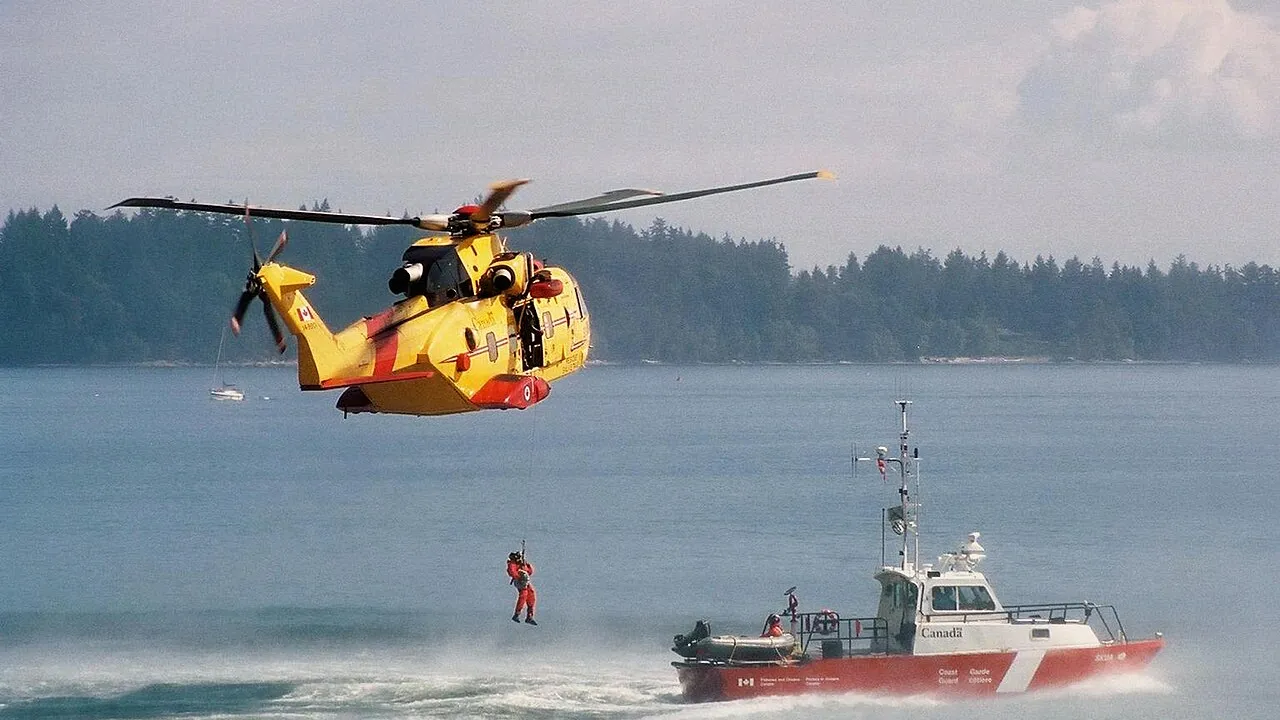
2. How does a helicopter lift someone up when trees or rocks block a landing?
🤯 Mind-Blowing Fact • Grade 2
Emergency beacon signals from hikers' pockets bounce off satellites high in space to show rescue crews where to fly!
✨ Word Sparks (Grade 2 Glossary)
Tap 🔊 to hear
cockpit
front seat area where flyers steer aircraft
hoist
a powered winch cable lifting heavy loads
intercom
headset radio linking crew members inside aircraft
🪝
Why does flying a rescue helicopter take both hands AND both feet at the exact same time?
1
Dancing With Hands and Feet
Deep inside a rocky canyon, a twisted ankle stops a hiker miles from any road. Moments later, a bright orange-and-white helicopter crests the ridge! Inside the , the aviator moves two hand sticks and two foot pedals together to hold a rock-steady hover.
2
Grid Maps and Night Vision
Finding one person in a vast forest takes smart planning. Crews fly neat back-and-forth search patterns across map grids. After sunset, special night-vision goggles turn tiny bits of starlight into bright green views of hills and rivers.
3
Teamwork on the Radio
Because the sits forward, the flyer listens closely on headset as a operator in back guides every inch: 'Easy left, hold steady!' Together they bring lost travelers safely home.
1. What helps rescue crews see mountains and rivers clearly in the dark?
2. Why does the aviator listen to the hoist operator over the headset?
🤯 Mind-Blowing Fact • Grade 3
Without a small spinning tail rotor pushing sideways at the back, Newton's laws of motion would spin a single-rotor helicopter body in circles!
✨ Word Sparks (Grade 3 Glossary)
Tap 🔊 to hear
infrared
heat energy invisible to normal human eyes
coordinates
exact latitude and longitude numbers on maps
downdraft
a sudden downward rush of mountain wind
🪝
Why is mountain air much trickier for helicopter blades to grip than air down at the beach?
1
Thin Air and Mountain Winds
High up at ten thousand feet, mountain air is much thinner than air at sea level! Because spinning rotor blades work like wings pushing air downward, thin air produces less lift. Before taking off, aviators calculate aircraft weight, fuel load, and air temperature so the helicopter has plenty of power near steep peaks.
2
Fixed-Wing Spotters and Rotorcraft Lifters
Not every search aircraft is a helicopter. Fast fixed-wing airplanes often fly wide 'creeping line' or 'expanding square' patterns across huge wilderness parks, using belly-mounted cameras to spot a campfire or warm jacket. Once the airplane pinpoints GPS , a rescue helicopter flies straight in for the pickup.
3
Mastering Three Controls at Once
Hovering near canyon walls requires remarkable coordination. One hand pulls the collective lever to tilt all rotor blades for climb, the other hand tilts the cyclic stick to glide sideways or forward, and foot pedals adjust the tail rotor so the fuselage never spins.
4
Knowing When Weather Says Wait
Courage in aviation always pairs with smart judgment. Crews study radar, icing levels, and canyon closely so every mission brings both rescuers and survivors home safely.
1. Why do helicopters have less lifting power high on tall mountains?
2. How do airplanes and helicopters often team up during big wilderness searches?
🤯 Mind-Blowing Fact • Grade 4
During a delicate 'one-skid' pinnacle rescue, a helicopter pilot balances thousands of pounds of spinning aircraft with just one metal skid touching a mountain ledge!
✨ Word Sparks (Grade 4 Glossary)
Tap 🔊 to hear
beacon
an emergency radio transmitter signaling exact location
turbulence
bumpy swirling air currents caused by wind
endurance
maximum time an aircraft flies on fuel
🪝
How does a rescue crew locate one stranded backpacker across hundreds of square miles of wilderness before a winter blizzard arrives?
1
Shrinking the Search Box With Science
When hikers or boaters vanish in remote terrain—from Virginia's rugged Shenandoah ridges to Alaska's icy glaciers—mission coordinators call Search and Rescue aviation crews. Instead of wandering the sky at random, teams shrink the search area using science. If a hiker triggers a Personal Locator , orbiting COSPAS-SARSAT satellites relay 406-megahertz radio signals to ground stations, narrowing hundreds of square miles down to a single valley.
2
FLIR Turrets and Search Geometry
Without a , aviators fly mathematical search patterns calculated from wind drift, trail slope, and the missing person's last known point. Beneath the aircraft's nose, a gimbal-stabilized Forward-Looking Infrared (FLIR) camera detects tiny temperature differences—making a ninety-eight-degree human body glow brightly against cold granite boulders or dark evergreens miles away.
3
One-Skid Landings and Precision Hoists
Reaching the survivor tests every hour of flight training. When boulders or angled scree prevent a flat touchdown, skilled helicopter aviators perform a 'toe-in' or one-skid landing, resting just the tip of one metal landing skid on a rock ledge while keeping full rotor lift engaged so hikers can climb aboard! In dense timber, the crew hovers stationary above treetops while lowering a paramedic on a 250-foot steel cable.
4
Crew Resource Management Under Pressure
Inside a noisy turbine aircraft buffeted by mountain , no one works alone. Aviators practice Crew Resource Management—cross-checking fuel , obstacle clearance, and weather ceilings with co-pilots and flight medics—turning calm teamwork into lifesaving precision.
1. How does a Forward-Looking Infrared (FLIR) camera spot a lost hiker in dense woods?
2. Why might a pilot perform a 'one-skid' landing on a mountain?
🤯 Mind-Blowing Fact • Grade 5
Spinning helicopter blades build up so much static electricity in dry air that a hoist cable must touch the ground or water first to discharge a massive spark safely!
What aerodynamic forces challenge an aviator hovering five feet from a sheer cliff at twelve thousand feet in gusting mountain winds?
1
Aerodynamics at the Edge of the Envelope
Few aviation roles demand greater aerodynamic mastery than backcountry and maritime Search and Rescue (SAR). High in alpine cirques, aviators confront 'density altitude'—where low barometric pressure and summer warmth thin the atmosphere, slashing both engine output and main-rotor lift. Simultaneously, winds spilling over jagged ridgelines curl into violent leeward rotors and downdrafts exceeding 1,500 feet per minute, requiring instantaneous, millimeter-smooth inputs on collective, cyclic, and anti-torque pedals.
2
Avoiding Vortex Ring State and Whiteout
Descent into a narrow canyon or snowy basin introduces subtle aerodynamic traps. Descending too steeply at low forward airspeed allows a helicopter to sink into its own turbulent downwash—a dangerous condition called vortex ring state—while rotor wash kicking up powder snow or desert dust can trigger instant spatial disorientation known as brownout or whiteout. Instrument-rated SAR aviators rely on synthetic-vision glass cockpits, radar , and four-axis autopilots to hold exact hover references when visual horizons vanish.
3
Satellite Telemetry and Multi-Sensor Fusion
Modern search theory blends probability mathematics with orbital engineering. When a distressed vessel or mountaineer activates an emergency locator transmitter on 406 megahertz, medium-Earth-orbit satellites compute Doppler frequency shifts and relay GPS coordinates to rescue coordination centers within minutes. Airborne crews augment these fixes with electro-optical/infrared (EO/IR) gimbals, cellular-signal direction finders, and Image-Intensifier Night Vision Goggles (NVGs) sensitive to near-infrared starlight.
4
Hoist Physics and Aeromedical Physiology
Hovering out of ground effect 200 feet above swaying Sitka spruces or flooded rooftops pushes twin turbine engines near maximum continuous torque. As the crew chief feeds steel cable from a hydraulic hoist, spinning rotor blades generate thousands of volts of static electricity on the airframe—meaning the rescue medic must ground the hook before touching a survivor! Once aboard, aviators monitor cabin altitude carefully so injured trauma or hypothermia patients receive abundant oxygen during rapid transport to Level I trauma centers.
5
Civil Air Patrol, Military SAR, and Risk Discipline
Across North America, SAR missions unite military squadrons, state police aviation units, National Park rangers, and volunteer Civil Air Patrol aircrews. Governed by a solemn motto—'That Others May Live'—seasoned captains weigh aeronautical risk matrices before every launch, ensuring technical skill and disciplined judgment turn perilous skies into lifelines.