🇺🇸 U.S. HISTORY
🏛️ First Woman U.S. Supreme Court Justice • 1930–2023
VA History & Social Science SOL K.1, 1.2, 2.4, VS.1–VS.10, USI & USII
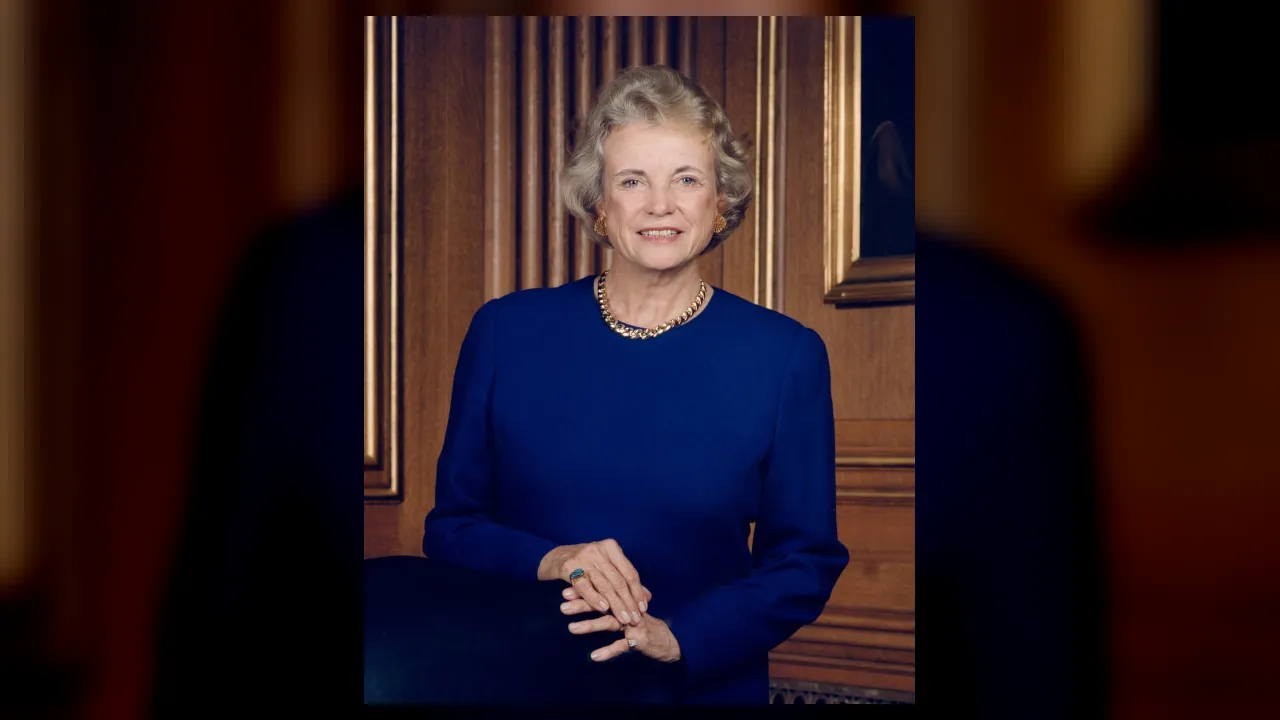
Sandra Day O'Connor
From Cattle Rancher to First Woman Supreme Court Justice
Grade 4 • Expanding • 263 words
⏳ Era / Statehood1930–2023 • U.S. Supreme Court Service (1981–2006)
🗺️ Region / CapitalLazy B Ranch, Arizona & Washington, D.C.
📜 Key MilestoneConfirmed 99–0 in 1981 as the first female Supreme Court Justice
⚡ Historical SparkBroke a 191-year barrier on the Supreme Court and founded iCivics for students
🤯 Mind-Blowing Fact • Grade 1
Growing up on the remote Lazy B Ranch in Arizona, young Sandra Day had a pet bobcat, rode horses with cowboys, and learned to change truck tires by herself!
✨ Word Sparks (Grade 1 Glossary)
Tap 🔊 to hear
ranch
A large farm where cattle graze
judge
A leader who decides cases fairly
barrier
An old rule or wall blocking progress
🪝
Could a cowgirl who rode horses in the desert grow up to sit on America's highest court?
1
Life on the Ranch
Young Sandra grew up on a big desert cattle in Arizona. She rode horses, fixed fences, and loved to read stacks of books!
2
A Smart Problem Solver
Sandra studied law and worked hard in her town. She listened carefully to both sides and helped people solve hard problems.
3
First Woman Justice
For almost two hundred years, only men sat on the Supreme Court. In 1981, Sandra became the very first woman justice!
1. Where did Sandra Day O'Connor spend her early childhood?
2. What milestone did Sandra Day O'Connor reach in 1981?
🤯 Mind-Blowing Fact • Grade 2
When the U.S. Senate voted on whether Sandra Day O'Connor should join the Supreme Court in 1981, senators approved her by a unanimous vote of 99 to 0!
✨ Word Sparks (Grade 2 Glossary)
Tap 🔊 to hear
nominate
To officially choose someone for a job
civics
Learning how citizens and government work together
lawmaker
An elected leader who writes state laws
🪝
What happens when a top law school graduate cannot get hired—and decides to make her own path instead?
1
Grit From the Lazy B Ranch
Picture an adobe house miles from the nearest town on the Arizona desert border, without running water or electricity at first! On the Lazy B Ranch, Sandra Day learned that excuses never mend a broken windmill. She loved reading so much that she finished high school early and graduated near the top of Stanford Law School.
2
Creating Her Own Opportunity
In 1952, big law firms refused to hire women as lawyers, offering Sandra only typing jobs. Instead, she volunteered for a county attorney in California until he saw her talent and hired her! Later she served as an Arizona and judge.
3
Making History in 1981
President Ronald Reagan nominated Sandra Day O'Connor to the U.S. Supreme Court in 1981. After retiring, she started a free civic learning website for kids!
1. What did Sandra Day O'Connor do when private law firms would not hire women lawyers in 1952?
2. Which president nominated Sandra Day O'Connor to the U.S. Supreme Court?
🤯 Mind-Blowing Fact • Grade 3
During her first years on the Supreme Court, Sandra Day O'Connor received over 60,000 letters from Americans—more mail than any justice in history up to that time!
✨ Word Sparks (Grade 3 Glossary)
Tap 🔊 to hear
confirm
To approve a president's choice by vote
legislative
The branch of government that makes laws
judicial
The branch of government with courts
🪝
How did one Arizonan serve in all three branches of state government before breaking a 191-year Supreme Court barrier?
1
Desert Lessons in Self-Reliance
Imagine waking before sunrise on a 160,000-acre cattle ranch straddling the Arizona–New Mexico border, where the nearest neighbor lives twenty-five miles away! On the Lazy B Ranch, young Sandra Day branded calves, drove tractors, and read newspapers and encyclopedias by lamplight. At sixteen, she enrolled at Stanford University, earning both her college degree and law degree in just six years.
2
Serving All Three Branches
After law firms turned her away because she was a woman, O'Connor turned to public service. Over the next three decades in California and Arizona, she worked in the executive branch as an assistant attorney general, in the branch as Majority Leader of the Arizona State Senate—the first woman in America to hold that post in any state—and in the branch as a trial and appeals judge.
3
First Woman on the Bench
On September 25, 1981, following her nomination by President Ronald Reagan and a 99–0 Senate confirmation, O'Connor took the oath as the 102nd Associate Justice of the U.S. Supreme Court.
4
Teaching Civics to Millions
After twenty-four years on the Court, Justice O'Connor retired in 2006 and founded iCivics, creating free interactive games that teach millions of students how the Constitution works.
1. Before joining the U.S. Supreme Court, what historic legislative role did Sandra Day O'Connor hold in Arizona?
2. What educational project did Justice O'Connor launch after retiring from the Supreme Court?
🤯 Mind-Blowing Fact • Grade 4
When Sandra Day O'Connor arrived at the Supreme Court in 1981, the justices' conference suite did not even have a women's restroom nearby until facilities were updated!
✨ Word Sparks (Grade 4 Glossary)
Tap 🔊 to hear
federalism
Sharing governing power between national and state levels
oath
A solemn promise to uphold the Constitution
civic literacy
Understanding how government works and citizens participate
🪝
Why did Justice Sandra Day O'Connor say that knowledge of our democracy is never passed down in our genes, so every generation must learn it anew?
1
Frontier Roots and Stanford Excellence
Step onto the sunlit marble steps of the United States Supreme Court on September 25, 1981, as Chief Justice Warren Burger administers the constitutional to the first woman ever appointed to the high bench. Raised on the remote Lazy B Ranch along the Gila River on the Arizona–New Mexico line, Sandra Day grew up learning practical problem-solving before the ranch house even had electricity. Entering Stanford University at sixteen, she completed undergraduate studies and Stanford Law School in five and a half years, graduating third in her 1952 class—two spots ahead of future Chief Justice William Rehnquist.
2
Overcoming Doors Closed to Women
Despite top academic honors and service on the Stanford Law Review, more than forty private California law firms declined to interview her for an attorney role, offering only legal-secretary work. Undeterred, she offered to work without salary—sharing space with a secretary—for the San Mateo County District Attorney until a paid deputy slot opened. Moving to Phoenix, Arizona, she opened a neighborhood law practice, raised three sons with her husband John O'Connor, and entered state government.
3
A Thoughtful Voice on the High Court
Having served as Arizona Assistant Attorney General, first female Majority Leader of any U.S. state senate, Maricopa County Superior Court judge, and Arizona Court of Appeals judge, O'Connor brought rare three-branch experience to Washington when President Ronald Reagan nominated her in July 1981. Confirmed 99–0, she spent twenty-four terms crafting careful, fact-centered opinions respecting constitutional balance and .
4
Championing Civic Literacy
Stepping down in 2006 to care for her husband, O'Connor received the Presidential Medal of Freedom in 2009 and founded iCivics, empowering millions of K–12 students nationwide to role-play judges, lawmakers, and active citizens.
1. How did Sandra Day O'Connor's early career in Arizona give her rare preparation for the U.S. Supreme Court?
2. Who graduated in the very same 1952 Stanford Law School class alongside Sandra Day O'Connor and later served with her on the Supreme Court?
🤯 Mind-Blowing Fact • Grade 5
Sandra Day O'Connor was the last justice appointed to the U.S. Supreme Court in the twentieth century who had previously held elected legislative office!
✨ Word Sparks (Grade 5 Glossary)
Tap 🔊 to hear
pragmatism
Solving problems using practical real-world results
gratis
Done freely without charging pay or fees
stewardship
Responsible care for something passed to others
🪝
How did frontier pragmatism and rare experience across all three branches of government shape Sandra Day O'Connor's quarter-century on the Supreme Court?
1
Frontier Pragmatism on the Lazy B
Picture an isolated high-desert cattle spread of 250 square miles straddling the Arizona–New Mexico border during the Great Depression, where windmills pump precious groundwater and every ranch hand is expected to repair whatever breaks. Born in 1930, Sandra Day spent school years living with her maternal grandmother in El Paso, Texas, to attend Radford School and returned every summer to ride roundups on the Lazy B Ranch. Matriculating at Stanford University at age sixteen, she earned an economics degree magna cum laude in 1950 and graduated third out of 102 students at Stanford Law School in 1952, serving as an editor of the Stanford Law Review.
2
Navigating Mid-Century Professional Barriers
In 1952, women constituted scarcely three percent of American attorneys, and major Los Angeles and San Francisco firms refused to hire female associates. Refusing discouragement, O'Connor proposed working for San Mateo County District Attorney Louis Dematteis until she proved indispensable, rapidly earning a deputy county attorney appointment. After serving as a civilian attorney for the U.S. Army Quartermaster Corps in Frankfurt, Germany, she settled in Maricopa County, Arizona, opening a storefront firm where she handled contracts, wills, and neighborhood disputes.
3
Three-Branch Mastery in State Government
Between 1965 and 1981, O'Connor compiled a résumé nearly unmatched among modern justices, serving sequentially across all three constitutional branches in Arizona: Assistant Attorney General (1965–1969), Republican State Senator elected Majority Leader in 1972—the first woman in the United States to lead a state senate majority—Maricopa County Superior Court trial judge (1975–1979), and judge on the Arizona Court of Appeals (1979–1981).
4
Breaking a 191-Year Constitutional Barrier
Since the Supreme Court first convened in February 1790, 101 consecutive justices had been men. Fulfilling a 1980 campaign pledge, President Ronald Reagan nominated O'Connor in July 1981, and the Senate confirmed her 99–0. Across twenty-four terms until January 2006, she became renowned for case-by-case judicial craftsmanship, rigorous questioning at oral argument, and deep attention to federalism and how rulings operated practically in states and schools—joining Ruth Bader Ginsburg in 1993 when a second woman finally reached the bench.
5
iCivics and the Duty of Democratic Stewardship
Awarded the Presidential Medal of Freedom in 2009, O'Connor devoted her retirement to founding iCivics after observing declining civic instruction nationwide. As she frequently reminded educators and students, 'The practice of democracy is not passed down through the gene pool. It must be taught and learned anew by each generation of citizens.'