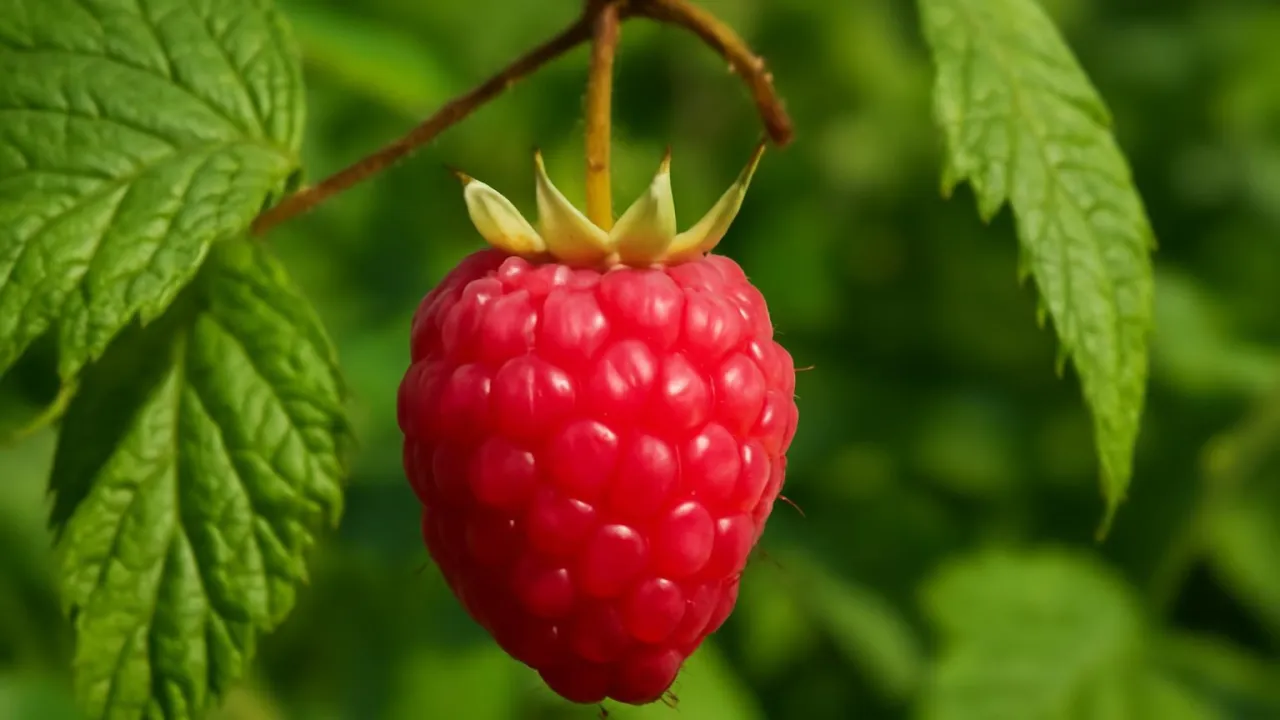
Raspberry bushes can grow up to six feet tall in good sunlight!
✨ Word Sparks (Grade 2 Glossary)
Tap 🔊 to hear
pollination
When bees help flowers make fruit
ripe
Ready to eat and sweet
pests
Small bugs that can harm plants
🪝
Have you ever touched the tiny hairs on a red raspberry?
1
Bright Red Berries on Bushes
Red raspberries grow on bushes that can reach six feet tall. They need plenty of sunlight and water to grow well. Bees visit the flowers to help with . The berries are small, red, and covered with tiny hairs.
2
From Flowers to Sweet Fruit
Raspberry bushes bloom with small white flowers in spring. After , the flowers turn into berries. The berries start green and slowly turn red when . Birds and animals enjoy eating the sweet fruit.
3
Tiny Hairs Protect the Berries
The tiny hairs on raspberries help protect them from bugs and . These hairs make the berries feel soft and fuzzy. People like to eat raspberries fresh or use them in jams. Raspberries are healthy and full of vitamins.
Raspberry hairs help reduce water loss and protect fruit from hungry insects!
✨ Word Sparks (Grade 3 Glossary)
Tap 🔊 to hear
adaptation
A change that helps plants survive better
pollination
When bees move pollen to help plants grow fruit
predator
An animal that eats other animals or plants
🪝
Why do red raspberries have tiny hairs on their skin?
1
Raspberry Bushes and Their Habitat
Red raspberries grow best in temperate forests and garden areas. These bushes can reach heights between three and six feet tall. They need moist soil and plenty of sunlight to thrive. The habitat provides nutrients and water essential for growth.
2
The Life Cycle of a Raspberry
Raspberries start as small white flowers that bloom in springtime. by bees helps flowers turn into green berries. As berries mature, they change color from green to bright red when ripe. Animals and birds often eat ripe berries, helping spread seeds.
3
Tiny Hairs and Their Purpose
The raspberry’s tiny hairs act as a natural defense against pests and insects. These hairs create a fuzzy texture that deters some . This helps protect the fruit until it is ready to be eaten. It also helps reduce water loss from the berry’s skin.
4
Raspberries in Nature and People’s Lives
Raspberries play an important role in food webs as a food source for many animals. Humans cultivate raspberries for fresh eating and making jams or desserts. The plant’s structure supports and fruit production efficiently. Understanding raspberries helps us appreciate their ecological role.
1. What helps raspberries change from flowers to fruit?
2. How do tiny hairs help raspberries survive?
🤯 Mind-Blowing Fact • Grade 4
Raspberry hairs protect fruit and help the plant survive in changing environments!
✨ Word Sparks (Grade 4 Glossary)
Tap 🔊 to hear
ecosystem
All plants and animals living together in one place
pollination
When bees help flowers make fruit by moving pollen
adaptation
A change that helps plants or animals survive better
🪝
How do tiny hairs help red raspberries survive in their environment?
1
Raspberry Growth and Habitat
Red raspberries thrive in temperate climates where soil is moist and well-drained, often found in forests and gardens. These bushes grow between three and six feet tall, needing full sunlight to produce sweet, ripe berries. The environment supplies essential nutrients and water that support healthy plant development. Without these conditions, raspberry bushes cannot grow well or produce fruit.
2
Pollination and Life Cycle
is a vital process where bees transfer pollen from flower to flower, allowing fruit to develop. Raspberry flowers bloom in spring, producing green berries that gradually turn bright red when ripe. This color change signals animals and birds that the fruit is ready to eat, which helps spread seeds to new locations. This cause-and-effect relationship ensures the raspberry’s survival and reproduction.
3
The Role of Tiny Hairs
The tiny hairs on raspberry berries serve multiple purposes, including protecting fruit from insect pests and reducing water loss through evaporation. This helps the berries remain healthy until animals eat them, aiding seed dispersal. These hairs also create a fuzzy texture that discourages some predators from eating the fruit prematurely. Such features demonstrate how raspberries have evolved to survive in their .
4
Raspberries in Ecosystems and Human Use
Raspberries are an important food source for many animals, playing a key role in local food webs. Humans cultivate raspberries widely for fresh consumption and processing into jams, juices, and desserts. Agricultural practices impact raspberry growth by improving soil and pest control. Understanding these interactions helps us protect raspberry habitats and maintain their ecological balance.
1. What do tiny hairs on raspberries help prevent?
2. Why do animals eat ripe raspberries?
🤯 Mind-Blowing Fact • Grade 5
Raspberry trichomes reduce water loss by up to 80 percent, helping fruit survive dry conditions!
✨ Word Sparks (Grade 5 Glossary)
Tap 🔊 to hear
trichomes
Tiny hairs on plants that protect and keep moisture
transpiration
Water loss from plants through leaves or fruit skin
mutualism
A helpful relationship between two living things
🪝
What scientific secrets do red raspberries’ tiny hairs reveal about plant survival?
1
Taxonomy and Scientific Classification
Red raspberry belongs to the genus Rubus within the Rosaceae family, scientifically named Rubus idaeus. This species is native to temperate regions of Europe and North America, where it occupies forest edges and disturbed habitats. Its classification helps scientists understand its evolutionary relationships with other fruit-bearing plants. The genus Rubus includes many species known for their aggregate fruits composed of multiple drupelets.
2
Physiological Mechanics of Raspberry Hairs
The tiny hairs on raspberry fruit, called , serve as a physical barrier against herbivorous insects and reduce water loss by limiting . These trichomes create a microenvironment on the fruit surface that maintains humidity and deters small pests. Additionally, the hairs contribute to the berry’s fuzzy texture, which may discourage some predators. This physiological adaptation enhances the fruit’s chances of reaching maturity and successful seed dispersal.
3
Conservation and Botanical History
Raspberries have been cultivated by humans for thousands of years, with archaeological evidence showing use in ancient Europe. Modern cultivation focuses on improving yield, disease resistance, and fruit quality. Conservation efforts aim to protect wild raspberry populations from habitat loss and genetic erosion. Understanding the plant’s history and ecology supports sustainable agricultural practices and biodiversity preservation.
4
Ecological Role and Human Impact
Raspberries contribute to ecosystem food webs by providing nourishment for birds, mammals, and insects. They engage in mutualistic relationships with pollinators like bees, which facilitate fruit production. Human agricultural activities influence raspberry distribution through selective breeding and habitat modification. These impacts can both enhance production and threaten wild populations if not managed responsibly.
5
Quantitative Comparisons and Growth Metrics
Raspberry bushes typically grow between 3 to 6 feet tall, producing fruit clusters that weigh about 4 to 6 grams each. The berries develop over 30 to 40 days from flower pollination to ripeness, requiring temperatures between 60 and 75 degrees Fahrenheit. Trichome density varies but can cover up to 80 percent of the fruit surface, significantly reducing water loss. These measurable traits demonstrate the plant’s adaptation to temperate climates.