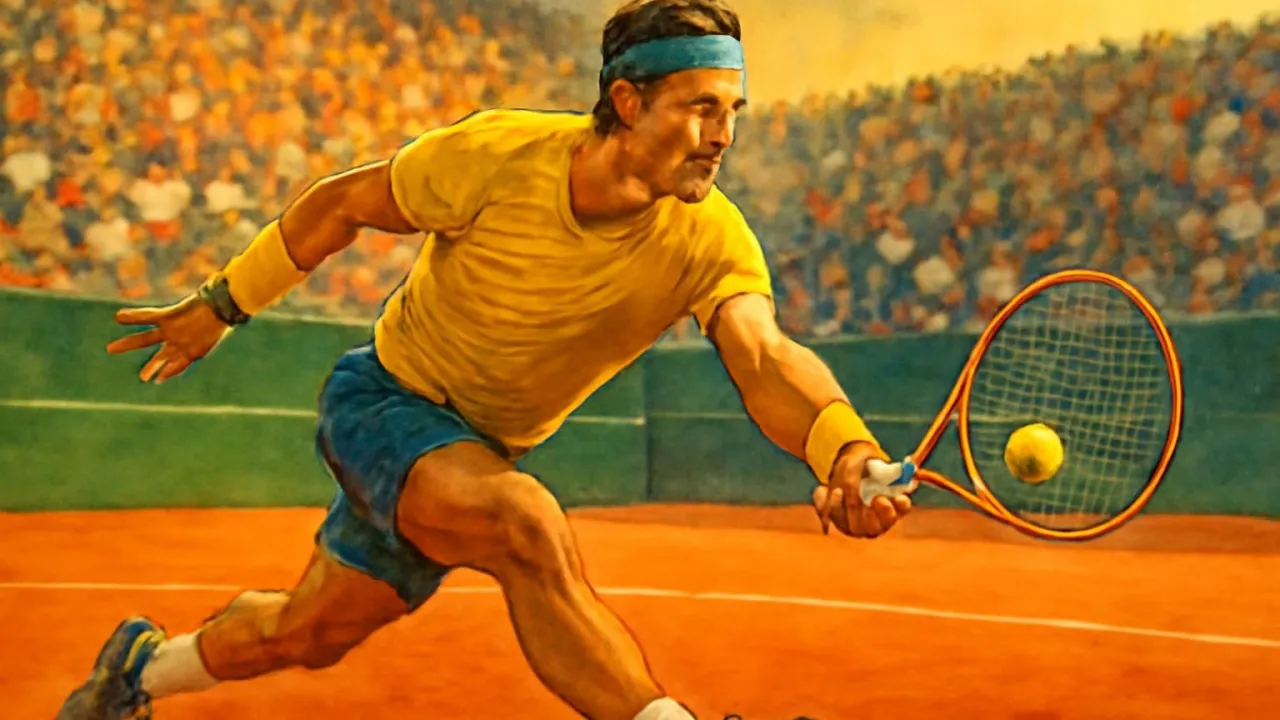
Rafa won his first French Open when he was only 19 years old.
✨ Word Sparks (Grade 2 Glossary)
Tap 🔊 to hear
tournament
A big sports contest with many games
topspin
A way to spin the ball forward
respect
Being kind and fair to others
🪝
What would it feel like to play tennis in front of thousands of cheering fans?
1
A Boy with a Racket
Rafa started playing tennis when he was just three years old. He practiced every day with his family, dreaming of big . The red clay courts in Spain became his favorite place to play.
2
Hard Work and Heart
Rafa learned that winning takes more than talent; it takes effort and heart. He trained hard, running, swinging, and learning new moves. His left-handed made his shots tricky for other players.
3
A Record-Breaking Champion
Rafa’s dream came true when he won the French Open many times. He became famous for never giving up and always showing . Fans call him the King of Clay because of his amazing wins.
Rafa has played some matches that lasted over five hours!
✨ Word Sparks (Grade 3 Glossary)
Tap 🔊 to hear
perseverance
Never giving up, even when it’s hard
forehand
A tennis swing from the front side
legacy
What someone is remembered for
🪝
Imagine playing a tennis match so long your socks turn orange from the clay!
1
A Tennis Star from Mallorca
As a child in Mallorca, Rafa Nadal spent hours practicing with his uncle Toni, who was also his coach. He learned to use his left hand, even though he wrote with his right, to make his shots stronger. The red clay courts of Spain became his favorite training ground, shaping his unique style.
2
Building Strength and Skill
Rafa’s training was tough, but he showed every day. He worked on his topspin , which made the tennis ball bounce high and fast. His speed and determination helped him win against older, stronger players. Rafa always listened to his coaches and kept improving his game.
3
The King of Clay
Rafa’s big breakthrough came at the French Open, the most famous clay tournament. He won his first title there at age 19, surprising the tennis world. Over the years, he set a record by winning 14 French Open championships. Fans everywhere cheered his sportsmanship and fighting spirit.
4
A Champion’s Legacy
Rafa inspires young athletes with his hard work and respect for opponents. He gives back to his community by teaching kids about tennis and fair play. His career shows that and heart can lead to greatness. Many say Rafa is one of the greatest tennis players ever.
Nadal is the only player in history to win the French Open 14 times.
✨ Word Sparks (Grade 4 Glossary)
Tap 🔊 to hear
resilience
Bouncing back after challenges or losses
ritual
A special habit before doing something important
ambassador
Someone who represents and inspires others
🪝
What does it take to become a tennis legend who never gives up, no matter the score?
1
Roots on Red Clay
Growing up in Mallorca, Spain, Rafael Nadal was surrounded by a family passionate about sports, especially tennis. His uncle Toni, a former tennis player, became his lifelong coach and mentor, teaching him discipline and . Nadal trained on the island’s red clay courts, which shaped his powerful baseline game and unique left-handed style. Early on, he learned that hard work and humility were just as important as talent.
2
Relentless Training and Signature Style
Nadal’s training sessions were famously intense, focusing on building speed, stamina, and mental strength. He developed a signature topspin forehand, which sent the ball spinning high and fast, making it difficult for opponents to return. His athletic footwork and quick reflexes allowed him to chase down nearly every shot, earning him a reputation for never giving up. Nadal’s , like lining up his water bottles and adjusting his headband, helped him stay focused under pressure.
3
Record-Breaking Achievements
Rafa’s breakthrough came when he won the French Open at just 19, the beginning of his reign on clay. Over his career, he has claimed 22 Grand Slam singles titles, with a record-breaking 14 at the French Open alone. His epic matches, some lasting over five hours, have captivated fans and inspired respect from fellow athletes. Nadal’s sportsmanship and humility have made him a global for tennis.
4
Giving Back and Inspiring Others
Beyond the court, Nadal founded the Rafa Nadal Academy to help young players develop their skills and character. He supports charities and encourages kids to value effort, respect, and teamwork in sports and life. Nadal’s story teaches that greatness comes from perseverance and kindness, not just winning trophies. He continues to inspire millions through his dedication, , and positive spirit.
Nadal’s topspin forehand can make the ball spin over 3,000 times per minute!
✨ Word Sparks (Grade 5 Glossary)
Tap 🔊 to hear
regimen
A strict plan for practice or training
composure
Staying calm and focused under pressure
integrity
Always doing what is right and fair
🪝
How does a determined athlete from a small island become one of the greatest champions in tennis history?
1
Early Spark and Family Roots
On the sunlit island of Mallorca, young Rafael Nadal chased tennis balls across red clay courts, driven by a passion that ran in his family. His uncle Toni, a former professional tennis player, recognized Rafa’s raw talent early and became his lifelong coach and mentor. Under Toni’s strict but caring guidance, Rafa learned not only technical skills but also the values of discipline, humility, and perseverance. Training alongside his supportive family, Rafa developed a unique left-handed playing style, even though he was naturally right-handed—a strategic decision that would later give him a competitive edge.
2
Relentless Practice and Signature Techniques
Rafa’s training was famously grueling, with hours spent perfecting his footwork, stamina, and mental toughness on the clay courts. He cultivated a devastating topspin forehand, generating more revolutions per minute than almost any player in history, causing the ball to leap unpredictably off the surface. Nadal’s athleticism, quick reflexes, and ability to slide on clay set him apart from his peers. He also developed mental rituals—such as carefully arranging his water bottles and following a precise pre-serve routine—to maintain focus and during high-pressure matches.
3
Historic Achievements and Records
Nadal’s professional career skyrocketed when he won his first French Open at just 19 years old, instantly earning the nickname 'King of Clay.' Over the next two decades, he amassed 22 Grand Slam singles titles, including a record-shattering 14 French Open victories—more than any player in history. Nadal’s legendary matches, some lasting over five hours, showcased his unwavering resilience and fighting spirit. He also achieved a Career Grand Slam, winning each of the four major tournaments at least once, and became an Olympic gold medalist in both singles and doubles.
4
Sportsmanship and Global Impact
Beyond his astonishing athletic achievements, Nadal is celebrated for his exemplary sportsmanship and humility on and off the court. He is known for respecting opponents, never giving up regardless of the score, and inspiring millions with his dedication and positive attitude. Through the Rafa Nadal Academy, he mentors young athletes, emphasizing the importance of character, effort, and teamwork alongside technical skill. Nadal’s charitable work and leadership have made him a global ambassador for tennis and a role model for aspiring athletes worldwide.
5
Legacy and Lifelong Inspiration
Rafael Nadal’s legacy extends far beyond trophies and records; he has redefined what it means to be a champion through perseverance, , and generosity. His journey from a determined boy on Mallorca’s clay courts to one of the greatest players in tennis history demonstrates that true greatness is built on hard work, resilience, and kindness. Nadal’s story continues to inspire future generations to chase their dreams, face challenges bravely, and always play with heart. His impact on tennis and sports culture will be felt for decades to come.