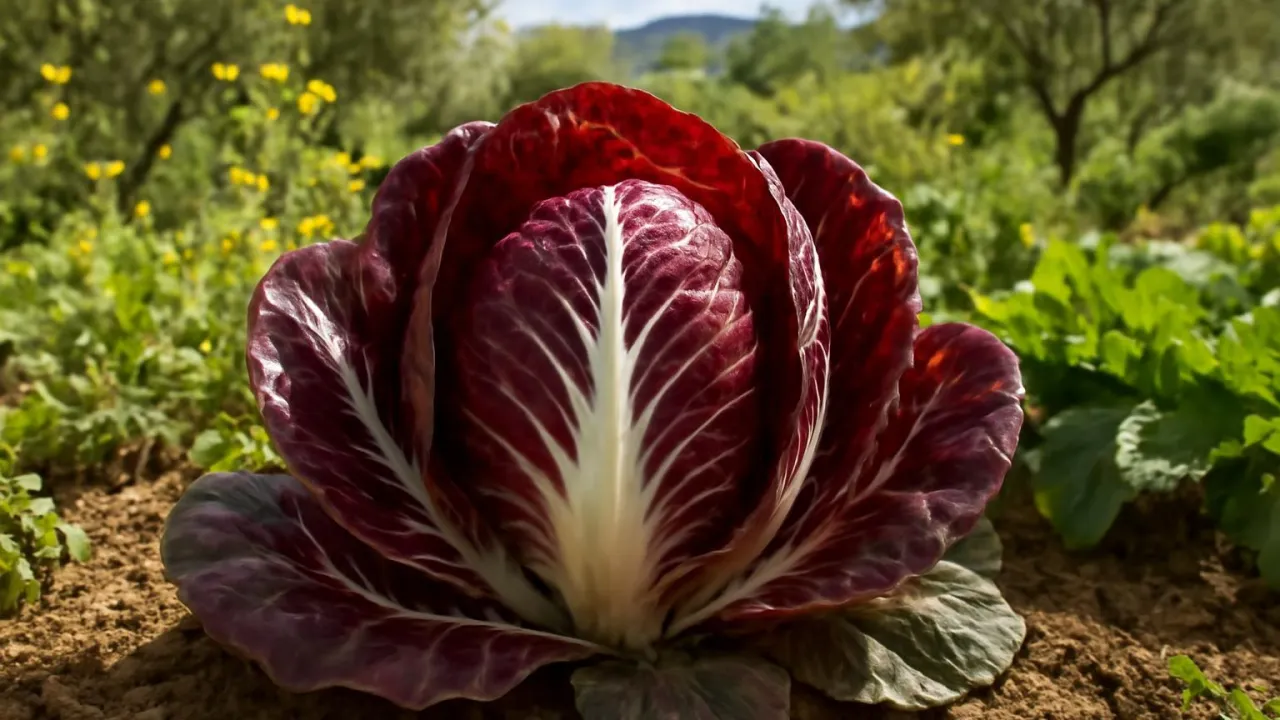
Radicchio’s red color helps protect it from too much sun and keeps the leaves fresh longer!
✨ Word Sparks (Grade 2 Glossary)
Tap 🔊 to hear
anthocyanins
Natural colors that make leaves red or purple
harvest
To pick plants when they are ready to eat
texture
How something feels when you touch or eat it
🪝
Have you ever tasted a leafy vegetable that is both spicy and bitter?
1
Radicchio’s Bright Red Leaves
Radicchio has bright red leaves with white veins that look like stripes. The leaves grow in a round shape like a small cabbage. People often use radicchio in salads for its crunchy and spicy taste. The red color comes from natural pigments called .
2
Where Radicchio Grows Best
Radicchio grows best in warm places with full sun and plenty of water. It is often grown in Mediterranean countries like Italy and Spain. Farmers plant radicchio in the spring or fall when the weather is cooler. The plant grows slowly and is ready to in about three months.
3
How Radicchio Tastes and Grows
Radicchio tastes bitter and spicy, which makes salads more interesting. The leaves are crunchy and have a strong flavor that some people enjoy cooked. Radicchio needs good soil and regular watering to grow healthy leaves. It is a vegetable that adds color and flavor to meals.
Radicchio is a vegetable with natural sunscreen pigments that protect it from strong sun damage!
✨ Word Sparks (Grade 3 Glossary)
Tap 🔊 to hear
anthocyanins
Pigments that make leaves red and protect from sun
adaptation
A change that helps plants survive better
predator
An animal or insect that eats plants or animals
🪝
Did you know radicchio’s red leaves help it survive in sunny places?
1
Radicchio’s Color and Shape
Radicchio has bright red leaves with white veins that form a tight, round head. The red color is caused by , which protect the leaves from strong sunlight. This natural pigment also gives radicchio its unique bitter taste. The plant’s shape helps it conserve water in warm climates.
2
Where Radicchio Grows and Thrives
Radicchio grows mainly in Mediterranean regions where the climate is warm and sunny. It prefers well-drained soil and needs regular watering to absorb enough nutrients. The plant grows slowly, taking about three months to mature before harvest. Its ability to tolerate heat is an important for survival.
3
Radicchio’s Role in the Ecosystem
Radicchio is part of many food webs because animals and humans eat it. Its bitter taste helps protect it from some , but insects like aphids may still feed on it. Farmers often grow radicchio alongside other vegetables to support healthy soil and reduce pests naturally. This shows how radicchio fits into a larger ecosystem.
4
How Radicchio’s Features Help It Survive
The bitter compounds in radicchio leaves act as natural defenses against and disease. Its red pigment helps block harmful ultraviolet rays, reducing leaf damage. The plant’s crunchy texture is due to strong cell walls that keep it firm and fresh. These allow radicchio to grow well in challenging environments.
1. What helps radicchio leaves protect themselves from sun damage?
2. Why do farmers grow radicchio with other vegetables?
🤯 Mind-Blowing Fact • Grade 4
Radicchio’s red pigments not only protect it but also help attract helpful insects for pollination!
✨ Word Sparks (Grade 4 Glossary)
Tap 🔊 to hear
ultraviolet
A type of strong sunlight that can harm plants
crop rotation
Planting different crops to keep soil healthy
dispersal
How seeds spread to new places
🪝
How does radicchio’s bright red color help it live in hot, sunny places?
1
Radicchio’s Protective Red Pigments
Radicchio’s bright red leaves contain anthocyanins, which serve as natural sunscreen to protect the plant from harmful rays. This pigment reduces leaf damage caused by intense sunlight and helps the plant conserve water by lowering heat stress. The red color also attracts certain pollinators and insects that benefit the plant’s growth. These adaptations allow radicchio to thrive in Mediterranean climates.
2
Radicchio’s Role in Food Webs and Agriculture
Radicchio plays an important role in food webs as both a food source for humans and some insects. Its bitter taste acts as a defense mechanism to reduce damage from many herbivores, although aphids and other pests sometimes feed on it. Farmers often grow radicchio alongside other vegetables in to improve soil nutrients and reduce pest populations naturally. This sustainable practice benefits both the ecosystem and agriculture.
3
Where Radicchio Grows and How It Spreads
Radicchio is native to the Mediterranean region but is now cultivated worldwide in temperate climates. It prefers well-drained, fertile soil with regular watering and full sun exposure. Seeds are sown in early spring or fall, and the plant takes about three months to mature. Radicchio spreads through seed , often helped by wind or human harvesting practices.
4
Cause and Effect of Radicchio’s Bitter Taste
The bitter compounds in radicchio leaves serve as a natural defense against many plant-eating insects and animals. This bitterness reduces the chance that the plant will be eaten before it can reproduce. However, this taste also encourages humans to cook or mix radicchio with other foods to balance the flavor. Thus, the plant’s bitterness affects both its survival and how people use it in meals.
1. Why do farmers use crop rotation with radicchio?
2. What helps radicchio seeds spread to new places?
🤯 Mind-Blowing Fact • Grade 5
Radicchio’s anthocyanin levels can be twice as high as in red cabbage, making it a powerful natural antioxidant source!
✨ Word Sparks (Grade 5 Glossary)
Tap 🔊 to hear
anthocyanins
Natural pigments that protect leaves and add color
integrated pest management
Using natural ways to control pests on plants
genetic diversity
Different plant types that help species survive
🪝
What scientific secrets make radicchio a resilient and colorful vegetable?
1
Scientific Classification and Origin
Radicchio belongs to the species Cichorium intybus var. foliosum within the Asteraceae family, native to Mediterranean regions. This vegetable is closely related to chicory and shares many physiological traits with other leafy greens. Its cultivation dates back to ancient Roman times, where it was prized for both flavor and medicinal properties. Today, radicchio is grown worldwide, especially in temperate climates with mild winters.
2
Physiological Adaptations and Leaf Pigmentation
Radicchio’s bright red coloration results from high concentrations of , flavonoid pigments that protect leaves from ultraviolet radiation and oxidative stress. These pigments also contribute to the vegetable’s characteristic bitter flavor by interacting with taste receptors. The plant’s thick, waxy leaf cuticle reduces water loss, enabling survival in hot, dry environments. Additionally, radicchio’s root system efficiently absorbs nutrients from well-drained soils to support healthy leaf growth.
3
Agricultural Practices and Conservation Importance
Farmers cultivate radicchio using crop rotation and to maintain soil fertility and reduce chemical use. The vegetable’s bitter compounds naturally deter many pests, reducing the need for pesticides. Conservation of heirloom radicchio varieties helps preserve vital for future breeding programs. Sustainable farming practices ensure radicchio remains a nutritious and environmentally friendly crop worldwide.
4
Quantitative Comparisons and Growth Metrics
Radicchio plants typically reach heights between 6 and 12 inches (15 to 30 centimeters) and weigh about 0.5 to 1 pound (225 to 450 grams) at harvest. They require approximately three months from sowing to maturity under optimal conditions. The anthocyanin concentration in radicchio leaves can exceed 100 milligrams per 100 grams of fresh weight, significantly higher than in many other leafy vegetables. These metrics highlight radicchio’s unique physiological profile among salad greens.
5
Culinary Uses and Botanical Insights
Although radicchio is botanically a leafy vegetable, its bitter taste often surprises new eaters and requires cooking or mixing with sweeter ingredients. It is commonly used in Italian cuisine, grilled or raw in salads, where its crunchy texture adds contrast. Unlike many vegetables, radicchio’s pigmentation and flavor result from complex biochemical pathways involving flavonoids and phenolic compounds. Understanding these botanical features helps chefs and farmers appreciate radicchio’s unique qualities.