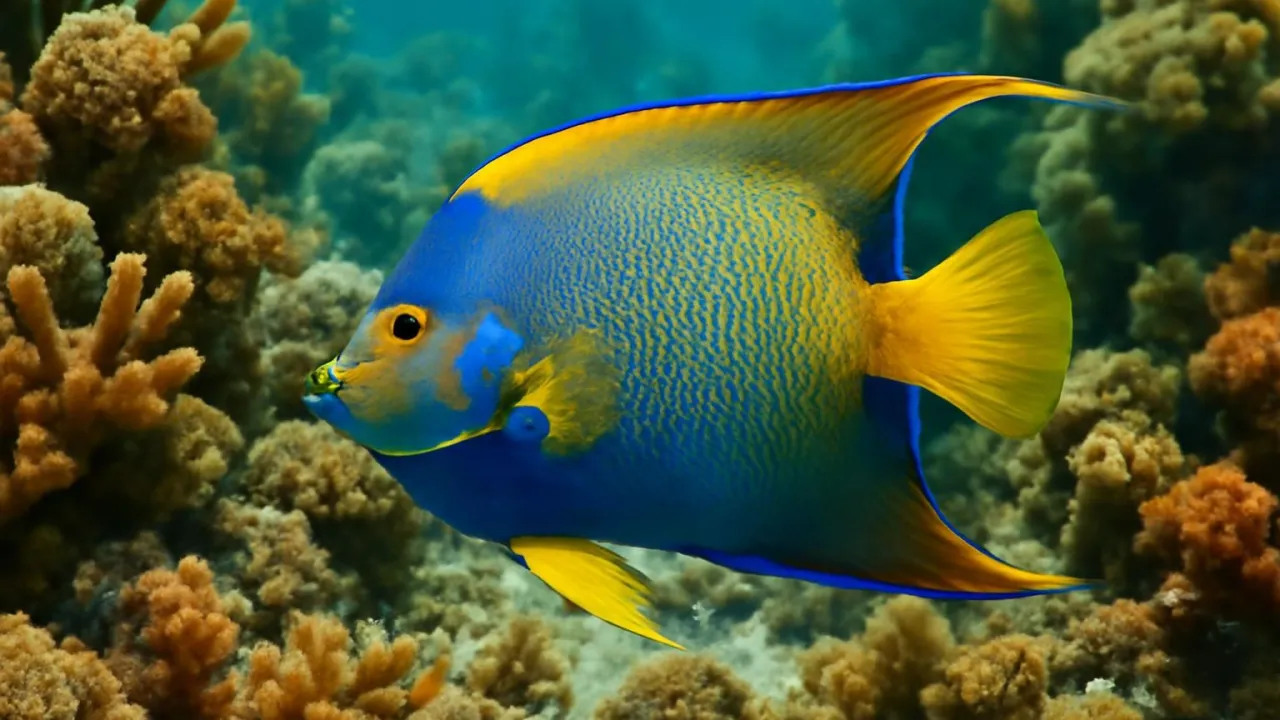
The queen angelfish’s crown is a bright blue spot that looks like a royal jewel!
✨ Word Sparks (Grade 2 Glossary)
Tap 🔊 to hear
coral reef
A colorful underwater home for many fish
blend
To mix in so you cannot see easily
shelter
A safe place to hide from danger
🪝
Have you ever seen a fish that looks like it wears a shiny crown?
1
Bright and Beautiful
The queen angelfish has bright blue and yellow colors that help it in . Its shiny crown on top of its head looks like a royal crown. These colors also help it scare away other fish that might want to fight.
2
Home Sweet Reef
This fish lives in warm ocean waters near in the Atlantic Ocean. It hides among the rocks and plants to stay safe. The reef gives it a place to find food and from bigger fish.
3
Yummy Food
Queen angelfish eat sponges, algae, and small animals that live on the reef. They use their small mouths to nibble on food. Eating these things helps them stay healthy and grow strong.
1. Why does the queen angelfish have bright colors?
2. What does the queen angelfish eat?
🤯 Mind-Blowing Fact • Grade 3
Queen angelfish help keep coral reefs healthy by eating sponges that could overgrow corals.
✨ Word Sparks (Grade 3 Glossary)
Tap 🔊 to hear
camouflage
Colors that help hide from enemies
predator
An animal that hunts other animals
invertebrate
A small animal without a backbone
🪝
Did you know the queen angelfish uses bright colors to survive in coral reefs?
1
Colorful Camouflage
The queen angelfish’s bright blue and yellow colors help it blend perfectly with coral reefs. This protects it from that hunt nearby. Its crown-like spot on the head is a unique adaptation to attract mates during breeding season. These colors also warn other fish to stay away.
2
Coral Reef Habitat
Queen angelfish live in warm tropical waters of the western Atlantic Ocean. They prefer coral reefs because these ecosystems provide shelter and food. The reef’s complex structure offers many hiding places from . Coral reefs also support the growth of sponges and algae, which the fish eat.
3
Diet and Feeding
This fish feeds mainly on sponges, algae, and small found on reefs. Its small mouth allows it to nibble carefully on tough sponge surfaces. Feeding on sponges helps control sponge growth, which benefits the reef ecosystem. This diet provides the nutrients needed for the fish’s bright colors and health.
4
Survival Adaptations
The queen angelfish’s body shape allows it to swim quickly through narrow reef spaces to escape . Its bright colors act as both and warning signals. Juveniles have different patterns to blend better with their surroundings. These adaptations increase their chances of survival in a competitive environment.
Queen angelfish act as reef gardeners by eating sponges that might smother coral polyps.
✨ Word Sparks (Grade 4 Glossary)
Tap 🔊 to hear
symbiotic
Living together and helping each other
biodiversity
Many different kinds of living things
distribution
Where animals or plants live
🪝
What role does the queen angelfish play in the coral reef ecosystem?
1
Bright Colors and Communication
The queen angelfish displays vivid blue and yellow colors that serve both as camouflage and communication signals. These colors help the fish blend into coral reefs while warning potential predators about its presence. During mating, the crown-like spot on its head attracts partners, showing a cause-and-effect relationship between color and reproduction success. Its bright hues also influence interactions with other reef species.
2
Ecosystem Role and Food Web
As a sponge and algae eater, the queen angelfish helps control sponge populations that could otherwise overgrow corals. This role maintains reef health and , showing a relationship between the fish and coral. It also serves as prey for larger predators, fitting into the reef’s complex food web. Human activities like overfishing and reef damage can disrupt these ecological balances.
3
Geographic Distribution
Queen angelfish are found throughout the western Atlantic Ocean, including the Caribbean Sea and Gulf of Mexico. They prefer warm, shallow waters where coral reefs flourish. Their is limited by water temperature and reef availability, which affects their population density. Seasonal changes and climate shifts can also impact their habitat range.
4
Adaptations for Survival
This fish’s body shape and fin structure enable agile swimming through narrow reef crevices to escape predators efficiently. Its bright coloration provides both camouflage and a warning to potential threats, reducing attacks. Juvenile queen angelfish have different patterns that improve their camouflage among reef sponges. These adaptations demonstrate an evolutionary response to environmental pressures.
Queen angelfish can live up to 15 years in the wild, helping reefs stay healthy for many seasons.
✨ Word Sparks (Grade 5 Glossary)
Tap 🔊 to hear
taxonomy
How scientists group living things
physiology
How a body works and moves
conservation
Protecting animals and their homes
🪝
How do queen angelfish contribute to coral reef ecosystems and what makes them unique scientifically?
1
Scientific Classification and Taxonomy
The queen angelfish, scientifically named Holacanthus ciliaris, belongs to the family Pomacanthidae, known for their vibrant colors and reef association. This species is distinguished by a bright blue and yellow coloration and a distinctive blue crown spot on its forehead. It is one of the largest angelfish species found in the western Atlantic Ocean, including the Caribbean Sea and Gulf of Mexico. Taxonomically, it is closely related to other reef angelfish but stands out due to its unique color patterns and size.
2
Physiological Mechanics and Adaptations
Queen angelfish have laterally compressed bodies that allow them to navigate tight coral reef crevices with agility and speed, reaching up to 16 inches in length. Their small, beak-like mouths are adapted to scrape sponges and algae off hard surfaces, providing a specialized diet. The bright coloration serves both as camouflage among the colorful reef and as a warning to potential predators. Juvenile angelfish exhibit different coloration patterns that enhance survival through improved camouflage.
3
Ecological Role and Conservation
As sponge and algae consumers, queen angelfish play a critical role in maintaining coral reef health by preventing sponge overgrowth that can suffocate corals. This ecological service supports reef biodiversity and resilience. However, threats such as habitat destruction, pollution, and overfishing have impacted their populations. efforts focus on protecting coral reefs and regulating fishing to sustain queen angelfish numbers and reef ecosystems.
4
Botanical and Zoological Clarifications
Though called a 'fish,' the queen angelfish's bright colors sometimes confuse observers with tropical birds or plants. Unlike botanical fruits that grow on plants, this fish is an animal with complex behaviors and . Understanding these differences helps clarify how animals and plants contribute differently to reef ecosystems, highlighting the queen angelfish’s unique role as a mobile reef gardener.
5
Quantitative Comparisons and Environmental Factors
Queen angelfish can grow up to 16 inches (40 centimeters) and weigh about 2 pounds (0.9 kilograms). They inhabit waters typically between 10 to 100 feet (3 to 30 meters) deep, preferring temperatures from 72 to 82 degrees Fahrenheit (22 to 28 degrees Celsius). Their swimming speed allows quick escapes from predators within reef structures. These quantitative details illustrate how their size, habitat depth, and temperature preferences influence their survival and distribution.