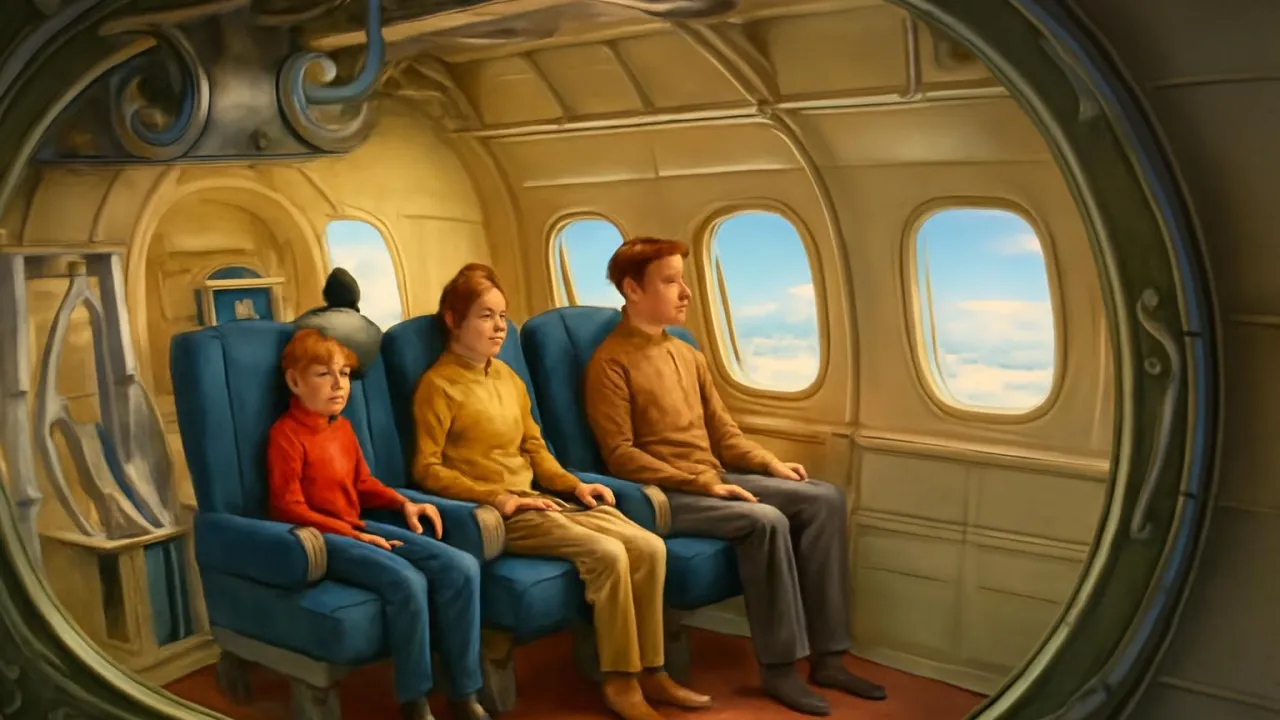
The first pressurized airplane cabin flew in 1938, letting people soar above the clouds!
✨ Word Sparks (Grade 2 Glossary)
Tap 🔊 to hear
sealed
Closed up tight so air stays in
passenger
A person riding in a plane
window
A small glass opening to look out
🪝
Have you ever wondered how people breathe high up in airplanes?
1
Flying High and Staying Safe
Airplanes fly so high that the air outside is too thin to breathe. Inside the plane, the cabin is tight and keeps the air safe for people. can relax and enjoy the ride.
2
How Does It Work?
Special pumps push fresh air into the cabin, making it feel like we are on the ground. The cabin holds the air in, so we can breathe easily. The are small and strong to keep the air inside.
3
Why Is It Important?
Pressurized cabins let us travel across the world without feeling sick or tired. People can visit new places and see family far away. Flying is safe and comfortable because of this invention.
At 30,000 feet, the outside air is too thin for humans to survive without pressurization!
✨ Word Sparks (Grade 3 Glossary)
Tap 🔊 to hear
altitude
How high something is above ground
valve
A part that controls air flow
aviation
The science of flying planes
🪝
What happens to your ears when a plane climbs high into the sky?
1
Flying Where Air Is Thin
When airplanes soar above the clouds, the outside air gets very thin and cold. Humans need oxygen to breathe, but there is less oxygen at high . Without help, people could get dizzy or even sick. That’s why airplanes use pressurized cabins.
2
The Science of Pressure
A pressurized cabin is like a strong, sealed tube that holds thick air inside. Special pumps and add air to keep the pressure comfortable for passengers. This pressure is called 'cabin pressure,' and it is much higher than the air outside. The rounded shape of the cabin helps spread the force evenly.
3
Engineering a Safe Ride
Engineers use strong metal and small windows to keep the cabin safe under pressure. The first successful pressurized airplane was the Boeing 307 Stratoliner in 1938. This invention let people fly higher, faster, and farther than ever before. Now, almost every big airplane uses this system.
4
Why It Matters
Pressurized cabins changed travel by making long flights safe and comfortable. Pilots and passengers can cross oceans and mountains without feeling sick from thin air. The invention also made air travel possible for millions of people around the world. Today, it’s a key part of modern .
The pressure inside most airplane cabins is like standing on a mountain over a mile high!
✨ Word Sparks (Grade 4 Glossary)
Tap 🔊 to hear
compressor
A machine that squeezes air tighter
metal fatigue
When metal weakens from bending
sea level
The height of the ocean’s surface
🪝
Imagine your ears popping as a plane climbs—how do engineers keep passengers comfortable at 30,000 feet?
1
Why the Air Gets Thin
As airplanes climb to cruising altitudes, the air outside becomes extremely thin, with much less oxygen and lower pressure. Humans need a certain amount of air pressure and oxygen to breathe comfortably and stay healthy. Without a special system, passengers would quickly feel dizzy, tired, or even risk losing consciousness. That’s why engineers created the pressurized airplane cabin.
2
How Pressurization Works
A pressurized cabin is built like a sealed, rounded tube made of strong metal alloys. Powerful air pumps, often called , draw in outside air, compress it, and pump it into the cabin. Valves help control the exact cabin pressure, which is usually set to feel like being at 6,000 to 8,000 feet above . The rounded shape helps distribute the force from the pressure evenly across the structure.
3
Aviation Engineering Breakthrough
The Boeing 307 Stratoliner, which first flew in 1938, was the world’s first commercial airplane with a fully pressurized cabin. This breakthrough let planes fly above storms and mountains, making flights smoother and much safer. Engineers had to solve problems like and pressure leaks to keep passengers protected. Today, every major passenger jet uses advanced pressurization systems.
4
Changing How the World Travels
Pressurized cabins made long-distance air travel possible for millions of people worldwide. Travelers can now cross continents and oceans without feeling sick from thin air or extreme cold. This invention helped connect people, cultures, and economies in ways never seen before. It remains one of aviation’s most important engineering achievements.
1. How do compressors help in a pressurized cabin?
2. What problem did engineers solve for pressurized cabins?
🤯 Mind-Blowing Fact • Grade 5
A typical jetliner cabin holds air at about 11 pounds per square inch—over twice the pressure outside at cruising altitude!
✨ Word Sparks (Grade 5 Glossary)
Tap 🔊 to hear
hypoxia
Dangerous lack of oxygen in the body
decompression
Sudden drop in air pressure
composite
A strong material made from several parts
🪝
What keeps your lungs comfortable and your ears from hurting as you soar above the tallest mountains?
1
The Challenge of High-Altitude Flight
At cruising altitudes above 30,000 feet, the atmosphere contains only about one-third the oxygen found at sea level, and the air pressure is so low that humans would quickly experience and serious health risks. Early aviators could only fly at lower altitudes or had to wear bulky oxygen masks, which made commercial air travel impractical and uncomfortable. The invention of the pressurized airplane cabin revolutionized aviation by allowing planes to fly higher, above dangerous storms and turbulence, while keeping passengers safe and comfortable inside.
2
Engineering the Pressurized Cabin
A modern pressurized cabin is constructed as a cylindrical shell made from high-strength aluminum alloys or advanced designed to withstand repeated cycles of pressurization and depressurization. Air is drawn in by powerful compressors, heated and filtered, then pumped into the cabin to maintain a pressure equivalent to an altitude of 6,000 to 8,000 feet. Outflow valves precisely regulate the balance between incoming and outgoing air, preventing dangerous pressure differences that could damage the structure or harm passengers.
3
Physics and Safety Principles
The rounded, tube-like shape of airplane cabins is crucial for distributing the immense internal pressure evenly, reducing the risk of structural failure due to metal fatigue. Engineers must carefully calculate stress points and use riveted or bonded joints to ensure the cabin remains airtight. Regular inspections are required to detect tiny cracks or leaks, as even small failures can lead to rapid , which is extremely dangerous at high altitudes.
4
Historical Evolution and Impact
The Boeing 307 Stratoliner, introduced in 1938, was the first commercial aircraft to feature a fully pressurized cabin, enabling routine flights at 20,000 feet and above. This innovation paved the way for the postwar boom in global air travel, making it possible for millions of people to cross oceans and continents in hours rather than days. Today, pressurization technology is a standard feature in all large passenger jets, and ongoing advances continue to improve safety, comfort, and fuel efficiency.
5
Modern Innovations and the Future
Contemporary research focuses on advanced materials, such as carbon-fiber , and smart sensors that monitor cabin pressure and structural health in real time. Some new aircraft, like the Boeing 787 Dreamliner, maintain even lower cabin altitudes (around 6,000 feet) for greater passenger comfort. As commercial aviation continues to evolve, pressurized cabins remain essential for safe, efficient, and accessible global travel, connecting people and cultures across the world.