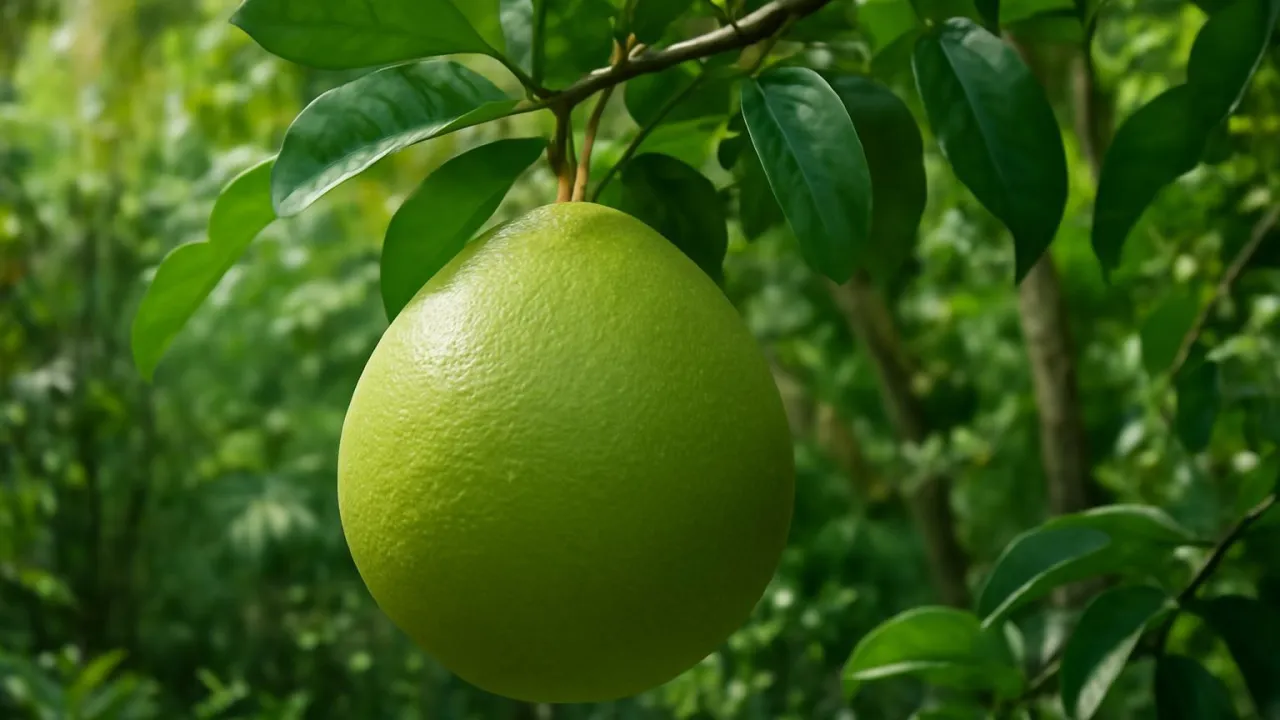
Pomelos can weigh up to 10 pounds, making them the biggest citrus fruit!
✨ Word Sparks (Grade 2 Glossary)
Tap 🔊 to hear
citrus
Fruits like oranges and lemons
tropical
Warm places near the equator
juicy
Full of tasty liquid inside
🪝
Have you ever seen a fruit bigger than your head?
1
Huge Citrus Fruit
Pomelos are the largest fruits in the world, and they can grow very big. They have thick green skin that protects the inside. People often peel the skin to eat the sweet fruit inside.
2
Where They Grow
Pomelos grow in warm places like Southeast Asia and need plenty of sun and water to grow well. The trees can grow tall and produce many large fruits each year.
3
Sweet Taste and Shape
Inside, pomelos are sweet and with a mild flavor. They look like a big grapefruit but are sweeter and less sour. Their round shape makes them easy to hold.
Pomelos have a thick, spongy rind that can be two inches thick or more.
✨ Word Sparks (Grade 3 Glossary)
Tap 🔊 to hear
adaptation
A change that helps plants survive
rind
The thick outer skin of a fruit
membrane
Thin layer that separates fruit parts
🪝
Did you know the pomelo is the largest citrus fruit on Earth?
1
Pomelo’s Giant Size
Pomelos can grow up to twelve inches in diameter and weigh up to ten pounds. Their thick helps protect the fruit from pests and damage while it ripens. This allows the pomelo to survive in tropical environments.
2
Tropical Habitat
Pomelo trees thrive in warm, humid tropical forests, mainly in Southeast Asia. They need full sun and plenty of water to grow healthy and strong. These conditions help the tree produce large, juicy fruits each season.
3
Sweet and Mild Flavor
Inside, pomelos have a pale yellow or pink flesh that is sweet and less sour than grapefruits. The fruit’s juicy segments are separated by thick , which some people remove before eating. This makes the fruit easy to enjoy.
4
Fruit and Seed Protection
The pomelo’s thick and bitter pith protect the seeds inside from predators and help the fruit last longer. This natural defense is important for the plant’s survival and reproduction through seed dispersal.
1. What helps protect pomelo seeds from predators?
2. Why do pomelo trees need full sun and water?
🤯 Mind-Blowing Fact • Grade 4
Pomelo seeds can travel far because animals eat the fruit and spread the seeds in new places.
✨ Word Sparks (Grade 4 Glossary)
Tap 🔊 to hear
seed dispersal
How seeds spread to new places
ecosystem
All plants and animals living together
agriculture
Growing plants and raising animals for food
🪝
How does the pomelo’s size help it survive in tropical ecosystems?
1
Pomelo’s Role in Ecosystems
Pomelos serve as a food source for many animals, including birds and small mammals, which eat the fruit and help spread its seeds. This is crucial for the growth of new pomelo trees. The thick rind protects the fruit during this process, ensuring seeds reach new areas safely.
2
Cause and Effect of Thick Rind
Because the pomelo has a thick rind, it can survive falls from tall trees without damage. This allows the fruit to reach the ground intact, increasing the chance that its seeds will germinate. The rind also discourages some predators, which helps the fruit last longer.
3
Geographic Distribution
Pomelos originated in Southeast Asia and are now grown in many tropical regions worldwide, including parts of India, China, and Florida. Their ability to adapt to warm, humid climates has made them popular in many countries. Farmers often cultivate pomelos for fresh fruit and juice.
4
Human and Agricultural Impact
Humans have selected pomelo trees for larger fruit size and sweeter flavor through farming practices. However, pomelo trees require careful water and sunlight management to produce quality fruit. Agricultural expansion has increased pomelo availability but also affects natural habitats.
1. How does the pomelo’s thick rind help seed dispersal?
2. Where did pomelos first grow?
🤯 Mind-Blowing Fact • Grade 5
Pomelo genetics have helped create many popular citrus fruits like grapefruit and tangelo through hybridization.
✨ Word Sparks (Grade 5 Glossary)
Tap 🔊 to hear
taxonomy
How scientists classify living things
genetics
How traits pass from parents to babies
hybridization
When two plants mix to make a new kind
🪝
What makes the pomelo a fascinating subject in citrus taxonomy and conservation?
1
Taxonomy and Botanical Context
Pomelo, scientifically known as Citrus maxima, is the largest citrus fruit and an ancestor of many hybrid citrus varieties. It belongs to the Rutaceae family and plays a crucial role in citrus due to its unique chromosome number and traits. Understanding pomelo genetics helps improve citrus breeding programs worldwide.
2
Physiological Mechanics and Growth
Pomelo trees grow best in tropical climates with temperatures ranging from 75 to 90 degrees Fahrenheit. Their thick, spongy rind protects the fruit from pests and dehydration, while the fruit’s internal structure supports nutrient transport to the juicy segments. The tree’s deep root system allows efficient water absorption during dry periods.
3
Conservation and Agricultural History
Historically native to Southeast Asia, pomelos have been cultivated for thousands of years and spread globally through trade routes. Conservation efforts focus on preserving wild pomelo varieties to maintain genetic diversity amid threats from habitat loss and disease. Sustainable farming practices help balance production with environmental health.
4
Comparative Size and Weight
Pomelos can reach diameters up to 12 inches and weigh as much as 10 pounds, making them significantly larger than grapefruits, which average 4 to 6 inches and 1 to 2 pounds. This size difference affects harvesting methods and market distribution, requiring special handling to avoid damage.
5
Ecological and Economic Importance
Pomelos contribute to tropical food webs by providing nutrients to wildlife and humans alike. Economically, they support local farmers and markets in Asia and other tropical regions. Their unique flavor and size make them valuable both as fresh fruit and in processed products like juices and marmalades.