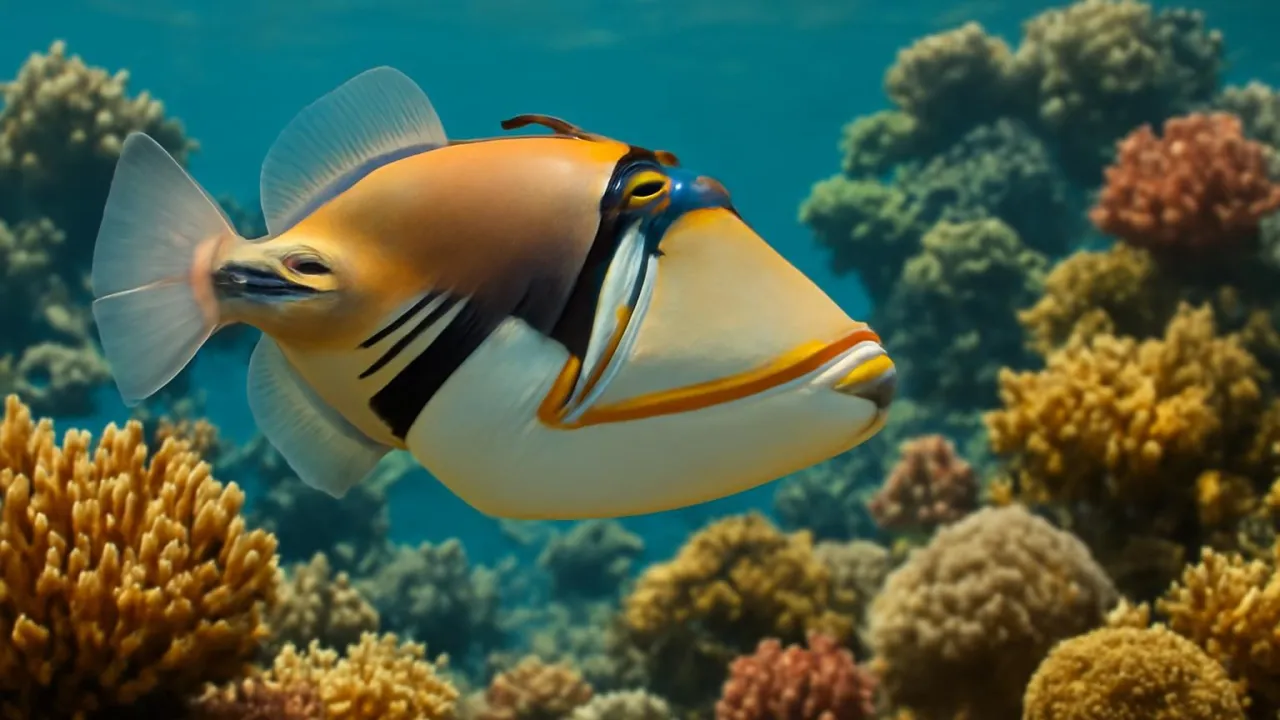
Picasso Triggerfish can lock its spines to protect itself from danger!
✨ Word Sparks (Grade 2 Glossary)
Tap 🔊 to hear
predator
An animal that hunts other animals
algae
Green plants that grow in water
spine
A sharp part on a fish’s body
🪝
Have you ever seen a fish that looks like a painting?
1
Colorful Body
The Picasso Triggerfish has bright colors that help it hide. Its body shows blue, yellow, and white stripes. These colors make it look like a moving painting in the water.
2
Home in Coral Reefs
This fish lives in warm coral reefs in the Indo-Pacific Ocean. It hides among rocks and coral to stay safe from . The coral reefs give it food and shelter.
3
Eating Small Animals
The Picasso Triggerfish eats small animals like crabs and shrimp. It also eats growing on rocks. Its strong teeth help it crush shells to get food.
Picasso Triggerfish can lock its dorsal spines to stay safe from predators!
✨ Word Sparks (Grade 3 Glossary)
Tap 🔊 to hear
camouflage
Colors that help animals hide in their homes
invertebrate
An animal without a backbone, like a crab
adaptation
A body change that helps animals survive
🪝
How does the Picasso Triggerfish use its colors to survive?
1
Amazing Camouflage
The Picasso Triggerfish uses its bright colors for in coral reefs. Its patterns confuse predators by breaking up its body shape. This helps it blend with colorful coral and rocks.
2
Habitat and Behavior
This fish lives in the warm Indo-Pacific coral reefs where many animals live. It often hides in crevices to avoid predators. It moves slowly but can swim fast if it feels threatened.
3
Feeding and Teeth
The Picasso Triggerfish feeds on small like crabs and sea urchins. Its strong teeth crush hard shells to get food. It also eats algae, which provides important nutrients for energy.
4
Defense Mechanisms
It has sharp spines on its back that it can lock in place for defense. When threatened, it wedges itself in coral and raises spines to stay safe. This protects it from predators trying to pull it out.
1. Why does the Picasso Triggerfish have bright colors?
2. How does the fish protect itself from predators?
🤯 Mind-Blowing Fact • Grade 4
Picasso Triggerfish help protect coral reefs by eating animals that harm coral growth.
✨ Word Sparks (Grade 4 Glossary)
Tap 🔊 to hear
ecosystem
All living things and their homes together
dorsal spine
A sharp, stiff part on a fish’s back
lagoon
A shallow water area near the ocean
🪝
What makes the Picasso Triggerfish a master of coral reef survival?
1
Color Patterns and Camouflage
The Picasso Triggerfish’s vibrant colors create camouflage that confuses predators and prey alike, helping it blend seamlessly into coral reefs. Its irregular stripes and spots break up its body outline, making it harder to detect in the complex reef environment filled with colorful corals and rocks.
2
Role in the Coral Reef Ecosystem
This fish plays an important role in coral reef by controlling populations of small invertebrates like sea urchins and crabs, which can damage coral if left unchecked. Its feeding habits help maintain the delicate balance of the reef’s food web and support coral health.
3
Defense and Behavior
When threatened, the Picasso Triggerfish wedges itself into coral crevices and locks its in place to prevent predators from pulling it out. This defense mechanism is highly effective against larger fish and helps it survive in a competitive environment full of threats.
4
Geographic Range and Habitat
This species is found throughout the Indo-Pacific region, from the Red Sea to Hawaii, favoring shallow coral reefs and . Its preference for warm, clear waters between 22 and 28 degrees Celsius makes it a common and colorful sight for divers and snorkelers worldwide.
Picasso Triggerfish lock their dorsal spines at right angles to defend against much larger predators.
✨ Word Sparks (Grade 5 Glossary)
Tap 🔊 to hear
dorsal spine
A stiff, sharp spine on a fish’s back for defense
invertebrate
An animal without a backbone, like crabs and sea urchins
coral bleaching
When coral loses color and health from stress
🪝
How does the Picasso Triggerfish’s biology and behavior support its survival in coral reefs?
1
Taxonomy and Scientific Classification
The Picasso Triggerfish, scientifically named Rhinecanthus aculeatus, belongs to the Balistidae family, known for their unique body shapes and strong . It is a ray-finned fish classified within the order Tetraodontiformes, which includes pufferfish and filefish. This classification highlights its evolutionary relationships with other specialized reef fishes.
2
Physiological Adaptations and Mechanics
This species exhibits remarkable physiological adaptations, including a laterally compressed body that allows agile movement through narrow coral crevices. Its powerful jaws and specialized teeth crush hard-shelled prey, while its can be locked rigidly to deter predators. These adaptations enable it to thrive in a complex and competitive reef environment.
3
Ecological Role and Conservation Status
Picasso Triggerfish contribute significantly to coral reef health by preying on sea urchins and other that can damage coral structures. Although not currently endangered, habitat degradation and pose potential threats to their populations. Conservation efforts focus on protecting coral reef habitats to ensure their survival.
4
Geographic Distribution and Habitat Preferences
This species inhabits shallow tropical waters across the Indo-Pacific, from the Red Sea to the Hawaiian Islands, favoring coral reefs and lagoons with clear, warm water between 22 and 28 degrees Celsius. Its wide distribution makes it an important indicator species for reef health in these regions.
5
Quantitative Comparisons and Interesting Facts
The Picasso Triggerfish grows up to 25 centimeters long and can swim bursts of speed reaching approximately 5 miles per hour. Its lock at a 90-degree angle, providing an effective defense against predators much larger in size. This fish’s striking color patterns also play a role in communication and territorial displays within its reef habitat.