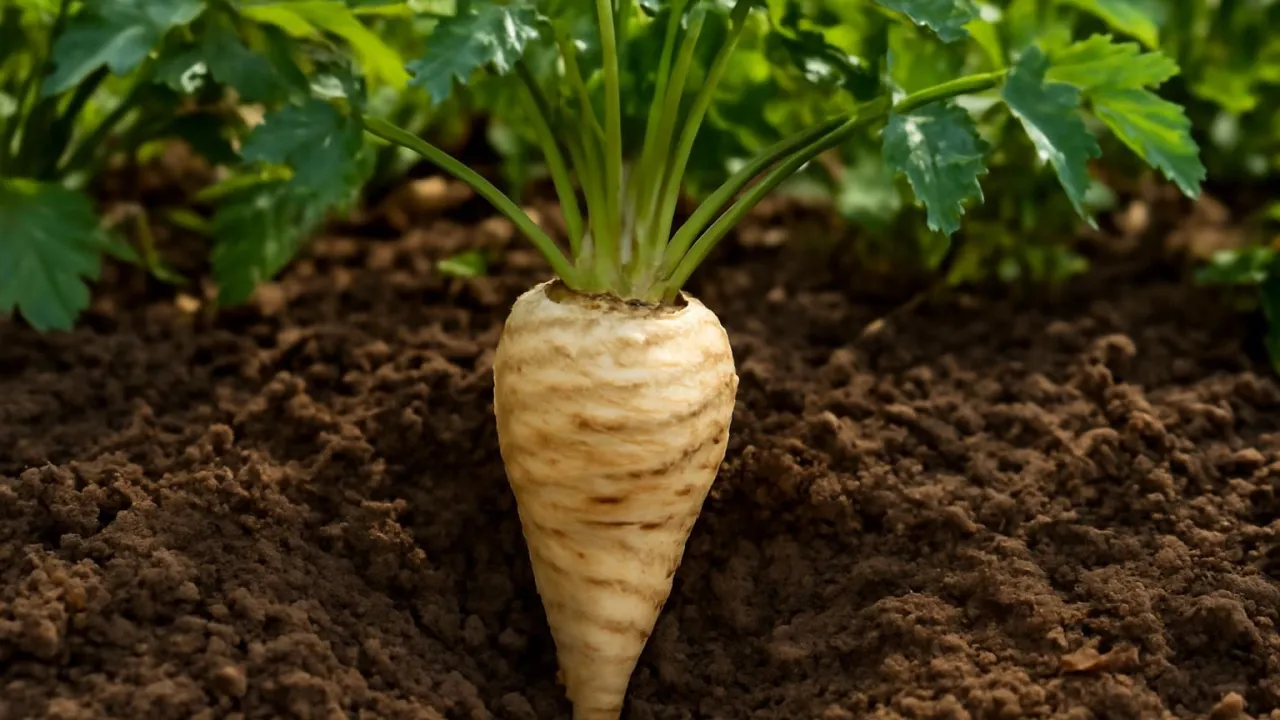
Cold weather changes starch in parsnips into sweet sugar!
✨ Word Sparks (Grade 2 Glossary)
Tap 🔊 to hear
moist
A little wet or damp, not too dry
frost
When it gets very cold and ice forms
energy
What helps us move, play, and grow strong
🪝
Have you ever tasted a vegetable that tastes like candy?
1
What Is a Parsnip?
Parsnips are white roots that grow underground in gardens and fields. They look like carrots but are paler. People have grown parsnips for many years in Europe and Asia.
2
How Parsnips Grow
Parsnips need full sun and soil to grow well. They take many months to grow big and sweet. After cold weather comes, their flavor becomes even sweeter and tastier.
3
Why Parsnips Are Special
Parsnips taste sweet and can be cooked in many ways. They are healthy and give people . Farmers grow parsnips to eat in soups, stews, and roasted dishes.
Parsnips convert starch to sugar after frost, making them taste like natural candy!
✨ Word Sparks (Grade 3 Glossary)
Tap 🔊 to hear
nutrients
Things plants need to grow strong and healthy
adaptation
A change that helps plants or animals survive better
ecosystem
A community of living things and their environment
🪝
Did you know parsnips are a root vegetable that tastes sweeter after frost?
1
Parsnip’s Unique Features
Parsnips are pale, cream-colored root vegetables that grow underground. Their shape looks like a carrot but is usually larger and thicker. The root stores to help the plant survive winter cold. This storage makes parsnips taste sweet and starchy.
2
How Parsnips Grow and Adapt
Parsnips grow best in moist, well-drained soil with plenty of sunlight. They take several months to mature, often planted in spring and harvested in fall. After frost, starches in the root turn into sugars, which helps the parsnip survive and taste sweeter. This is an to cold weather.
3
Parsnips in the Ecosystem
Parsnips provide food for humans and some animals. They are part of a food web that includes insects and soil organisms helping the plant grow. Parsnips also help improve soil health by breaking up compacted earth with their long roots. This benefits other plants nearby.
4
Interesting Parsnip Facts
Parsnips have been cultivated for thousands of years in Europe and Asia. They were an important food before potatoes became popular. Parsnips contain vitamins and minerals that help humans stay healthy. Cooking methods like roasting or boiling bring out their sweet flavor.
Parsnips produce natural antifreeze sugars after frost to survive freezing temperatures.
✨ Word Sparks (Grade 4 Glossary)
Tap 🔊 to hear
photosynthesis
How plants use sunlight to make food
carbohydrates
Nutrients that give energy to living things
crop rotation
Planting different crops to keep soil healthy
🪝
Have you ever wondered why parsnips taste sweeter after cold frosts?
1
Parsnip’s Physical Traits and Growth
Parsnips are cream-colored root vegetables that grow underground in moist, well-drained soils. They develop a long, tapered shape similar to carrots but are generally thicker and larger. The plant’s leaves grow above ground to capture sunlight for , which fuels root growth. Their thick roots store starches that convert to sugars after exposure to frost.
2
Cause and Effect: Frost and Sweetness
When temperatures drop below freezing, parsnip roots respond by turning stored starch into sugar to protect their cells. This chemical change causes the parsnip to taste much sweeter after frost. The sugar acts as a natural antifreeze, helping the root survive cold winter conditions. This cause-and-effect relationship is a clever adaptation.
3
Parsnips in Food Webs and Farming
Parsnips serve as food for humans and various animals, including some insects that pollinate the plant’s flowers. Their long roots improve soil structure by breaking up compacted earth, benefiting other plants. Farmers cultivate parsnips in temperate regions worldwide, often rotating crops to maintain soil health. Parsnips also contribute to human diets by providing vitamins and .
4
Geographic Distribution and History
Originally from Europe and Asia, parsnips have been cultivated for thousands of years and spread globally. They were a staple food before potatoes were introduced to Europe. Today, parsnips thrive in temperate climates with cool growing seasons. Their long history and adaptability make them an important vegetable in many cultures.
1. What happens to starch in parsnips after frost?
2. How do parsnips help soil in farms?
🤯 Mind-Blowing Fact • Grade 5
Parsnips can increase their sugar content by 50% after frost to survive freezing temperatures.
✨ Word Sparks (Grade 5 Glossary)
Tap 🔊 to hear
enzyme
A protein that helps chemical reactions happen faster
taproot
The main large root that grows straight down
biochemical
Relating to chemical processes in living things
🪝
Did you know the parsnip’s sweet flavor comes from a unique chemical process after frost?
1
Scientific Classification and Botanical Context
The parsnip, scientifically named Pastinaca sativa, belongs to the Apiaceae family, which includes carrots and celery. It is a biennial plant grown as an annual for its edible . Botanically, the parsnip is a root vegetable that stores energy in the form of starch, which converts into sugars during cold weather. This conversion enhances its flavor and nutritional value.
2
Physiological Mechanics of Parsnip Sweetness
During exposure to frost, in the parsnip root break down stored starch molecules into simpler sugars like glucose and fructose. These sugars lower the freezing point of the root’s cells, acting as natural antifreeze to prevent ice crystal damage. This adaptation allows the parsnip to survive freezing temperatures and develop a sweeter taste preferred by humans.
3
Conservation and Agricultural History
Parsnips have been cultivated since ancient times, especially in Europe and Asia, before the widespread use of potatoes. Their ability to grow in cooler climates and store well made them a vital food source historically. Modern agricultural practices include crop rotation and pest management to maintain soil fertility and reduce disease in parsnip cultivation.
4
Quantitative Comparisons and Growth Conditions
Parsnip roots typically grow between 6 and 12 inches (15 to 30 centimeters) in length and prefer temperatures between 50 and 70 degrees Fahrenheit (10 to 21 degrees Celsius) for optimal growth. The sugar content in parsnips can increase by up to 50 percent after frost exposure. Compared to carrots, parsnips have a higher starch content, which converts to more sugar after cold weather.
5
Ecological Role and Human Uses
Parsnips contribute to ecosystem health by improving soil structure with their deep roots and providing food for insects and animals. Humans consume parsnips in various culinary forms, including roasting, boiling, and mashing. Their rich vitamin C and potassium content supports human nutrition, and their historical significance reflects cultural adaptation to temperate environments.