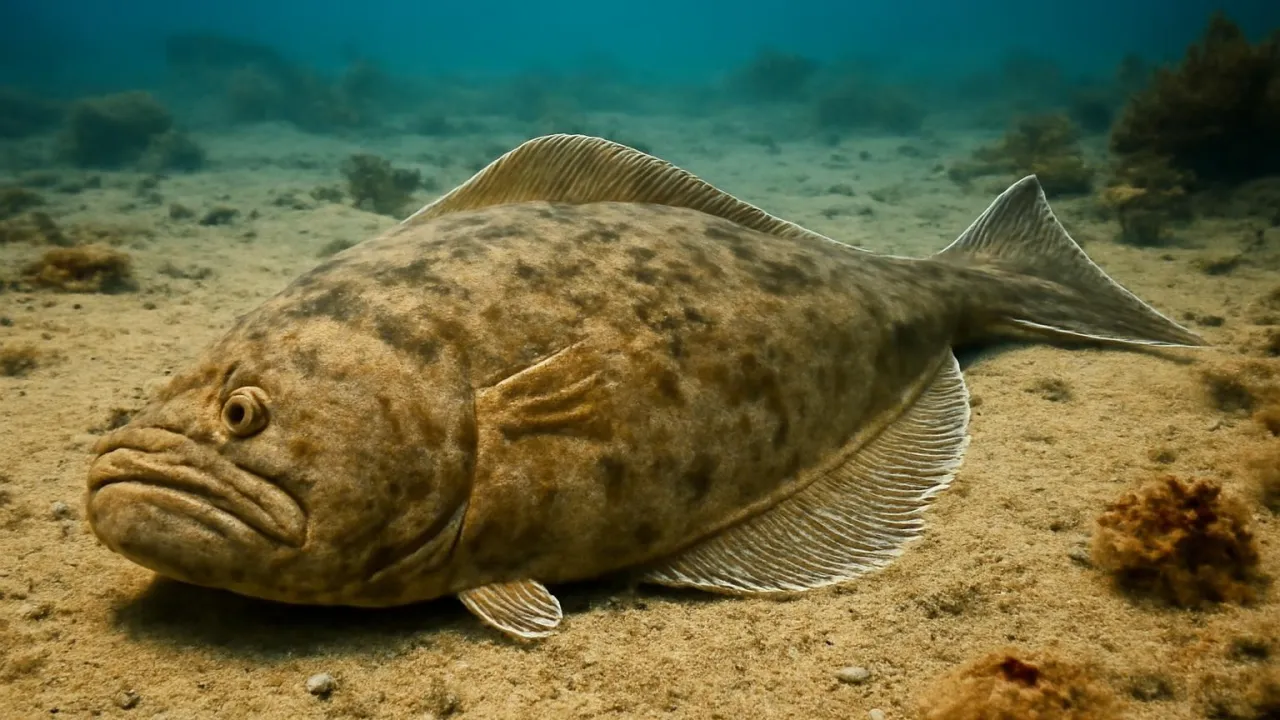
Pacific Halibut can weigh over 500 pounds, heavier than a small car!
✨ Word Sparks (Grade 2 Glossary)
Tap 🔊 to hear
camouflage
To hide by looking like the background
habitat
The place where an animal lives
predator
An animal that hunts other animals
🪝
How does a flat fish hide on the ocean floor?
1
Living Flat on the Sea
The Pacific Halibut lives on the ocean floor where it can hide easily. It stays flat to blend in with sand and rocks. This helps it avoid bigger fish that want to eat it.
2
Growing Big and Strong
This fish grows very large, sometimes as long as eight feet. It grows slowly and can live for many years. People catch it for food because it is so big and tasty.
3
Eating and Hunting
The halibut hunts fish, crabs, and squid by waiting quietly on the ocean floor. Its eyes are on one side so it can see while lying flat. It uses sharp teeth to catch its food quickly.
1. Why does the halibut lie flat on the ocean floor?
2. What does the halibut use to catch its food?
🤯 Mind-Blowing Fact • Grade 3
Pacific Halibut can live more than 50 years and grow to weigh over 500 pounds.
✨ Word Sparks (Grade 3 Glossary)
Tap 🔊 to hear
adaptation
A body change that helps survival
ecosystem
All plants and animals in one place
predator
An animal that hunts others for food
🪝
Did you know the Pacific Halibut can blend into the ocean floor like a chameleon?
1
Camouflage and Survival
The Pacific Halibut uses camouflage to hide from on the ocean floor. Its flat body and mottled skin help it blend with sand and rocks. This helps it avoid danger and sneak up on prey. Camouflage is a key survival skill for this fish.
2
Habitat and Range
This fish lives in cold North Pacific Ocean waters near Alaska and Canada. It prefers sandy or muddy bottoms where it can rest flat. The halibut’s habitat provides nutrients and shelter from strong currents. It is an important in this .
3
Body and Hunting
The halibut’s eyes are both on one side of its head to see while lying flat. Its wide mouth and sharp teeth help it catch fish, crabs, and squid. It waits quietly and uses sudden bursts of speed to capture prey. This hunting method is very effective in its environment.
4
Life Cycle and Growth
Pacific Halibut hatch from eggs that float near the ocean surface. Young halibut swim freely before settling to the bottom as they grow. They can live over 50 years and grow very large. Their long lifespan helps maintain healthy ocean food webs.
Pacific Halibut migrate seasonally to spawn in shallower waters, showing complex behavior.
✨ Word Sparks (Grade 4 Glossary)
Tap 🔊 to hear
food web
How animals eat each other in nature
migration
Animals moving to new places to live
conservation
Protecting animals and nature
🪝
How does the Pacific Halibut’s flat shape affect its role in the ocean ecosystem?
1
Camouflage and Defense
The Pacific Halibut’s flat body and mottled skin allow it to camouflage perfectly against the ocean floor, helping it avoid predators and sneak up on prey. This cause-and-effect relationship between shape and survival is vital for its defense. Because it blends so well, it can remain hidden for long periods. This adaptation also helps balance predator-prey interactions in its ecosystem.
2
Ecosystem Role and Food Web
As a top predator in cold North Pacific waters, the halibut controls populations of fish, crabs, and squid, maintaining a healthy . Its hunting impacts the abundance of prey species, which affects other marine animals indirectly. Humans also rely on halibut fisheries for food and economic benefits, making it important to manage sustainably. Overfishing can disrupt this balance and harm the ecosystem.
3
Geographic Distribution and Habitat
Pacific Halibut are found from California to Alaska and across to Russia’s eastern coasts, preferring sandy or muddy ocean bottoms between 50 and 1,300 feet deep. Their habitat choice provides shelter and abundant prey but exposes them to fishing pressures. Seasonal occur as halibut move to shallower waters to spawn, showing complex behavior linked to environmental cues.
4
Human Impact and Conservation
Due to their size and value, Pacific Halibut have been heavily fished, leading to strict regulations and efforts. Sustainable fishing quotas help protect halibut populations and ensure long-term ecosystem health. Research on their life cycle and habitat supports better management practices. Public awareness about halibut’s ecological role encourages responsible seafood choices.
2. What human action helps protect Pacific Halibut?
🤯 Mind-Blowing Fact • Grade 5
Pacific Halibut can live over 50 years and weigh more than 500 pounds, making them ocean giants.
✨ Word Sparks (Grade 5 Glossary)
Tap 🔊 to hear
benthic
Living on the ocean floor
binocular vision
Seeing with two eyes at once
apex predator
Top animal hunter in its home
🪝
What unique biological features allow the Pacific Halibut to thrive as a giant flatfish in cold northern oceans?
1
Taxonomy and Scientific Context
The Pacific Halibut, scientifically named Hippoglossus stenolepis, belongs to the family Pleuronectidae, known as righteye flounders. This species is one of the largest flatfish, adapted to life on the ocean floor. Its evolutionary adaptations include eye migration to one side and a flattened body shape. These traits distinguish it from other fish and support its ecological niche.
2
Physiological Mechanics and Adaptations
The halibut’s flattened body allows it to lie flush against the ocean substrate, reducing visibility to predators and prey. Both eyes are positioned on the right side, providing while lying flat. Its muscular tail enables sudden bursts of speed to capture prey, while its lateral line senses vibrations in the water. These physiological features optimize hunting and defense.
3
Life Cycle, Growth, and Conservation
Pacific Halibut begin life as planktonic larvae near the ocean surface before metamorphosing and settling to the zone. They grow slowly, reaching lengths up to eight feet and weights over 500 pounds, with lifespans exceeding 50 years. Overfishing has led to strict management policies including quotas and size limits to sustain populations. Conservation efforts rely on scientific research and international cooperation.
4
Ecological Role and Human Impact
As , Pacific Halibut regulate prey populations, influencing marine community structure and biodiversity. Their presence supports balanced food webs in North Pacific ecosystems. Commercial fisheries provide significant economic value but must balance harvest with sustainability. Human activities such as habitat disturbance and climate change pose ongoing challenges to halibut conservation.
5
Quantitative Comparisons and Environmental Range
Pacific Halibut can grow up to 8 feet long and weigh over 500 pounds, making them among the largest flatfish species globally. They inhabit depths from 50 to 1,300 feet and prefer water temperatures between 37 and 46 degrees Fahrenheit. Their seasonal migrations span hundreds of miles to spawning grounds, demonstrating remarkable endurance. These quantitative traits highlight their adaptation to cold, deep marine environments.