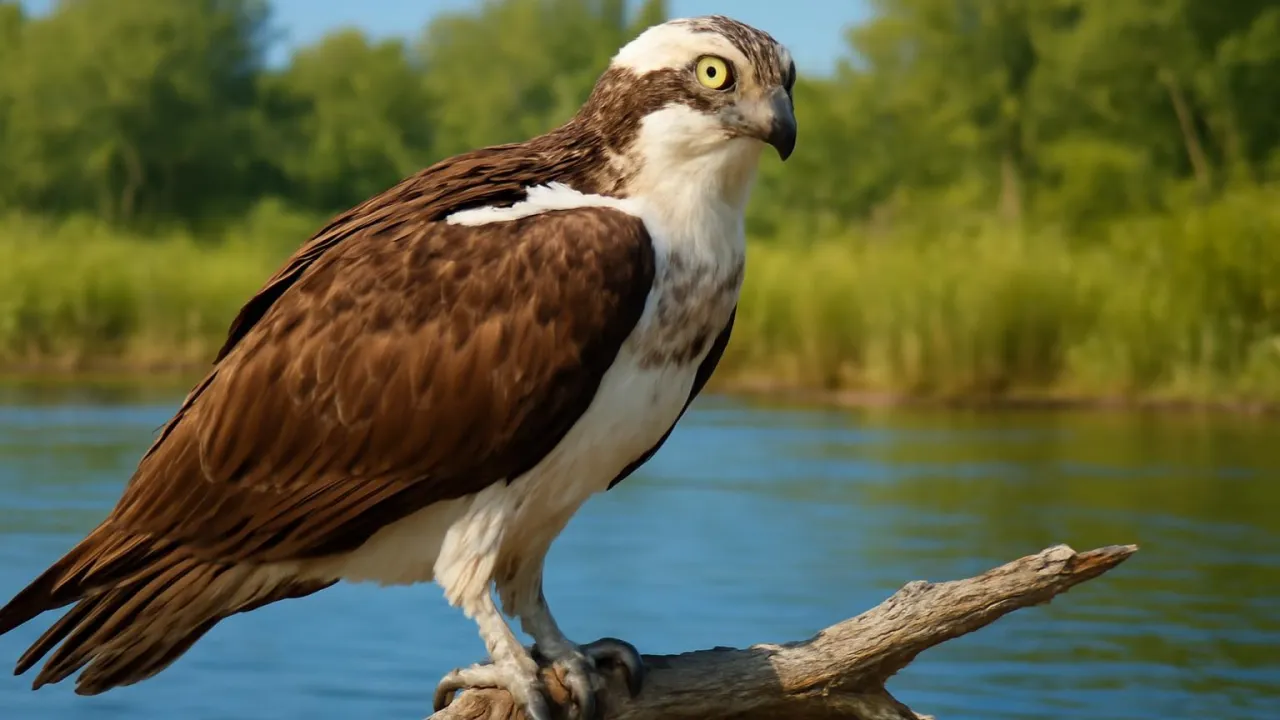
Ospreys can turn their feet backward to hold fish tightly while flying!
✨ Word Sparks (Grade 2 Glossary)
Tap 🔊 to hear
talons
Sharp claws on a bird's feet for catching prey
nest
A home made by birds to lay eggs and raise babies
dive
To jump quickly into water or air to catch something
🪝
Have you ever seen a bird dive into water to catch dinner?
1
Osprey's Home
Ospreys live near lakes, rivers, and oceans where fish swim freely. They build large on tall trees or poles near water. These nests are made from sticks and can be used for many years.
2
Life Cycle and Growth
Ospreys lay eggs in their during springtime. The baby birds hatch after about a month and stay in the nest while their parents bring food. Young ospreys learn to fly and hunt by watching their parents.
3
Amazing Fishing Talons
Ospreys have sharp curved that help them catch slippery fish. Their feet have special pads that keep fish from slipping away. They can feet-first into water to grab fish quickly.
Ospreys can rotate one of their toes backward to better grip fish while flying!
✨ Word Sparks (Grade 3 Glossary)
Tap 🔊 to hear
plunge-diving
Diving headfirst into water to catch prey
camouflage
Colors or patterns that help animals hide
ecosystem
A community of living things and their environment
🪝
What makes the osprey a skilled hunter of fish in the wild?
1
Osprey Habitat and Hunting
Ospreys live near freshwater and saltwater bodies where fish are abundant. Their sharp eyesight helps them spot fish beneath the water’s surface. They use a special hunting technique called to catch fish. This adaptation allows them to survive in many aquatic .
2
Physical Adaptations
The osprey’s feet have reversible outer toes that help grasp slippery fish firmly. Its talons are curved and sharp, perfect for holding prey tightly. The bird’s feathers are oily and water-resistant, which helps it stay dry after diving. These features are vital for effective fishing.
3
Life Cycle and Camouflage
Ospreys build large nests in tall trees or on man-made platforms near water. Their brown and white feathers provide against the sky and water, protecting them from predators. After hatching, chicks remain in the nest while parents bring food. This care increases their survival chances.
4
Ecosystem Role
As fish predators, ospreys help control fish populations and maintain healthy aquatic food webs. They often serve as indicators of environmental health because they need clean water to thrive. Human activities like pollution can affect osprey survival, making conservation important.
Ospreys can carry fish weighing up to half their own body weight while flying long distances!
✨ Word Sparks (Grade 4 Glossary)
Tap 🔊 to hear
reversible
Can be turned backward or changed direction
biodiversity
Many different kinds of plants and animals living together
pollution
Harmful things added to air, water, or land
🪝
How does the osprey’s unique body help it survive near water all over the world?
1
Global Habitat and Nesting
Ospreys are found on every continent except Antarctica, living near rivers, lakes, and coasts where fish are plentiful. They build large nests on tall trees, cliffs, or human-made platforms, often returning to the same site year after year. These nests can grow very large, sometimes weighing hundreds of pounds due to reuse.
2
Physiological Adaptations for Fishing
The osprey’s outer toe allows it to grasp fish with two toes in front and two behind, providing a strong grip. Its sharp talons and rough foot pads prevent fish from slipping during flight. Additionally, its dense, oily feathers repel water, allowing quick drying after repeated dives.
3
Role in Ecosystems and Human Impact
As a top predator of fish, the osprey plays a key role in aquatic food webs by regulating fish populations and supporting . However, and habitat destruction caused by humans have threatened osprey populations in some areas. Conservation efforts, including nest platform installations, have helped osprey numbers recover.
4
Cause and Effect in Osprey Survival
Because ospreys rely on clean water with abundant fish, directly reduces their food supply and breeding success. When water quality declines, ospreys may abandon nests or produce fewer chicks. Human protection laws and habitat restoration have improved conditions, demonstrating how people impact wildlife survival.
1. What helps ospreys hold fish tightly while flying?
2. How does pollution affect ospreys?
🤯 Mind-Blowing Fact • Grade 5
Ospreys can dive from 100 feet high and catch fish at speeds over 30 miles per hour!
✨ Word Sparks (Grade 5 Glossary)
Tap 🔊 to hear
zygodactyl
Two toes point forward, two point backward
pesticide
Chemicals used to kill insects or pests
apex piscivore
Top fish-eating predator in an ecosystem
🪝
What scientific secrets make the osprey a globally successful fish-eating raptor?
1
Taxonomy and Scientific Classification
The osprey, scientifically named Pandion haliaetus, is the sole species in the family Pandionidae. It belongs to the order Accipitriformes, which includes hawks and eagles. This unique taxonomic position reflects its specialized adaptations for fishing and aquatic hunting.
2
Physiological Mechanics of Hunting
Ospreys possess reversible outer toes that allow a foot arrangement, enabling two toes forward and two backward for a powerful grip. Their talons have sharp, curved claws and spiny foot pads called spicules that prevent fish from slipping. Their eyes have specialized retinal structures for excellent underwater vision during hunting dives.
3
Conservation History and Human Interaction
Osprey populations declined dramatically in the mid-20th century due to contamination, especially DDT, which caused eggshell thinning. After bans on harmful pesticides and active conservation programs including nest platform installations, osprey numbers have rebounded significantly across North America and Europe.
4
Quantitative Comparisons and Abilities
Adult ospreys typically weigh between 2 to 4 pounds (0.9 to 1.8 kilograms) and measure 20 to 26 inches (50 to 66 centimeters) in length. They can dive from heights of up to 100 feet (30 meters) at speeds reaching 30 to 40 miles per hour (48 to 64 kilometers per hour). Ospreys can carry fish weighing up to 50% of their body weight during flight.
5
Ecological Role and Adaptations
As , ospreys regulate fish populations and maintain aquatic ecosystem balance. Their migratory patterns span continents, with some traveling thousands of miles annually. Their physiological and behavioral adaptations, such as water-resistant plumage and precise hunting techniques, enable survival in diverse environments worldwide.