🇺🇸 U.S. HISTORY
🏛️ Westward Overland Migration • Missouri to Oregon (1840s–1860s)
VA History & Social Science SOL K.1, 1.2, 2.4, VS.1–VS.10, USI & USII
Oregon Trail Pioneers
Two Thousand Miles Beside Canvas Covered Wagons
Grade 5 • Advanced • 377 words
⏳ Era / StatehoodPeak Trail Era: 1843–1869
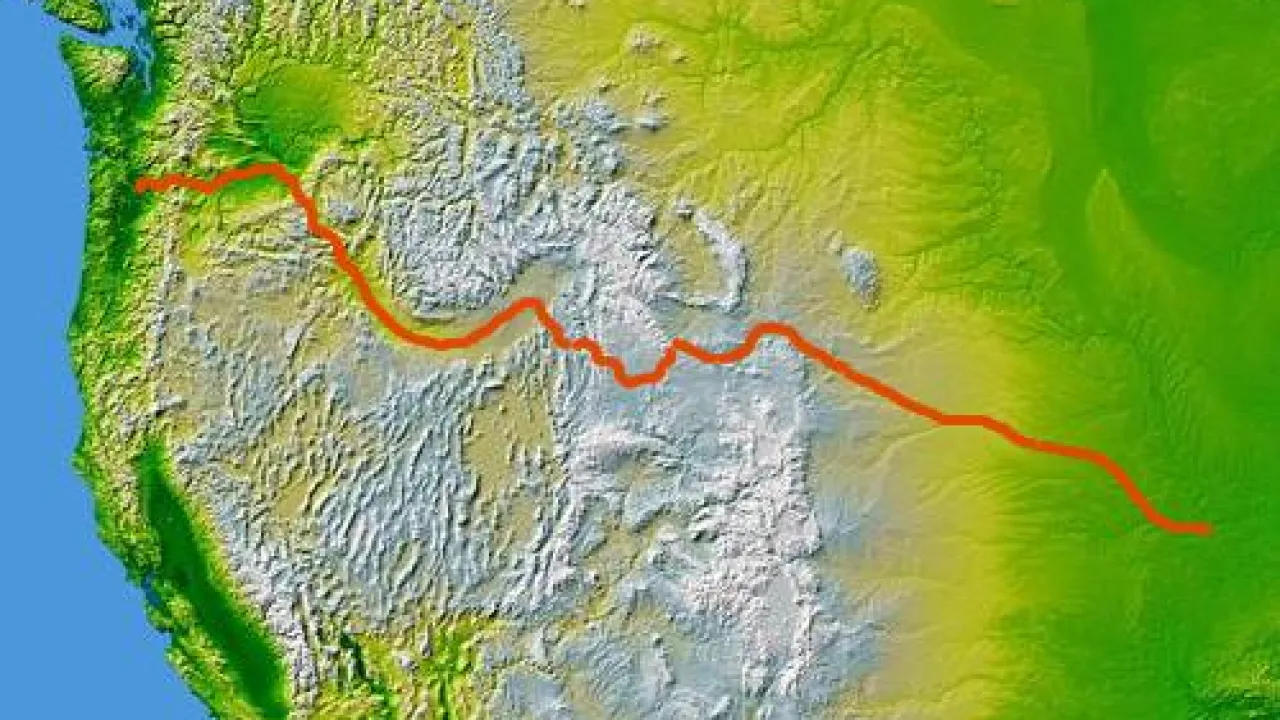
🗺️ Region / Capital2,170 Miles (Independence, Missouri, to Willamette Valley, Oregon)
📜 Key MilestoneCarried Hundreds of Thousands of Settlers Across Plains & Rockies
⚡ Historical SparkWalked fifteen miles a day for five months beside ox-drawn prairie schooners
🤯 Mind-Blowing Fact • Grade 1
Deep wagon-wheel ruts carved into soft sandstone along the Oregon Trail in Wyoming and Nebraska can still be seen in the ground today!
✨ Word Sparks (Grade 1 Glossary)
Tap 🔊 to hear
pioneer
Person who travels west to build a new home
oxen
Strong cattle trained to pull heavy wagons
prairie schooner
Covered wagon whose white top looked like ship sails
🪝
Could your family walk two thousand miles beside a wooden wagon?
1
Creaking Wheels on Dusty Grass
Creak, rattle go big wooden wheels! White cloth wagon tops look like sails on green grass. Strong pull heavy loads west.
2
Walking to Green Valleys
In the 1840s, families left Missouri on the Oregon Trail. Most kids walked beside the wagon so the would not tire!
3
Campfires Under Big Stars
At night, wagons formed a circle around warm campfires. Five months later, reached green farms in Oregon!
1. Why did most healthy pioneer kids walk beside the covered wagon instead of riding inside?
2. About how long did it take a wagon train to travel the Oregon Trail?
🤯 Mind-Blowing Fact • Grade 2
More than five thousand pioneer names are still carved into giant granite Independence Rock in Wyoming—nicknamed 'The Great Register of the Desert'!
✨ Word Sparks (Grade 2 Glossary)
Tap 🔊 to hear
wagon train
Line of covered wagons traveling west together safely
landmark
Tall rock or feature showing travelers their location
fertile
Rich soil where crops grow tall and healthy
🪝
How did bumpy wagon wheels churn fresh butter all by themselves on the Oregon Trail?
1
Packing a Prairie Schooner
Imagine fitting everything your family owns into a wooden wagon box just four feet wide and ten feet long! Starting in towns like Independence, Missouri, during the 1840s, pioneers packed barrels of flour, cornmeal, bacon, tools, and seeds for a 2,170-mile trek to Oregon's Willamette Valley.
2
Chimney Rock and Independence Rock
Teams of patient oxen pulled white-canvas 'prairie schooners' fifteen miles a day along the Platte River. Families cheered when they spotted tall stone like Chimney Rock in Nebraska and carved their names on Independence Rock in Wyoming by the Fourth of July.
3
Teamwork on the Trail
Mothers hung buckets of morning milk underneath bouncing wagons so evening bumps turned cream into fresh butter for campfire biscuits!
1. Why did pioneers hope to reach Independence Rock in Wyoming by July 4?
2. What clever trick turned fresh milk into butter during a day's march?
🤯 Mind-Blowing Fact • Grade 3
When heavy furniture proved too much for tired oxen halfway across Nebraska, families lightened loads beside the trail—leaving pianos, iron stoves, and trunks scattered in the prairie grass!
✨ Word Sparks (Grade 3 Glossary)
Tap 🔊 to hear
yoke
Curved wooden bar linking two oxen together
South Pass
Wide, gentle valley crossing the Rocky Mountains
homestead
A family's farmhouse and surrounding farm land
🪝
Why did most Oregon Trail families choose slow-moving oxen instead of fast horses to pull their wagons?
1
Jumping Off From Missouri
Every April and May in the 1840s and 1850s, bustling Missouri River towns like Independence and St. Joseph overflowed with families bound for green farmland in Oregon's Willamette Valley. Once spring prairie grass grew tall enough to feed livestock, elected trail captains signaled wagon trains to roll west.
2
Oxen Beat Horses on Tough Trails
Experienced guides advised buying of sturdy oxen rather than horses. Although oxen plodded at just two miles per hour, they cost less, ate tough prairie grass, rarely wandered off at night, and pulled two-thousand-pound prairie schooners across muddy rivers and steep ridges.
3
Through South Pass
Following the Platte and Sweetwater Rivers past Chimney Rock and Fort Laramie, pioneers crossed the Rocky Mountains through Wyoming's wide, gentle —a twelve-mile-wide saddle discovered earlier by fur trappers and Native travelers.
4
Hardships and New Beginnings
Crossing Idaho's dusty Snake River Plain and Oregon's steep Blue Mountains tested everyone's grit before families finally reached new .
1. Why were oxen preferred over horses by most Oregon Trail families?
2. Which wide natural gap in Wyoming allowed wooden wagons to roll right over the Continental Divide?
🤯 Mind-Blowing Fact • Grade 4
Where few trees grew across hundreds of miles of the Great Plains, pioneer children collected dried 'buffalo chips' in aprons and baskets every afternoon so families could bake evening skillet bread!
✨ Word Sparks (Grade 4 Glossary)
Tap 🔊 to hear
emigrant
Traveler leaving home to settle in new territory
barter
Trading goods directly without using coins or bills
linseed oil
Flaxseed oil rubbed onto canvas to shed rain
🪝
How did daily chores, river crossings, and Native trading networks keep hundreds of thousands of pioneers alive across 2,170 miles?
1
The Great Migration Begins
Picture waking at 4:00 a.m. to the crack of sentinel rifles along the Platte River in May 1843, the year nearly a thousand settlers proved large wagon trains could reach Oregon overland. Drawn by reports of disease-free climate and rich black soil in the Willamette Valley—and encouraged after the 1846 Oregon Treaty settled the border with Great Britain at the forty-ninth parallel—roughly 300,000 to 400,000 followed overland trails west before 1869.
2
Life on Foot From Dawn to Dusk
Inside a waxed canvas cover waterproofed with , families packed 600 pounds of flour, 400 pounds of bacon, coffee, dried apples, Dutch ovens, and spare wooden axles. Children gathered dried buffalo dung—called 'buffalo chips'—on treeless plains to fuel evening cooking fires. Far from Hollywood myths of constant battles, most early encounters with Pawnee, Lakota, Shoshone, and Nez Perce peoples involved helpful bartering: trading cloth, iron tools, or cattle for moccasins, dried salmon, horses, and ferry guidance across dangerous rivers.
3
Real Dangers Along the Way
Actual trail hazards came from contaminated water causing cholera, sudden thunderstorms, accidental wagon-wheel injuries, and treacherous crossings of the Kansas, Green, and Snake Rivers. After cresting Wyoming's 7,500-foot South Pass, California-bound gold seekers split southwest near Fort Hall while Oregon pioneers braved the steep Blue Mountains and Columbia River Gorge.
4
Iron Rails Close an Era
When the Transcontinental Railroad linked East and West in May 1869, a five-month walking odyssey shrank to a one-week train ride—yet wagon ruts carved into Western stone remain as monuments to pioneer endurance.
1. How did most interactions between early Oregon Trail pioneers and Native American tribes actually look?
2. What 1869 invention finally ended the era of five-month covered-wagon trips west?
🤯 Mind-Blowing Fact • Grade 5
Near Guernsey, Wyoming, thousands of iron-rimmed wagon wheels wore grooves up to five feet deep into solid sandstone cliffs—footprints of history still visible after more than 170 years!
✨ Word Sparks (Grade 5 Glossary)
Tap 🔊 to hear
bylaws
Agreed rules written by a group to govern itself
ford
Shallow place where wagons wade across a river
forty-ninth parallel
Latitude line forming the western U.S.–Canada border
🪝
How did North America's longest overland migration reshape Western ecosystems, Indigenous homelands, and the map of the Pacific Northwest?
1
From Fur Trappers' Trace to Family Highway
Originally blazed in segments by Indigenous hunters and Rocky Mountain fur trappers such as Robert Stuart (1812) and Jedediah Smith (1824), the 2,170-mile Oregon Trail evolved from a narrow pack-mule path into a wheeled emigrant corridor following the Panic of 1837. After missionaries Marcus and Narcissa Whitman demonstrated wagons could reach Fort Boise in 1836, the 'Great Migration' of May 1843 led nearly 1,000 settlers and 120 wagons successfully into Oregon's lush Willamette Valley.
2
Logistics of a Five-Month Crossing
Departing Missouri River outfitting hubs—Independence, Westport, St. Joseph, and Council Bluffs—in late April once prairie bluestem grass could sustain draft stock, families organized democratic wagon companies with written and elected captains. Rather than giant Conestoga freighters, emigrants favored compact, nimble farm wagons ('prairie schooners') pulled by two to four yokes of oxen hauling 1,800 to 2,500 pounds of provisions. Averaging twelve to fifteen miles daily, families timed their ascent of the Platte and North Platte valleys—past Courthouse Rock, Chimney Rock, Fort Laramie, and Wyoming's granite Independence Rock—to clear 7,412-foot South Pass well before October blizzards.
3
Disease, River Fords, and the Barlow Road
Between 1840 and 1869, an estimated 350,000 to 400,000 emigrants traveled the shared Platte corridor toward Oregon, California, and Utah. Contrary to popular legend, infectious diseases—principally waterborne cholera—along with drownings at turbulent river and accidental gunshot or wheel mishaps accounted for over ninety percent of trail fatalities. Beyond Fort Hall in Idaho, Oregon-bound families endured arid sagebrush plains along the Snake River, steep ascents of the Blue Mountains, and either perilous rafts through Columbia River rapids at The Dalles or Samuel Barlow's 1846 toll road around Mount Hood.
4
Women, Diverse Pioneers, and Indigenous Impact
Hundreds of trail diaries penned by women document grueling labor alongside remarkable resilience, while African American pioneers such as George Washington Bush—who helped found Tumwater in present-day Washington after facing exclusionary laws south of the Columbia—carved lasting communities in the Northwest. Simultaneously, heavy wagon traffic depleted riverfront timber, decimated bison pastures, introduced epidemic diseases, and spurred treaties such as the 1851 Fort Laramie Treaty that compressed Plains and Plateau nations onto shrinking lands.
5
Oregon Statehood and National Trail
Bolstered by surging American settlement, Polk's administration concluded the 1846 Oregon Treaty with Britain along the , Congress passed the Donation Land Claim Act of 1850, Oregon entered the Union as the thirty-third state in 1859, and Congress preserved surviving ruts—like five-foot-deep limestone grooves at Guernsey, Wyoming—as the Oregon National Historic Trail.