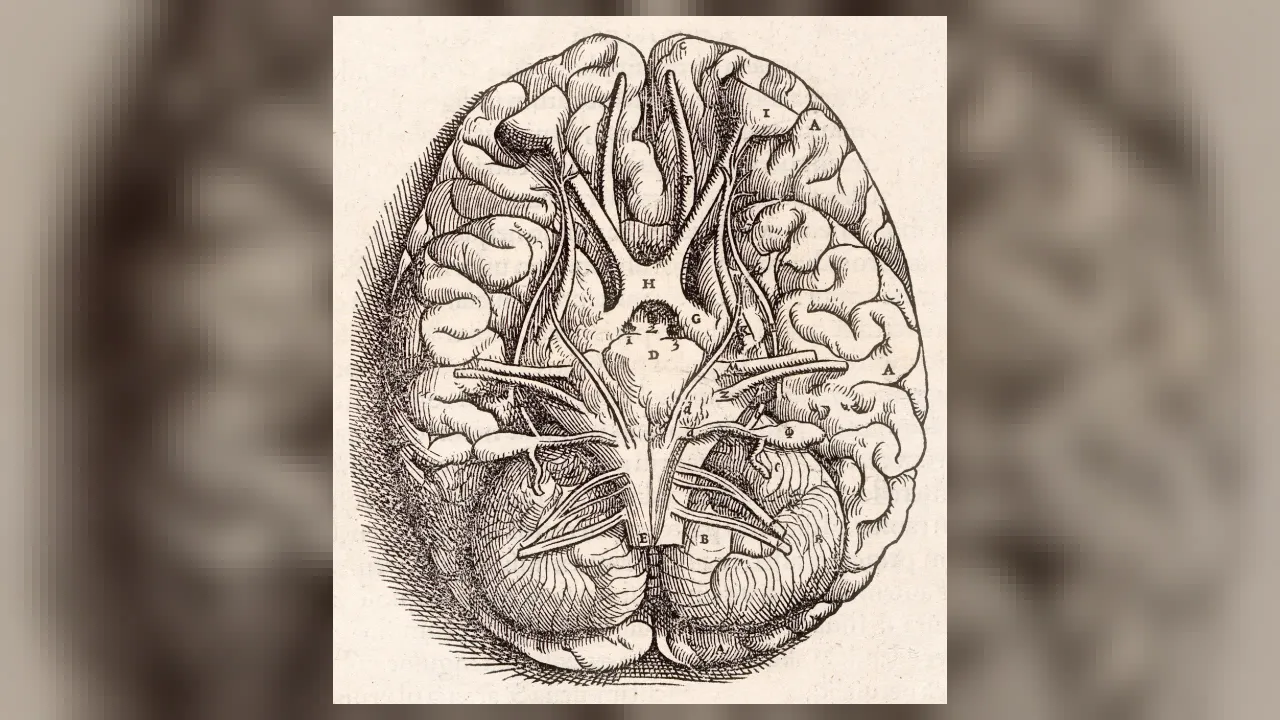
1. Where does your olfactory bulb sit inside your head?
2. About how big is one human olfactory bulb?
🤯 Mind-Blowing Fact • Grade 2
Humans actually have two olfactory bulbs—one above the left nostril and one above the right nostril!
✨ Word Sparks (Grade 2 Glossary)
Tap 🔊 to hear
odor
a distinctive smell carried through the air
nostril
one of the two openings of your nose
receptor
a tiny cell part that catches signals
🪝
Why does food seem plain and flavorless when you have a stuffy nose?
1
Catching Floating Molecules
Breathe in near fresh popcorn or pine trees! Invisible bits drift high into the roof of your nose. Millions of tiny smell sensors catch them like baseball mitts.
2
The Sorting Station Above
Those sensors send quick signals through tiny holes in a thin bone straight into two pea-sized pads under your front brain. Each pad is called an olfactory bulb, and it works like a busy mailroom.
3
Teamwork With Taste and Memory
Your olfactory bulb groups matching scent clues together and sends the finished message deeper into your brain. That is why one whiff of campfire smoke can bring back a favorite trip!
1. What does the olfactory bulb act like for smell signals?
2. Why does soup lose much of its flavor when your nose is stuffed up?
🤯 Mind-Blowing Fact • Grade 3
Olfactory neurons feeding your olfactory bulb are among the very few nerve cells in the human body that continuously replace themselves every month or two!
✨ Word Sparks (Grade 3 Glossary)
Tap 🔊 to hear
molecule
an ultra-tiny particle of a substance
glomeruli
tiny round nerve hubs inside the olfactory bulb
cribriform plate
sieve-like skull bone letting smell nerves pass
🪝
Why can the smell of cinnamon or rain unlock a vivid memory faster than a photograph?
1
From Airway to Brainway
Inhale over a mug of hot cocoa! Swirling vapor carries microscopic odor to a postage-stamp patch of tissue high inside your nasal cavity. Roughly six to ten million receptor neurons dissolve those molecules in mucus and spark electrical impulses.
2
Crossing the Sieve Bone
Bundled nerve fibers thread upward through tiny pinpoint openings in a bony shelf called the . Waiting directly on the other side are twin oval structures on the underside of your forebrain: the olfactory bulbs.
3
Chord Patterns of Scent
Inside each bulb sit thousands of round relay hubs called . Every hub collects wires from just one of your roughly four hundred receptor types. Like musical notes forming a chord, blended hubs reveal whether you smelled lemon peel, mint, or toasted bread.
4
Express Lane to Memory
Unlike sight or hearing, smell signals skip the brain's main relay switchboard and wire straight to emotion and memory centers. That direct express lane explains why scents spark sudden, vivid memories!
1. How do smell nerves travel from the top of your nose into the olfactory bulb?
2. Why do smells trigger strong memories so quickly?
🤯 Mind-Blowing Fact • Grade 4
Bloodhounds have olfactory bulbs roughly forty times larger relative to brain size than humans, packed with hundreds of millions of scent receptors!
✨ Word Sparks (Grade 4 Glossary)
Tap 🔊 to hear
volatile
easily evaporating into air as floating vapor
combinatorial
mixing small sets into many unique combinations
retronasal
food aromas rising from mouth into nasal cavity
🪝
With only about 400 types of smell receptors, how can your olfactory bulb tell tens of thousands of scents apart?
1
Chemical Keys in Every Breath
Step outside right after a summer thunderstorm, and an earthy scent called petrichor fills your nostrils! Every aroma—from ripe peaches to campfire cedar—is made of molecules light enough to evaporate and drift on air currents. High in the nasal roof, millions of olfactory sensory neurons wave microscopic cilia coated in specialized receptor proteins.
2
Convergence Inside Glomeruli
Although millions of neurons carpet your upper nose, each individual neuron builds only one of roughly four hundred receptor varieties. Their axons ascend through the perforated ethmoid bone and converge with astonishing neatness inside the olfactory bulb. Every neuron expressing the exact same receptor plugs into the same spherical tangle of synapses, called a glomerulus.
3
Combinatorial Scent Coding
How can four hundred receptor types identify countless aromas? Your olfactory bulb uses coding, much like a twenty-six-letter alphabet spells whole libraries of words. A single rose aroma activates dozens of different glomeruli in a signature pattern, which mitral and tufted cells sharpen before transmitting onward.
4
Retronasal Flavor and Limbic Links
Scents also reach the nose from behind your palate while you chew—a pathway called olfaction that creates up to eighty percent of rich food flavor. Meanwhile, olfactory bulb axons project directly to the amygdala and hippocampus, tying aromas tightly to safety warnings and cherished memories.
1. How does the olfactory bulb recognize far more than 400 different smells?
2. What is retronasal olfaction?
🤯 Mind-Blowing Fact • Grade 5
Scientists Linda Buck and Richard Axel revealed that roughly three percent of all human genes are devoted solely to building smell receptors that wire into your olfactory bulbs!
✨ Word Sparks (Grade 5 Glossary)
Tap 🔊 to hear
lateral inhibition
quieting neighboring nerve signals to sharpen contrast
mitral cells
main output neurons sending bulb signals brainward
piriform cortex
primary brain region that identifies distinct odors
🪝
Why is smell the only human sense that bypasses the brain's central relay station to wire straight into ancient memory circuits?
1
A Direct Window to the Chemical World
Slice into a fresh orange, and bursts of limonene molecules spray into the air, entering your nostrils at highway speed when you inhale. Perched beneath the frontal lobes on the cribriform plate of the ethmoid bone, your paired olfactory bulbs—each roughly eleven millimeters long—serve as the forebrain's dedicated chemical processors, translating airborne molecules into crisp neural maps.
2
Precision Wiring of Six Million Axons
High in the olfactory epithelium, roughly six to ten million bipolar sensory neurons extend odor-catching cilia into a protective mucus layer. Each neuron expresses just one odorant receptor gene from a family of approximately four hundred functional human genes. Remarkably, scattered neurons carrying identical receptors thread unmyelinated cranial nerve I axons through the skull base to converge onto matching spherical neuropil hubs—glomeruli—inside the olfactory bulb.
3
Signal Sharpening by Mitral and Granule Cells
Inside roughly five thousand human glomeruli, incoming axons synapse onto principal output neurons called mitral and tufted cells. Surrounding interneurons—periglomerular and granule cells—use to quiet weak background noise while sharpening dominant scent contours. This neural contrast filter lets you pick out the aroma of roasted garlic even inside a bustling, multi-scented kitchen.
4
Bypassing the Thalamus
Whereas sight, hearing, and touch route first through a central gatekeeper called the thalamus, mitral cell axons sweep along the olfactory tract directly into the , amygdala, and entorhinal cortex feeding the hippocampus. Evolution preserved this ancient shortcut so organisms could instantly detect spoiled food, smoke, or familiar shelter.
5
Nobel Prize Discovery of Scent Maps
For decades, how the brain decoded tens of thousands of odors remained a mystery. In 1991, researchers Linda Buck and Richard Axel discovered the vast multigene family encoding odorant receptors and mapped how matching signals converge onto specific olfactory bulb glomeruli—a landmark breakthrough honored with the 2004 Nobel Prize in Physiology or Medicine.