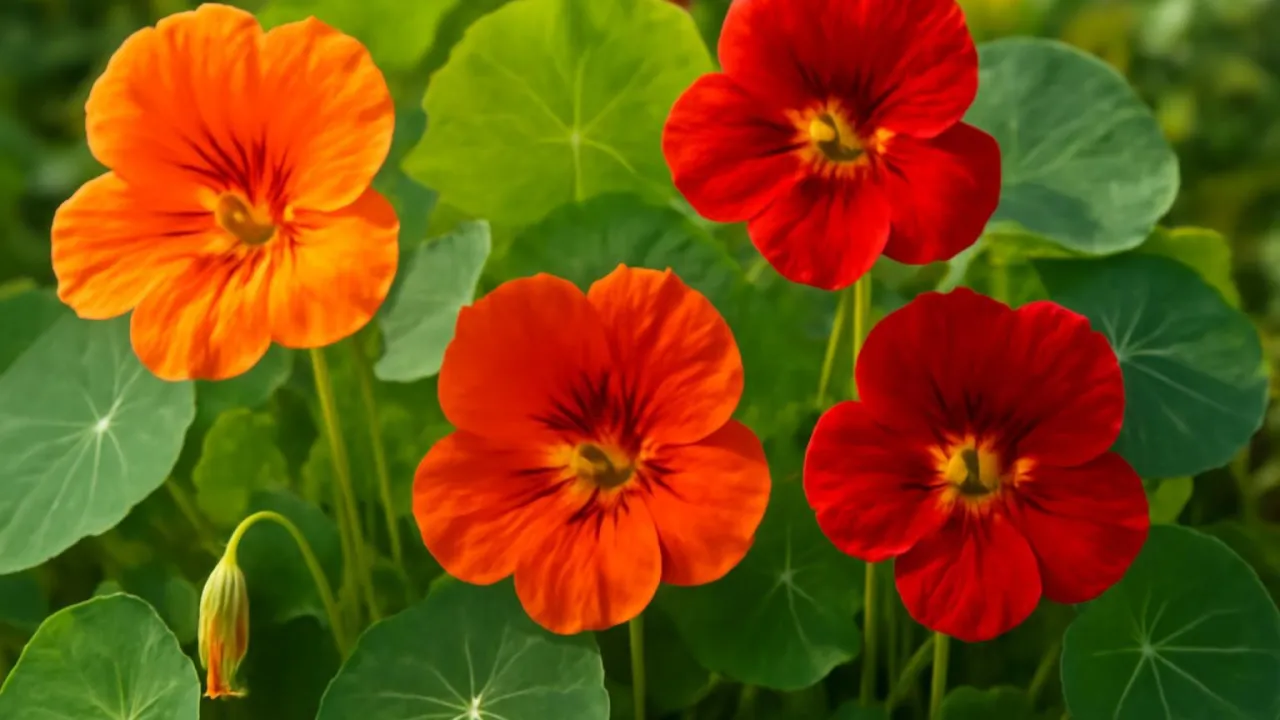
Nasturtium flowers have a peppery taste that can spice up salads and dishes!
✨ Word Sparks (Grade 2 Glossary)
Tap 🔊 to hear
nectar
Sweet juice inside flowers that bees drink.
peppery
A spicy taste like black pepper in food.
insect
A small bug with six legs and wings.
🪝
Have you ever tasted a flower that feels spicy in your mouth?
1
Bright Colors and Shapes
Nasturtiums have bright orange, red, and yellow flowers that look like small trumpets. Their round green leaves grow on long stems. The flowers bloom in warm weather and attract many .
2
Where Nasturtiums Live
These flowers grow well in gardens and pots with soft, well-drained soil. Nasturtiums like full sun and need water to grow healthy. They come from South America but grow all over the world now.
3
A Spicy Surprise
People can eat nasturtium flowers and leaves because they taste and fresh. Bees and butterflies visit the flowers to drink . The spicy taste helps keep bugs away that might eat the plant.
Nasturtiums use their spicy flavor to defend against pests and attract helpful pollinators.
✨ Word Sparks (Grade 3 Glossary)
Tap 🔊 to hear
pollination
When pollen moves to help plants make seeds.
predator
An animal or bug that eats other creatures.
nutrients
Food and minerals plants need to grow strong.
🪝
Did you know nasturtiums use their spicy taste to protect themselves?
1
Bright Flowers and Leaves
Nasturtiums have bright, trumpet-shaped flowers in orange, red, and yellow colors. Their round, shield-like leaves help shade the soil and keep moisture. These plants use their bright colors to attract pollinators like bees and butterflies.
2
Growing and Living Places
Nasturtiums grow best in warm, sunny places with well-drained soil that provides . They are native to South America but have adapted to many gardens worldwide. Their climbing or trailing stems help them spread and cover ground or climb fences.
3
Spicy Defense and Pollination
The peppery taste of nasturtium leaves and flowers acts as a defense against hungry like insects. This spicy flavor keeps many bugs away but attracts pollinators that help with . Pollination helps the plant make seeds to grow new nasturtiums.
4
Helping Gardens and People
Nasturtiums are often planted in gardens to attract helpful insects that eat pests. Their edible flowers add color and flavor to salads and dishes. Gardeners use them as companion plants to protect vegetables from harmful bugs naturally.
Nasturtiums protect gardens naturally by repelling pests and attracting helpful insects.
✨ Word Sparks (Grade 4 Glossary)
Tap 🔊 to hear
symbiosis
A helpful relationship between two living things.
erosion
When soil washes or blows away from land.
companion plant
A plant that helps other plants grow well.
🪝
How does nasturtium’s spicy flavor affect its role in the garden ecosystem?
1
Bright Colors and Adaptations
Nasturtiums display bright orange, red, and yellow flowers that attract pollinators like bees and butterflies, which help the plant reproduce by spreading pollen. Their round leaves provide shade that reduces soil evaporation, helping the plant conserve water in dry environments. This adaptation allows nasturtiums to survive in warm climates with less water.
2
Ecosystem Role and Symbiosis
Nasturtiums serve as in gardens because their spicy taste repels harmful pests, protecting nearby vegetables from damage. They attract beneficial insects that prey on pests, creating a natural symbiotic relationship that supports garden health and biodiversity. This balance helps reduce the need for chemical pesticides.
3
Geographic Distribution and Growth
Originally from South America, nasturtiums have spread worldwide due to their easy growth and adaptability to many climates. They thrive in full sun and well-drained soils, and their trailing stems enable them to cover ground or climb, helping prevent soil in gardens. Their ability to grow in various environments makes them popular worldwide.
4
Human Uses and Agricultural Impact
Humans cultivate nasturtiums for their edible flowers and leaves, which add peppery flavor to salads and dishes. Their pest-repellent properties reduce the need for chemical pesticides, promoting organic gardening and sustainable agriculture practices. Nasturtiums also support pollinator populations important for food crops.
1. What do nasturtiums do to protect nearby plants?
2. Where did nasturtiums originally come from?
🤯 Mind-Blowing Fact • Grade 5
Nasturtiums produce natural chemicals that repel pests, reducing the need for pesticides in gardens and farms.
✨ Word Sparks (Grade 5 Glossary)
Tap 🔊 to hear
glucosinolates
Natural plant chemicals that taste spicy and repel bugs.
peltate
Leaf shape with the stem attached in the middle.
pollinator
An animal that helps plants make seeds by moving pollen.
🪝
What scientific traits make nasturtiums a valuable plant in ecology and cuisine?
1
Taxonomy and Botanical Context
Nasturtium, scientifically named Tropaeolum majus, belongs to the Tropaeolaceae family, native to the Andes mountains in South America. Despite its name, it is unrelated to the watercress genus Nasturtium. Botanically, its edible flowers and leaves are prized for their unique peppery flavor and vibrant colors that attract .
2
Physiological Adaptations and Mechanics
Nasturtiums have leaves with long petioles attached near the center, allowing efficient water runoff and reducing fungal infections. Their bright, funnel-shaped flowers feature nectar spurs that attract specific , enhancing reproductive success through specialized pollination. These adaptations increase survival in diverse environments.
3
Ecological Role and Conservation
In ecosystems, nasturtiums serve as companion plants by deterring herbivorous insects with , natural compounds producing their spicy taste. This reduces pesticide use in agriculture and supports biodiversity. Although widely cultivated, wild populations face habitat loss in native ranges, highlighting conservation importance.
4
Botanical History and Human Use
Nasturtiums were introduced to Europe in the 16th century and quickly became popular ornamental and edible plants. Their flowers and leaves are used in culinary dishes worldwide, valued for their vibrant colors and peppery taste, which adds zest to salads and garnishes. They also have medicinal uses in traditional remedies.
5
Quantitative Comparisons and Growth
Nasturtiums grow between 1 and 3 feet tall (30 to 90 centimeters), with flowers measuring 1 to 2 inches across (2.5 to 5 centimeters). They thrive in temperatures from 55 to 75 degrees Fahrenheit (13 to 24 degrees Celsius) and prefer well-drained soils with moderate moisture. Their growth rate and flowering time vary by climate and soil quality.