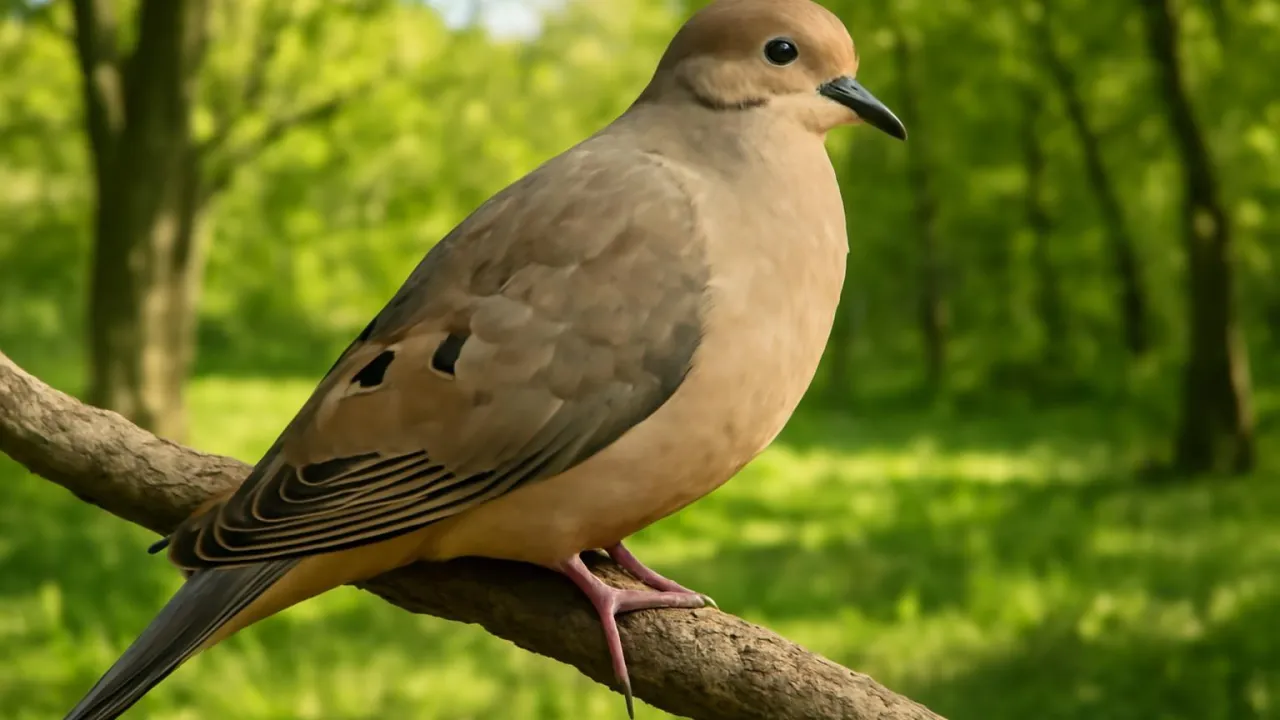
Mourning doves can fly very fast, reaching speeds up to 55 miles per hour.
✨ Word Sparks (Grade 2 Glossary)
Tap 🔊 to hear
nest
A bird’s home made with twigs and leaves
predator
An animal that hunts other animals for food
feathers
Soft parts that cover a bird’s body
🪝
Did you know mourning doves have soft songs that sound like crying?
1
Where They Live
Mourning doves live in open fields and near trees. They like warm places and farms. They build in bushes or trees. They are very common across North America.
2
Growing Up
Baby doves hatch from small white eggs. Both parents take turns keeping eggs warm. The babies grow fast and learn to fly in just weeks. This helps them stay safe from .
3
Cool Feather Colors
Their are light brown with black spots. This coloring helps them hide from hawks and snakes. Their long, pointed tails help them fly quickly and change direction fast.
Mourning doves can fly faster than most other songbirds, reaching speeds up to 55 miles per hour.
✨ Word Sparks (Grade 3 Glossary)
Tap 🔊 to hear
camouflage
Colors that help animals hide from others
incubate
Keeping eggs warm until babies hatch
predator
An animal that hunts other animals for food
🪝
Have you ever wondered why mourning doves sound so soft and sad?
1
Habitat and Camouflage
Mourning doves live in open fields, woodlands, and towns across North America. Their light brown feathers with black spots provide that helps them avoid . This adaptation allows them to blend into dry grasses and tree bark. They often perch quietly to stay hidden.
2
Life Cycle and Growth
These birds lay two white eggs in a flimsy nest made of twigs. Both parents share the duty of incubating the eggs and feeding the hatchlings. The young grow quickly and develop feathers within two weeks. This fast growth helps them escape sooner.
3
Feather Features and Flight
Mourning doves have long, pointed tails that help with quick, agile flight. Their feathers are soft and smooth, reducing noise when flying. This silent flight helps them avoid . They can reach speeds up to 55 miles per hour during flight.
4
Soft Songs and Communication
The mourning dove’s soft cooing sounds like a sad song, which is used to attract mates and mark territory. This gentle sound carries well through open spaces. Their song is a key part of their communication and survival strategy.
1. Why do mourning doves have brown feathers with spots?
2. What is the purpose of the mourning dove’s soft cooing song?
🤯 Mind-Blowing Fact • Grade 4
Mourning doves can fly at speeds up to 55 miles per hour, faster than many other songbirds.
✨ Word Sparks (Grade 4 Glossary)
Tap 🔊 to hear
ecosystem
A community of plants and animals living together
migration
Seasonal movement of animals to new places
crop milk
A special food pigeons feed their babies
🪝
Why does the mourning dove’s soft cooing echo across fields and forests?
1
Habitat and Geographic Range
Mourning doves inhabit open fields, woodlands, farms, and suburban areas throughout most of North America. They prefer warm climates but can adapt to colder regions during . Their wide geographic range allows them to thrive in many , from deserts to forests.
2
Adaptations for Survival
Their light brown and spotted feathers provide excellent camouflage against predators such as hawks and snakes. The long, pointed tail aids in swift, agile flight, helping them escape threats quickly. Their soft, mournful cooing serves as communication to attract mates and defend territories.
3
Role in Ecosystems and Human Impact
Mourning doves play a key role in food webs by consuming seeds and dispersing them, which helps plant growth. They serve as prey for many predators, balancing naturally. Human activities like habitat loss and hunting have affected some populations, but mourning doves remain widespread and common.
4
Life Cycle and Behavior
Mourning doves build simple nests of twigs in trees or shrubs, where they lay two eggs. Both parents incubate the eggs and feed the chicks with nutrient-rich . The young fledge within two weeks, quickly learning to fly and find food independently.
Mourning doves can fly faster than 55 miles per hour, making them among the fastest songbirds in North America.
✨ Word Sparks (Grade 5 Glossary)
Tap 🔊 to hear
Columbidae
The bird family that includes doves and pigeons
aerodynamic
Shaped to move smoothly through the air
crop milk
Special food pigeons feed their babies
🪝
What makes the mourning dove’s soft cooing and swift flight vital for its survival?
1
Scientific Classification and Distribution
The mourning dove, scientifically named Zenaida macroura, belongs to the family, which includes pigeons and doves. It is one of the most widespread birds in North America, ranging from southern Canada to Central America. This species thrives in diverse habitats such as open fields, woodlands, deserts, and urban areas.
2
Physiological Adaptations and Flight Mechanics
Mourning doves have lightweight bodies and powerful breast muscles that enable rapid wing beats, allowing flight speeds up to 55 miles per hour. Their long, pointed tails provide stability and maneuverability during fast, agile flights. Their soft feathers reduce noise, aiding in stealthy movement to avoid predators.
3
Communication and Reproductive Behavior
The mourning dove’s distinctive soft cooing serves multiple purposes: attracting mates, establishing territory, and signaling alarm. During breeding, both parents incubate two white eggs and feed hatchlings with nutrient-rich , a secretion unique to pigeons and doves. The young fledge within two weeks, rapidly developing flight skills.
4
Ecological Role and Human Interaction
Mourning doves contribute significantly to seed dispersal, influencing plant community dynamics and ecosystem health. They are prey for raptors, snakes, and mammals, maintaining balanced food webs. Although hunting and habitat loss impact some populations, mourning doves remain abundant due to their adaptability and widespread range.
5
Quantitative Comparisons and Conservation
Mourning doves weigh approximately 4 to 6 ounces (113 to 170 grams) and measure about 12 inches (30 centimeters) in length. Their flight speed of up to 55 miles per hour surpasses many other songbirds. Conservation efforts focus on habitat preservation and regulated hunting to sustain healthy populations across North America.