🇺🇸 U.S. HISTORY
🏛️ U.S. Civil Rights & First Amendment Milestone • August 28, 1963
VA History & Social Science SOL K.1, 1.2, 2.4, VS.1–VS.10, USI & USII
March on Washington (1963)
Quarter Million Voices Sharing 'I Have a Dream' at Lincoln Memorial
Grade 5 • Advanced • 284 words
⏳ Era / StatehoodAugust 28, 1963 (Centennial Year of the Emancipation Proclamation)
🗺️ Region / CapitalNational Mall & Lincoln Memorial, Washington, D.C.
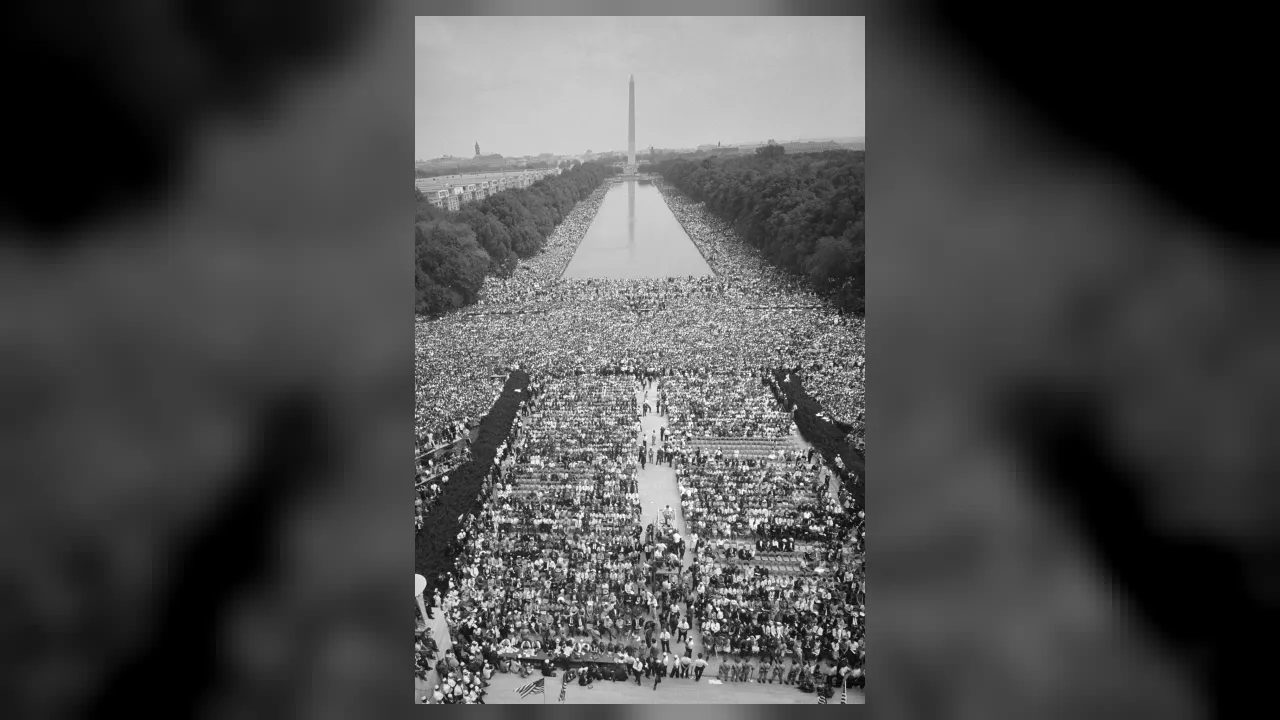
📜 Key Milestone250,000 peaceful marchers gathered for Jobs and Freedom, capped by Dr. King's 'I Have a Dream' speech
⚡ Historical SparkDemonstrated the peaceful power of the First Amendment on live television, building momentum for the Civil Rights Act of 1964
🤯 Mind-Blowing Fact • Grade 1
Marchers arrived on more than two thousand chartered buses and twenty-one special passenger trains from every corner of America!
✨ Word Sparks (Grade 1 Glossary)
Tap 🔊 to hear
memorial
Special monument built to honor someone great
peaceful
Calm kind and free from any fighting
dream
Big hopeful wish for a better world
🪝
What did 250,000 friendly people sing and hear beside the sparkling Reflecting Pool?
1
Trains and Buses to Washington
Choo-choo! On August 28, 1963, thousands of buses and trains roll into Washington, D.C. People of all races hold hands and walk peacefully together.
2
Songs at the Lincoln Memorial
Two hundred fifty thousand people gather by the long Reflecting Pool! Folksinger Marian Anderson's friend Mahalia Jackson sings joyful songs from the marble steps.
3
I Have a Dream!
Dr. Martin Luther King Jr. steps to the microphone. He shares his famous that all children will live together in fairness and peace!
1. In front of which famous monument did Dr. Martin Luther King Jr. give his 'I Have a Dream' speech?
2. About how many people gathered peacefully at the 1963 March on Washington?
🤯 Mind-Blowing Fact • Grade 2
Volunteers packed eighty thousand cheese sandwiches in a single day so hungry travelers arriving from far away would have lunch on the National Mall!
✨ Word Sparks (Grade 2 Glossary)
Tap 🔊 to hear
character
How honest kind and trustworthy someone is
freedom
Power to live speak and vote equally
rally
Large outdoor gathering supporting an important cause
🪝
How did one shout from singer Mahalia Jackson inspire the most famous part of Dr. King's speech?
1
A March for Jobs and Freedom
Feel the warm August sunshine glinting off the Lincoln Memorial Reflecting Pool in 1963! Organized by elder labor leader A. Philip Randolph and planner Bayard Rustin, the March on Washington for Jobs and brought 250,000 Americans of every background together.
2
Music and Brave Young Voices
Folksingers Joan Baez, Bob Dylan, and Odetta sang hopeful songs, and twenty-three-year-old student leader John Lewis urged lawmakers to protect equal rights right away.
3
Tell Them About the Dream!
As the last speaker, Dr. Martin Luther King Jr. read his prepared notes until gospel singer Mahalia Jackson called out, 'Tell them about the dream, Martin!' Setting his paper aside, Dr. King spoke from the heart about judging people by the content of their , not the color of their skin.
1. What were the two main goals in the full official name: the 'March on Washington for ____ and ____'?
2. Who called out 'Tell them about the dream, Martin!' right before Dr. King set aside his written speech?
🤯 Mind-Blowing Fact • Grade 3
The 1963 March on Washington was one of the very first historic events beamed live across the Atlantic Ocean to European viewers via the Telstar communications satellite!
✨ Word Sparks (Grade 3 Glossary)
Tap 🔊 to hear
centennial
Special celebration marking one hundred full years
emancipation
Setting enslaved people free by official law
momentum
Growing forward energy helping a movement succeed
🪝
How did organizers plan water fountains, sound speakers, and lunches for 250,000 visitors in just eight weeks?
1
One Hundred Years After Lincoln
Look down from the top step of the Lincoln Memorial on August 28, 1963, and see a sea of smiling faces stretching all the way to the Washington Monument! Organizers chose 1963 to honor the one-hundredth anniversary of Abraham Lincoln's Proclamation while asking Congress for a strong new civil rights bill.
2
Bayard Rustin's Masterful Planning
Senior statesman A. Philip Randolph had dreamed of a Washington march since 1941. His chief deputy, Bayard Rustin, coordinated 4,000 volunteer marshals, twenty-one water stations, first-aid tents, and crystal-clear loudspeakers in just two months—resulting in zero arrests among 250,000 attendees!
3
Live Television Reaches the World
All three major television networks paused regular shows to broadcast the afternoon live into millions of living rooms, and the brand-new Telstar satellite beamed highlights overseas.
4
Let Freedom Ring
Closing the program, Dr. Martin Luther King Jr. envisioned freedom ringing from every mountainside, energizing citizens and lawmakers to pass the landmark Civil Rights Act of 1964 the very next summer.
1. Which two leaders originally conceived and organized the logistics of the 1963 March on Washington?
2. Why was the year 1963 especially meaningful for holding the speech at the Lincoln Memorial?
🤯 Mind-Blowing Fact • Grade 4
On the morning of the March, crowds grew so fast that A. Philip Randolph and marchers spontaneously started walking from the Washington Monument ahead of schedule—turning officials into followers of the peaceful crowd!
✨ Word Sparks (Grade 4 Glossary)
Tap 🔊 to hear
petition
Constitutional right to ask government for change
promissory
Containing a solemn promise to pay fairly
galvanize
Inspire people into immediate determined action
🪝
How did the March on Washington put the First Amendment into action on a scale America had never seen before?
1
Six Organizations Join Forces
Hear 250,000 voices linking arms along the Reflecting Pool singing 'We Shall Overcome' in three-part harmony on August 28, 1963! Following spring protests in Birmingham, Alabama, and President John F. Kennedy's proposal for sweeping civil rights legislation, six major civil rights, labor, and religious coalitions united behind A. Philip Randolph and chief organizer Bayard Rustin to exercise the First Amendment rights of peaceful assembly and .
2
Diverse Voices on the Steps
The afternoon featured a tapestry of American voices: NAACP leader Roy Wilkins, Urban League head Whitney Young, labor president Walter Reuther, rabbis, Catholic and Protestant clergy, twenty-three-year-old SNCC chairman John Lewis, and civil rights heroine Daisy Bates, who delivered a tribute to women of the movement alongside Rosa Parks and Dorothy Height.
3
Echoing the Declaration and Gettysburg
Speaking sixteenth and last, thirty-four-year-old Dr. Martin Luther King Jr. connected civil rights directly to America's founding documents, calling the Declaration of Independence and Constitution a ' note' guaranteeing life, liberty, and the pursuit of happiness to every citizen. Prompted by Mahalia Jackson, his improvised 'I Have a Dream' conclusion galvanized millions watching on live network television.
4
From the Mall to the White House
Immediately afterward, march leaders met President Kennedy at the White House. Within two years, this peaceful outpouring of civic resolve helped secure both the Civil Rights Act of 1964 and the Voting Rights Act of 1965.
1. Which First Amendment freedoms did the 250,000 marchers exercise on the National Mall?
2. How did Dr. King describe the Declaration of Independence and the U.S. Constitution in his speech?
🤯 Mind-Blowing Fact • Grade 5
Right after delivering the 'I Have a Dream' speech, Dr. Martin Luther King Jr. graciously handed his original typed speech pages to a twenty-six-year-old Villanova basketball coach named George Raveling, who had volunteered to stand beside the podium ensuring Dr. King's safety!
✨ Word Sparks (Grade 5 Glossary)
Tap 🔊 to hear
rhetoric
Art of speaking persuasively and inspiring listeners
interfaith
Bringing people of different religions together cooperatively
accommodation
Public place like hotels restaurants and theaters
🪝
Why do historians view the 1963 March on Washington as both a masterpiece of coalition-building and a turning point in American rhetoric?
1
Twenty-Two Years in the Making
The 1963 March on Washington had roots stretching back to 1941, when Brotherhood of Sleeping Car Porters president A. Philip Randolph first proposed a march to end wartime defense discrimination. Two decades later, amid urgent 1963 campaigns against segregation and Black unemployment twice the national average, Randolph partnered with logistical strategist Bayard Rustin to unite the 'Big Six' civil rights organizations alongside labor unions and clergy.
2
Ten Demands for Economic and Civic Justice
Far more than a ceremonial concert, the March on Washington for Jobs and Freedom advanced ten concrete policy goals: comprehensive civil rights legislation ending public- and school segregation, protection of voting rights, fair employment practices, job training, and a $2.00-per-hour federal minimum wage (worth roughly $20 today) to lift working families of every race out of poverty.
3
Dignity and Discipline on the National Mall
Critics had predicted chaos in the capital; instead, 250,000 participants—approximately one-quarter of them white allies, students, and union members—arrived via 2,000 buses, twenty-one chartered trains, and Virginia commuter caravans in serene, joyful order. Speakers including John Lewis, Roy Wilkins, Rabbi Joachim Prinz, Walter Reuther, and Daisy Bates (honoring Myrlie Evers, Diane Nash, Rosa Parks, and Gloria Richardson) addressed a live television audience of tens of millions.
4
Rhetorical Genius of 'I Have a Dream'
Standing beneath Daniel Chester French's statue of Abraham Lincoln, Dr. Martin Luther King Jr. wove together three great currents of American thought: Lincoln's Gettysburg Address ('Five score years ago'), Jefferson's Declaration of Independence, and prophetic passages from Isaiah and Amos ('until justice rolls down like waters'). Leaving his prepared text mid-speech, King elevated civil rights from a regional dispute into a universal moral covenant.
5
Legislative Harvest of 1964 and 1965
Broadcast worldwide via satellite, the March shifted undecided public opinion and strengthened congressional coalitions, propelling passage of the Civil Rights Act of 1964, the Voting Rights Act of 1965, and a broadened federal minimum wage in 1966.