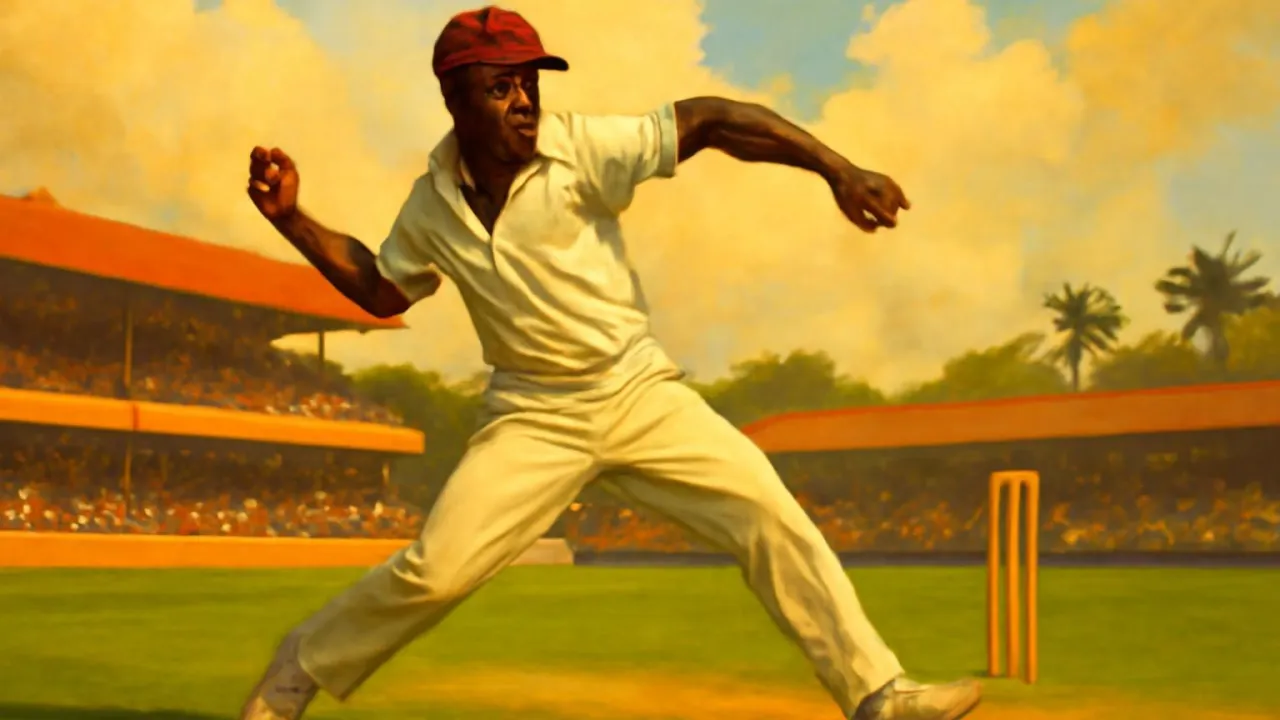
Malcolm Marshall took 376 wickets in Test cricket matches!
✨ Word Sparks (Grade 2 Glossary)
Tap 🔊 to hear
swing
When a ball moves sideways in air
grip
How you hold the ball
wickets
When a bowler gets a batter out
🪝
What makes a cricket ball move so fast?
1
Chasing His Dream
Malcolm liked to bowl with his friends, dreaming of playing for his country. He practiced every day, running and throwing the ball as fast as he could. His family cheered him on and believed in his dream.
2
Learning to Swing
Malcolm learned how to make the cricket ball in the air. He tried different and watched the ball curve past batsmen. He worked hard to get better, never giving up even when it was tough.
3
A Record Breaker
Malcolm played for the West Indies and took many . He became one of the fastest bowlers in the world, winning games for his team. Fans everywhere cheered for his amazing skills.
Malcolm once bowled with a broken thumb and still took 7 wickets in a match!
✨ Word Sparks (Grade 3 Glossary)
Tap 🔊 to hear
outswinger
A ball that curves away from the batter
bouncer
A fast ball that bounces high
Test cricket
A long, important cricket match
🪝
Can a cricket ball really curve through the air?
1
Early Curiosity
Young Malcolm would watch older players bowl, wondering how they made the ball move. He started practicing with a tennis ball, dreaming of playing for the West Indies team. His small size did not stop him from trying to bowl as fast as possible. He was determined to master the art of fast bowling.
2
Mastering the Swing
Malcolm learned that a cricket ball could swing if held just right. He experimented with different grips and wrist positions, watching the ball swerve past batsmen. His coaches noticed his quick learning and powerful arm. Soon, he became known for his deadly and sharp .
3
Breaking Records
As a West Indies player, Malcolm faced some of the world’s best batters. He used his speed and clever tricks to take wickets and win matches. He set a record by taking 376 wickets in . His skill and sportsmanship inspired many young players.
4
Changing the Game
Malcolm showed that even a shorter bowler could be the fastest. He taught others to use their minds and bodies together on the field. His leadership helped the West Indies become cricket champions. Today, people remember him as one of cricket’s greatest fast bowlers.
Malcolm Marshall is the only West Indies bowler with over 300 Test wickets and an average under 21!
✨ Word Sparks (Grade 4 Glossary)
Tap 🔊 to hear
seam
The stitched line on a cricket ball
pace
How fast the ball is bowled
mentored
Taught and guided younger players
🪝
How did Malcolm Marshall become one of the fastest bowlers in cricket history?
1
A Young Dreamer in Barbados
On the sunlit fields of Barbados, young Malcolm Marshall watched local cricket heroes and wondered how they made the ball dance. Despite being smaller than most bowlers, he practiced tirelessly, determined to use his speed and intelligence to outsmart batters. His mother and grandmother supported his passion, encouraging him to chase his cricket dreams. By his teenage years, Malcolm’s quick arm and creative bowling style began to attract attention from coaches.
2
Crafting a Unique Bowling Style
Malcolm studied the science of swing bowling, experimenting with positions and wrist movements to make the ball curve through the air. He developed a fierce outswinger and a sharp bouncer, surprising batters with his accuracy and . Coaches admired his ability to read the game and adjust his tactics mid-over. His dedication to practice and learning helped him overcome challenges and become a star in local leagues.
3
International Success and Records
Selected for the West Indies team, Malcolm faced legendary batters from around the world and quickly earned respect for his fearsome deliveries. He took 376 wickets in 81 Test matches, becoming the leading West Indies fast bowler of his era. Even when injured, he showed remarkable courage, once taking seven wickets in a match with a broken hand. His sportsmanship and leadership inspired teammates and fans across the globe.
4
Legacy Beyond the Pitch
Malcolm Marshall’s impact on cricket went far beyond his records. He proved that skill, strategy, and perseverance could overcome physical limitations. After retiring, he young cricketers, sharing his knowledge and passion for the game. Today, his name stands for excellence, innovation, and the spirit of cricket. Young bowlers everywhere still study his techniques and dream of following in his footsteps.
Malcolm Marshall’s Test bowling average (20.94) is the lowest among all fast bowlers with over 200 wickets!
✨ Word Sparks (Grade 5 Glossary)
Tap 🔊 to hear
outswinger
A ball that curves away from the batter
average
A number that shows how well someone did
resilience
Never giving up, even when it’s hard
🪝
What does it take to become a cricket legend when you’re not the tallest or strongest on the field?
1
Childhood Curiosity and Early Practice
On the sun-baked cricket grounds of Bridgetown, Barbados, a young Malcolm Marshall watched older bowlers with wide-eyed curiosity, fascinated by the way a cricket ball could swerve and leap. Despite being shorter than most aspiring fast bowlers, Malcolm was determined to develop his own style, practicing for hours with a tennis ball and dreaming of representing the West Indies. His mother and grandmother encouraged his ambitions, providing unwavering support even when resources were scarce. By his teens, Malcolm’s relentless practice and sharp cricketing mind set him apart from his peers. Coaches soon noticed his quick arm action and his ability to generate surprising pace and movement.
2
Inventing a New Fast Bowling Blueprint
Malcolm Marshall revolutionized fast bowling by combining speed, swing, and pinpoint accuracy, despite his modest height of 5'11". He studied the physics of cricket, perfecting seam positions and wrist angles to make the ball swing both ways— and inswingers—confusing even the world’s best batters. His signature delivery, the outswinger, curved away at the last moment, while his bouncer threatened to leap unexpectedly high. Marshall’s tactical intelligence allowed him to outthink opponents, often setting clever traps and adjusting his bowling to exploit a batter’s weaknesses. His relentless work ethic and innovative approach inspired a generation of bowlers to believe that skill and strategy could rival sheer power.
3
Dominating World Cricket and Setting Records
Making his Test debut for the West Indies in 1978, Marshall quickly became a mainstay of the team’s legendary pace attack. Over 81 Test matches, he captured 376 wickets at an astonishing of just 20.94—one of the best in cricket history. He also took 157 wickets in One Day Internationals, helping the West Indies win important matches across the globe. Marshall’s courage was legendary; in one famous 1984 match, he bowled with a broken thumb and still took seven wickets, leading his team to victory. His ability to perform under pressure and adapt to different pitches made him a feared opponent everywhere he played.
4
Leadership, Mentorship, and Lasting Legacy
Beyond his personal records, Malcolm Marshall was known for his leadership and generosity toward younger players. He mentored many up-and-coming cricketers, teaching them the science of swing and the importance of . After retiring from international cricket, he became a respected coach for Hampshire in England and later for the West Indies, sharing his expertise with the next generation. Marshall’s sportsmanship and humility earned him admiration from fans and players of every background. His influence extended beyond the Caribbean, shaping the future of fast bowling worldwide.
5
Lessons from a Cricket Legend
Malcolm Marshall’s story proves that greatness comes from determination, creativity, and a willingness to learn. He overcame doubts about his size by mastering technique and strategy, showing that anyone can achieve excellence through hard work. His records and innovations continue to inspire young athletes, especially those who feel different or overlooked. Marshall’s legacy lives on in every bowler who dares to swing the ball and outsmart the batter. For cricket fans everywhere, he remains a symbol of brilliance, courage, and the enduring spirit of the game.