🧬 HUMAN BODY
🧬 Nodi Lymphatici • Lymphatic & Immune System
VA Science & Health SOL 1.1, 3.1, 4.2, 5.1 (Cells, Organs & Body Systems)
Lymph Nodes
Tiny Bean-Shaped Checkpoints Guarding Your Health
Grade 4 • Expanding • 197 words
🩺 Body System & LocationLymphatic System • Clustered in neck, armpits, chest, and groin
🔬 Size / Cell Count0.04–1 in (1–25 mm) long • About 600–800 nodes across the body
⚙️ Core JobFilters clear lymph fluid and traps invading microbes for immune cells
⚡ Body SuperpowerSwelling into bustling immune command centers whenever germs try to sneak past
🤯 Mind-Blowing Fact • Grade 1
Your body has more than six hundred tiny lymph nodes hiding from your neck down to your knees!
✨ Word Sparks (Grade 1 Glossary)
Tap 🔊 to hear
Lymph
Clear body fluid that washes around cells
Node
A small bean-shaped bump that traps germs
Filter
A strainer that catches tiny unwanted bits
🪝
Why do little bumps under your chin puff up when you catch a cold?
1
Little Bean Guards
Gently touch the sides of your neck right under your jaw. Tiny bean-shaped helpers hide under your skin! Doctors call them , and hundreds of them guard your body.
2
Catching Sneaky Germs
Clear fluid flows through tiny tubes to wash your cells. Each works like a little net. It catches bad germs before they can travel any farther.
3
Busy Helper Teams
When you get sick, helper cells rush inside the . That crowd makes the bumps feel puffy while they help you get well!
1. What shape are most lymph nodes inside your body?
2. Why do lymph nodes in your neck puff up when you have a sore throat?
🤯 Mind-Blowing Fact • Grade 2
Several liters of clear lymph fluid pass through your lymph nodes every single day before returning to your bloodstream!
✨ Word Sparks (Grade 2 Glossary)
Tap 🔊 to hear
Vessel
A thin tube carrying fluid inside you
Cluster
A close group of similar things together
White Blood Cell
A tiny body defender that fights germs
🪝
How does your body check for germs in hidden places where blood vessels end?
1
Checkpoints Under Your Skin
Imagine tiny security stations posted along quiet roads inside your body. Those stations are your lymph nodes, and they sit in in your neck, armpits, chest, and tummy.
2
Straining Clear Fluid
A watery liquid called lymph washes between your cells and carries away waste. Narrow guide this fluid straight into nearby lymph nodes. Inside each node, spongy pathways slow the liquid down so sneaky germs get stuck.
3
Waking Up the Defenders
wait inside every node like alert lifeguards. As soon as germs arrive, the cells multiply fast and clear the invaders away so you feel healthy again.
1. What happens to lymph fluid when it enters a lymph node?
2. Where are clusters of lymph nodes easiest for a doctor to feel?
🤯 Mind-Blowing Fact • Grade 3
More tubes bring fluid into a lymph node than carry it out, creating a natural traffic jam that gives immune cells extra time to inspect every drop!
✨ Word Sparks (Grade 3 Glossary)
Tap 🔊 to hear
Lymphatic System
Network of vessels and nodes filtering fluid
Lymphocyte
Specialized white blood cell living in nodes
Capsule
Protective outer layer wrapping an organ
🪝
Why does a doctor gently feel the sides of your neck during a checkup?
1
A Second Highway System
Everyone knows about red blood rushing through arteries and veins, yet your body runs a second hidden plumbing network too! Called the , it collects extra watery fluid that leaks out around your tissues and guides it toward tiny checkpoints called lymph nodes.
2
Inside a Busy Node
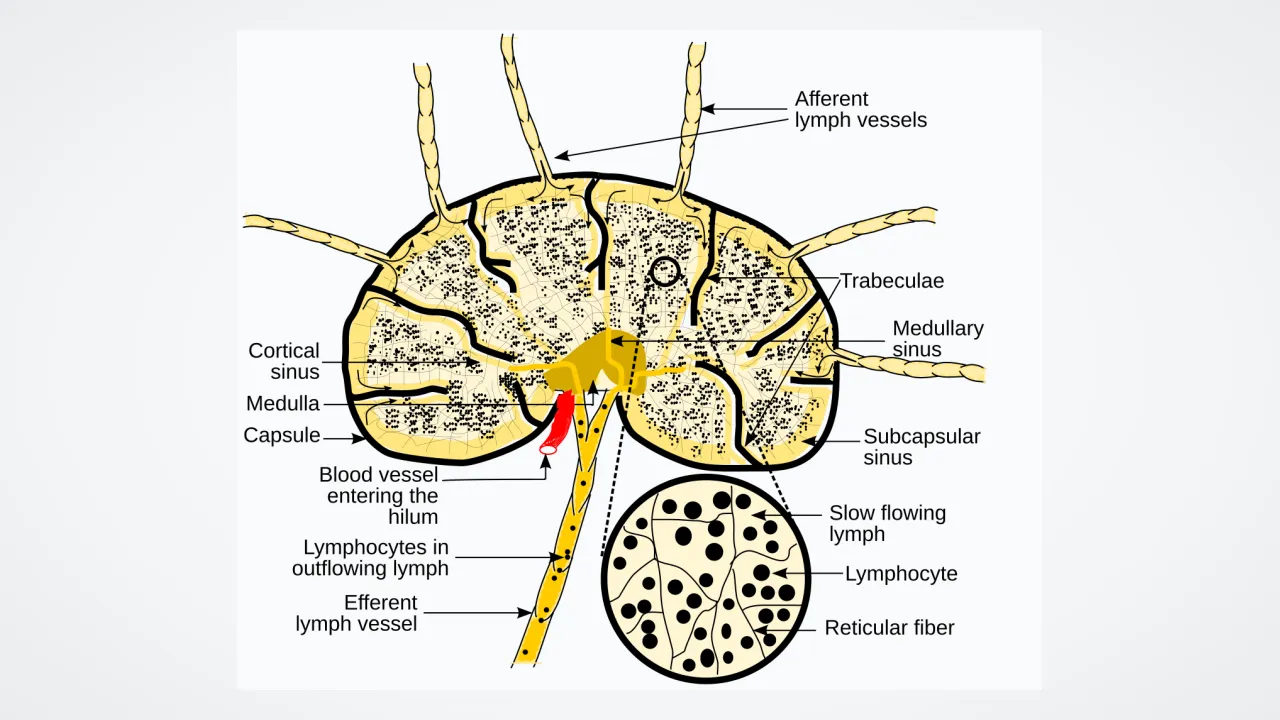
Each lymph node is wrapped in a tough outer coat and divided into cozy rooms packed with white blood cells. Many tubes pour fluid in around the outer edge, while fewer tubes let clean fluid exit from one notched side.
3
Trapping Unwanted Guests
Because fluid enters fast and leaves slowly, bacteria, viruses, and damaged cell bits cannot simply rush past. Web-like fibers snag invaders right where immune cells can spot them.
4
Why Nodes Swell Up
When an infection starts nearby, millions of fresh copy themselves inside the closest nodes. That extra crowd stretches the slightly, telling your doctor exactly where your immune system is battling microbes.
1. Why does fluid move slowly once it enters a lymph node?
2. What does a slightly swollen lymph node near your ear or jaw usually signal?
🤯 Mind-Blowing Fact • Grade 4
Unlike blood, lymph has no heart to pump it—your everyday breathing and muscle movements power its entire journey through hundreds of nodes!
✨ Word Sparks (Grade 4 Glossary)
Tap 🔊 to hear
Cortex
Outer region of an organ or node
Pathogen
Microscopic germ capable of causing illness
Valve
Flap keeping fluid moving in one direction
🪝
Without a central pump like the heart, how do hundreds of lymph nodes inspect fluid from every corner of your body?
1
Powered by Everyday Motion
Every time you stretch, breathe deeply, or walk across a room, squeezing skeletal muscles push clear interstitial fluid through thin-walled lymphatic vessels. One-way stop that fluid from sliding backward, steering it steadily through a chain of six hundred to eight hundred bean-shaped lymph nodes before it rejoins veins near your collarbones.
2
Three Specialized Neighborhoods
Slice open a model of a lymph node and you will discover three organized neighborhoods inside its fibrous capsule. An outer houses round clusters of B-cells, a middle paracortex shelters T-cells alongside messenger dendritic cells, and an inner medulla channels purified fluid toward the exit.
3
Sharing Microscopic Clues
Reticular fibers stretch across internal passages like a three-dimensional spiderweb. Macrophages cling to those fibers and gobble up trapped , while messenger cells display tiny germ fragments so T-cells and B-cells can launch a custom antibody defense.
4
Nature's Early-Warning Map
Because each regional cluster drains a specific neighborhood of tissue, swollen cervical nodes point to throat or ear infections, while axillary nodes under the arm respond to a scraped hand. Staying active and well hydrated helps clear lymph circulate smoothly from head to toe. Once the invaders are cleared, the extra defenders stand down and the nodes shrink back to pea size.
1. How does lymph fluid travel toward lymph nodes without a heart pumping it?
2. Which internal part of a lymph node holds web-like fibers where B-cells and T-cells organize an immune response?
🤯 Mind-Blowing Fact • Grade 5
Inside an active lymph node's germinal center, B-cells can divide every six to eight hours while fine-tuning antibodies to lock onto a brand-new microbe!
✨ Word Sparks (Grade 5 Glossary)
Tap 🔊 to hear
Afferent Vessel
Tube carrying incoming fluid into a node
Germinal Center
Zone where B-cells multiply and sharpen antibodies
Interstitial Fluid
Thin liquid bathing spaces between body cells
🪝
How do microscopic bean-shaped organs turn three liters of leaked tissue fluid each day into an intelligent surveillance network?
1
Reclaiming Fluid and Guarding Borders
Every day, blood pressure forces roughly twenty liters of plasma out of microscopic capillaries to bathe your cells in oxygen and nutrients. Veins reabsorb most of it, leaving about three liters behind as . Without the lymphatic network collecting this excess liquid—now called lymph—tissues would quickly swell, and stray pathogens would gain an unchecked path into circulation.
2
Precision Micro-Architecture
Measuring anywhere from one millimeter to twenty-five millimeters long, each lymph node is engineered as a biological bottleneck. Multiple afferent lymphatic vessels pierce the convex outer capsule, pouring lymph into a narrow subcapsular sinus lined with scavenging macrophages. Fluid then percolates slowly through reticular meshworks before exiting via just one or two efferent vessels at the indented hilum.
3
Antigen Presentation in Action
Lymph nodes are classified as secondary lymphoid organs—the bustling meeting halls where adaptive immunity ignites. Antigen-presenting dendritic cells migrate from infected skin or mucosa into the node's paracortex, displaying molecular fragments of viruses or bacteria to naive T-cells until they locate the exact receptor match.
4
Germinal Centers and Clonal Expansion
Once activated, helper T-cells collaborate with B-cells inside outer cortical follicles to build temporary training arenas called . There, B-cells divide rapidly, refine high-affinity antibodies through somatic hypermutation, generate long-lived memory cells, and cause the familiar tender swelling clinicians call lymphadenopathy.
5
Centuries of Anatomical Discovery
In the 1620s, Italian anatomist Gaspare Aselli spotted milky lymphatic vessels after a meal, and in the 1650s Thomas Bartholin and Olaus Rudbeck mapped the broader lymphatic system, revealing how clean filtered lymph travels up the thoracic duct and finally empties into the subclavian veins near the heart to keep blood volume balanced and pathogen-free.