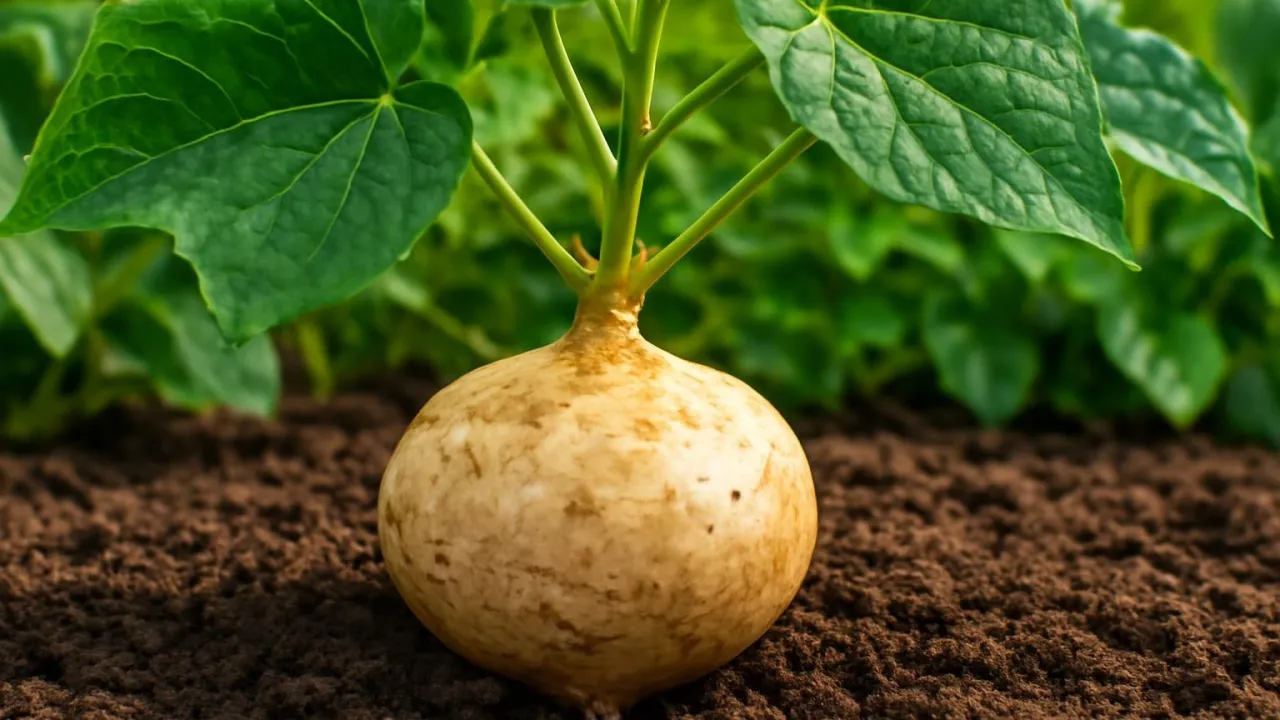
Jicama is sometimes called the 'Mexican turnip' because it grows underground like a root vegetable!
✨ Word Sparks (Grade 2 Glossary)
Tap 🔊 to hear
harvest
To gather plants when they are ready to eat
skin
The outside part of a fruit or vegetable
peel
To take off the skin before eating
🪝
Did you know jicama is a crunchy root that tastes sweet and fresh?
1
What Jicama Looks Like
Jicama has a round, light brown and a white, crunchy inside. It feels smooth and hard when you touch it. People often it before eating.
2
Where Jicama Grows
Jicama grows underground in warm places like Mexico and Central America. It needs full sun and moderate water to grow well. Farmers it by digging it up carefully.
3
How People Eat Jicama
People eat jicama raw in salads or cooked in dishes. It tastes sweet and juicy, making it a refreshing snack. Sometimes people dip it in chili powder for extra flavor.
Jicama is a root vegetable that stores water inside to stay crunchy and fresh underground!
✨ Word Sparks (Grade 3 Glossary)
Tap 🔊 to hear
nutrients
Good things plants and people need to grow strong
adaptation
A change that helps plants or animals survive better
predator
An animal that eats other animals or plants
🪝
Have you ever wondered how jicama stays crunchy and sweet underground?
1
Jicama’s Appearance and Texture
Jicama has a rough, light brown skin covering a crisp white root inside. This root is juicy and crunchy, making it a popular snack. Its texture helps protect it from drying out underground.
2
Where Jicama Grows and Thrives
Jicama grows in warm climates like Mexico and Central America, thriving in full sun. It grows underground as a root, absorbing and water from the soil. This helps it survive dry seasons.
3
Jicama’s Role in Food and Culture
People often eat jicama raw in salads or cooked in dishes, enjoying its sweet flavor. It is sometimes called a 'Mexican turnip' because it grows underground like other root vegetables. Jicama also provides important like fiber and vitamin C.
4
How Jicama Protects Itself
The tough skin of jicama acts as a natural barrier against and insects. Its white flesh contains water that keeps it juicy and fresh. This protection helps jicama survive until harvest time.
Jicama plants help improve soil by adding nitrogen, which helps other plants grow better!
✨ Word Sparks (Grade 4 Glossary)
Tap 🔊 to hear
nitrogen
A nutrient in soil that helps plants grow strong
tuberous
A thick root that stores water and food
biodiversity
Many different plants and animals living together
🪝
Did you know jicama plays an important role in ecosystems and human diets?
1
Jicama’s Growth and Environment
Jicama grows best in warm, sunny climates where the soil is loose and well-drained. It develops a large, root underground that stores water and nutrients. This root allows jicama to survive dry spells by conserving moisture. Because of this, jicama is well adapted to arid and semi-arid regions.
2
Ecosystem and Agricultural Roles
Jicama contributes to soil health by fixing through its root system, which benefits other plants. It is part of food webs, serving as food for humans and some animals. Farmers cultivate jicama carefully to maintain soil quality and prevent erosion. Its cultivation also supports local economies in Mexico and Central America.
3
Jicama’s Physical Features and Protection
The thick, brown skin of jicama protects the root from pests and physical damage during growth. Inside, the white flesh contains high water content, which keeps it crisp and refreshing. This combination of features helps jicama survive underground until harvest time. Its sweet flavor makes it popular in many dishes worldwide.
4
Geographic Distribution and Human Use
Originally from Mexico and Central America, jicama is now grown in many warm regions globally. It is a staple vegetable in various cuisines, often eaten raw or cooked. The plant’s climbing vines also contribute to by providing habitat for insects. Human farming practices have spread jicama beyond its native range.
Jicama is a legume root that fixes nitrogen, helping soil stay healthy and plants grow better!
✨ Word Sparks (Grade 5 Glossary)
Tap 🔊 to hear
Fabaceae
The plant family that includes beans and peas
carbohydrates
Nutrients that give plants and people energy
genetic diversity
Different types of the same plant species
🪝
What makes jicama a unique root vegetable with important ecological and cultural value?
1
Scientific Classification and Taxonomy
Jicama, scientifically named Pachyrhizus erosus, belongs to the family, which includes legumes. Unlike many root vegetables, jicama is a legume, meaning it has nitrogen-fixing bacteria in its roots. This biological trait enriches soil fertility and supports sustainable agriculture. Its climbing vines and edible tuberous roots distinguish it from other Fabaceae members.
2
Physiological Adaptations and Growth
Jicama develops a large, tuberous root that stores water and , allowing it to survive dry conditions. The root’s thick, brown skin protects it from pests and physical damage. Its white, juicy flesh contains up to 90 percent water, which keeps it crisp and refreshing. The plant’s climbing vines maximize sunlight exposure for photosynthesis.
3
Cultural History and Conservation
Native to Mexico and Central America, jicama has been cultivated for centuries by indigenous peoples. It remains a staple in traditional diets and is gaining popularity worldwide. Conservation efforts focus on preserving and sustainable farming practices. This ensures jicama’s availability amid changing climates and agricultural demands.
4
Ecological Impact and Agricultural Benefits
Jicama’s nitrogen-fixing ability improves soil health, reducing the need for chemical fertilizers. Its cultivation supports biodiversity by providing habitat for various insects and animals. Farmers benefit economically from jicama’s adaptability to arid environments. The plant also helps prevent soil erosion due to its extensive root system.
5
Quantitative Comparisons and Interesting Facts
Jicama roots typically measure 4 to 6 inches long and can weigh up to 3 pounds. They store about 90 percent water, which is why they remain crunchy after harvest. The plant grows best in temperatures between 68 and 86 degrees Fahrenheit. Compared to other root vegetables, jicama has a lower calorie count but higher fiber content, making it a healthy snack.