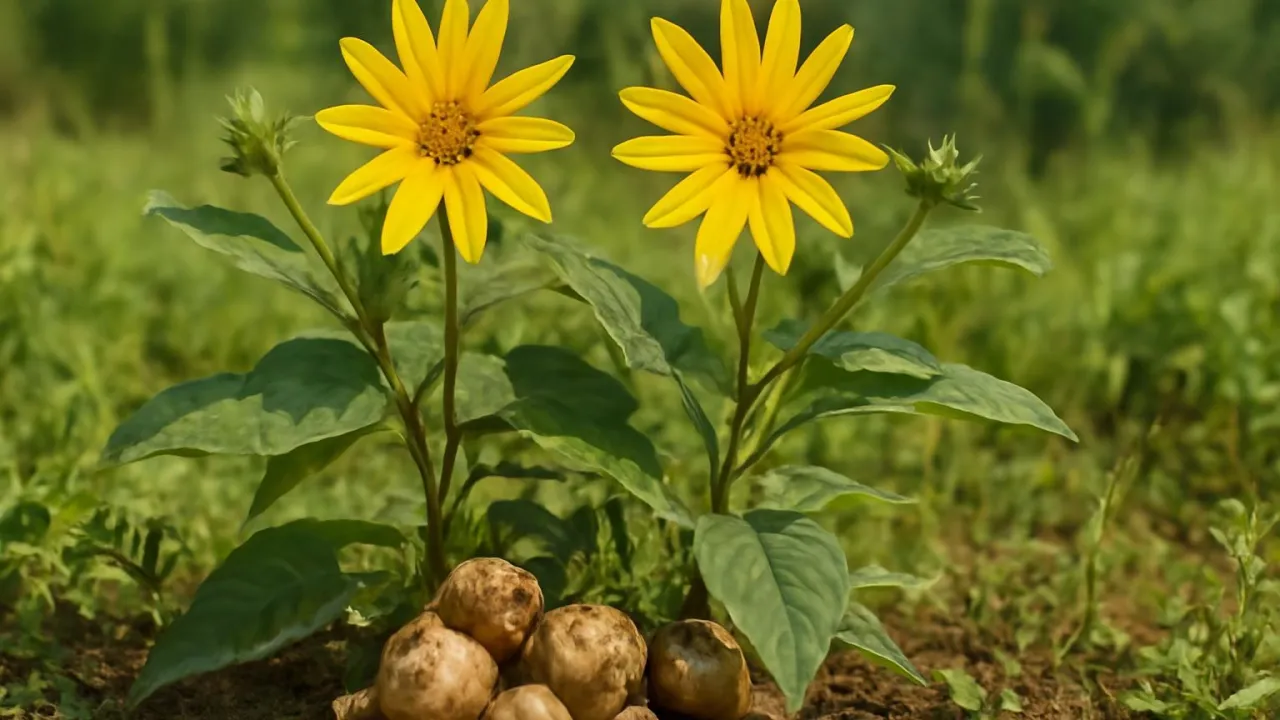
1. What part of the Jerusalem artichoke do people eat?
2. What does the plant need to grow well?
🤯 Mind-Blowing Fact • Grade 2
Jerusalem artichokes contain inulin, a fiber that helps digestion!
✨ Word Sparks (Grade 2 Glossary)
Tap 🔊 to hear
tuber
A thick root that stores food
nectar
Sweet juice flowers make for insects
harvest
To gather plants when they are ready
🪝
Have you ever seen a plant with sunflower-like flowers and tasty roots?
1
Tall Plants with Bright Flowers
Jerusalem artichokes grow tall and have bright yellow flowers like sunflowers. Their green leaves are large and rough. These plants can reach up to ten feet tall. They bloom in late summer and attract many insects.
2
Underground Tubers You Can Eat
The plant grows edible underground that taste sweet and nutty. These tubers store food for the plant to grow each year. Farmers them in the fall after the leaves die back. People cook or eat these tubers raw.
3
Where They Grow and What They Need
Jerusalem artichokes grow best in full sun and well-drained soil. They need moderate water but can survive dry spells. Native to central North America, they now grow in many countries. Birds and bees visit the flowers to get .
Jerusalem artichoke tubers contain inulin, a fiber that does not raise blood sugar!
✨ Word Sparks (Grade 3 Glossary)
Tap 🔊 to hear
pollination
When insects help flowers make seeds
inulin
A fiber in tubers that helps digestion
adaptation
A trait that helps plants survive
🪝
Did you know the Jerusalem artichoke is not an artichoke but a sunflower relative?
1
A Tall Plant with Sunflower Flowers
The Jerusalem artichoke grows tall, sometimes reaching ten feet high. Its yellow flowers look very much like sunflowers. These flowers attract pollinators like bees and butterflies. helps the plant make seeds for new plants.
2
Edible Tubers Store Energy
This plant produces underground tubers that store energy as , a special fiber. Inulin helps some people digest food better and supports healthy gut bacteria. The tubers grow in clusters beneath the soil surface. They are harvested in autumn after the plant dies back.
3
Adaptations for Survival
Jerusalem artichokes have rough leaves that reduce water loss in dry weather. Their tall stems help them reach sunlight in crowded fields. The tubers allow the plant to survive cold winters underground. These help the plant thrive in many environments.
4
Where They Live and Grow
Native to central North America, Jerusalem artichokes now grow worldwide. They prefer sunny areas with well-drained soil and moderate moisture. Birds and small animals eat the seeds and tubers, helping spread the plant. This plant plays a role in local food webs.
1. What helps Jerusalem artichokes survive cold winters?
2. Why do bees visit Jerusalem artichoke flowers?
🤯 Mind-Blowing Fact • Grade 4
Jerusalem artichokes improve soil health by preventing erosion and supporting microbes!
✨ Word Sparks (Grade 4 Glossary)
Tap 🔊 to hear
symbiosis
When two living things help each other
biodiversity
Many different kinds of living things
invasive
A plant that spreads too much and harms others
🪝
How does the Jerusalem artichoke help both people and ecosystems?
1
Plant Structure and Growth
Jerusalem artichokes grow tall, sturdy stems that support large sunflower-like flowers attracting many pollinators. Their rough, broad leaves reduce water loss, helping the plant survive dry conditions. Underground, tubers store energy as inulin, enabling regrowth each year. This perennial plant spreads quickly by both seeds and tubers.
2
Role in Ecosystems and Food Webs
The flowers provide nectar for bees, butterflies, and other insects, supporting pollination and . Birds and small mammals feed on the seeds and tubers, linking the plant to local food webs. By growing in disturbed soils, Jerusalem artichokes help prevent erosion and improve soil health. This plant forms symbiotic relationships with soil microbes that aid nutrient uptake.
3
Geographic Distribution and Cultivation
Native to central North America, Jerusalem artichokes have spread worldwide due to their edible tubers and ease of cultivation. They thrive in temperate climates with full sun and well-drained soils. Farmers grow them both for human food and as livestock feed. Their adaptability allows growth in diverse soils and climates, from gardens to wild areas.
4
Human Uses and Agricultural Impact
People harvest Jerusalem artichoke tubers for cooking, enjoying their sweet, nutty flavor and crunchy texture. The inulin fiber benefits digestion and blood sugar control, making them valuable in health foods. However, the plant can become , outcompeting native species if not managed properly. Sustainable farming practices help balance its benefits and ecological impact.
2. What can happen if Jerusalem artichokes spread too much?
🤯 Mind-Blowing Fact • Grade 5
Jerusalem artichoke tubers contain high inulin fiber, aiding digestion without raising blood sugar!
✨ Word Sparks (Grade 5 Glossary)
Tap 🔊 to hear
Asteraceae
The sunflower family of plants
mycorrhizal
Fungi that help plant roots get nutrients
polysaccharide
A complex sugar made of many units
🪝
What makes the Jerusalem artichoke a unique member of the sunflower family with important ecological and nutritional roles?
1
Taxonomy and Botanical Characteristics
Jerusalem artichoke, scientifically named Helianthus tuberosus, belongs to the family, closely related to common sunflowers. Unlike typical sunflowers, it produces edible tubers underground rather than seeds for food. The plant reaches heights up to three meters with rough, broad leaves and bright yellow composite flowers. Its perennial growth cycle allows it to regrow tubers annually from stored energy.
2
Physiological Adaptations and Growth Mechanisms
The plant synthesizes inulin, a fructan stored in tubers, which serves as an energy reserve and dietary fiber beneficial for human digestion. Its tall stems maximize sunlight capture, while broad leaves reduce transpiration through a tough cuticle layer. Tubers remain dormant underground during winter, protecting the plant from freezing temperatures and enabling rapid spring regrowth. These adaptations support survival in temperate climates with variable moisture.
3
Ecological Role and Environmental Impact
Jerusalem artichokes contribute to ecosystem stability by providing nectar for pollinators and food for birds and small mammals, integrating into complex food webs. Their extensive root systems improve soil structure and prevent erosion, while symbiotic relationships with fungi enhance nutrient uptake. However, their vigorous growth can lead to invasiveness, potentially displacing native vegetation if unmanaged. Sustainable cultivation practices mitigate ecological risks.
4
Conservation and Agricultural History
Native to central North America, Jerusalem artichokes were cultivated by indigenous peoples for centuries as a reliable food source. Their tubers gained renewed interest in modern agriculture due to health benefits linked to inulin content. Conservation efforts focus on balancing cultivation with control to prevent invasive spread. The plant’s resilience and nutritional value make it a candidate for sustainable food systems amid climate change challenges.
5
Quantitative Comparisons and Nutritional Value
Jerusalem artichoke tubers contain approximately 16–20% inulin by dry weight, significantly higher than many root vegetables. The plant can grow up to 10 feet tall, capturing sunlight efficiently compared to shorter crops. Tubers weigh between 50 to 200 grams each and store energy without raising blood glucose levels, unlike typical starches. These features position the plant as a valuable crop for diabetics and fiber-rich diets.