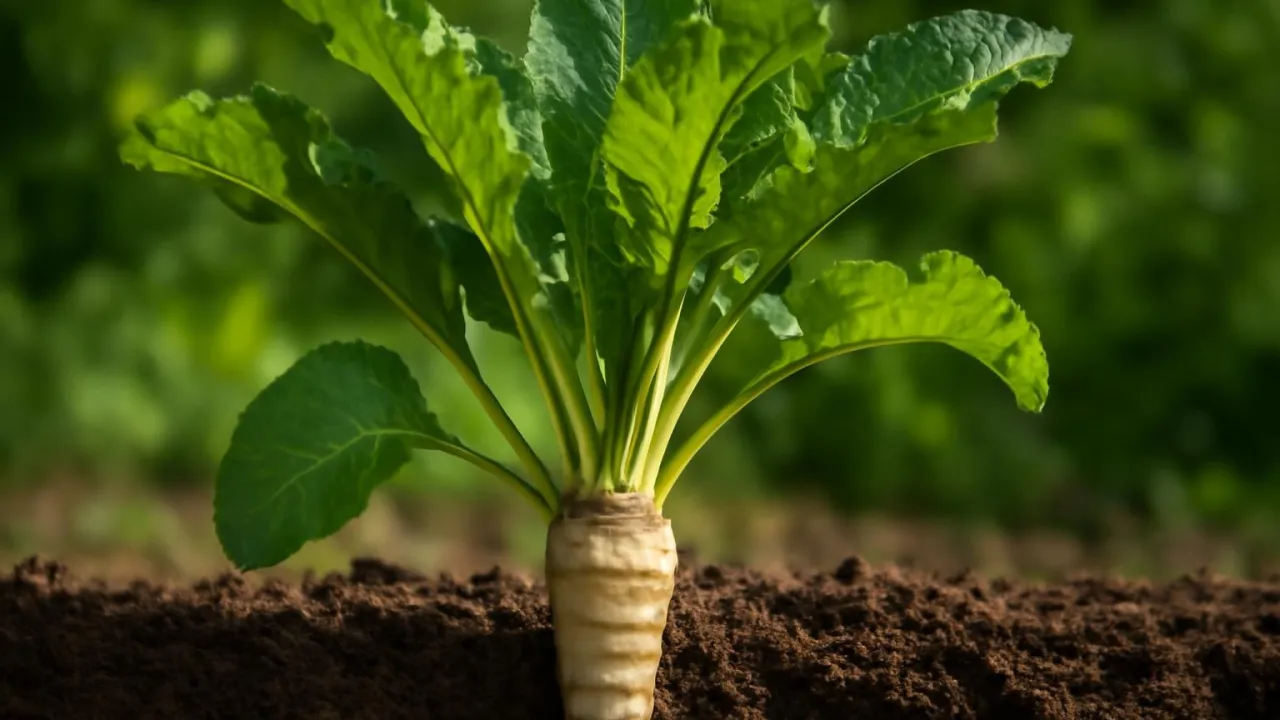
Cutting horseradish root releases a spicy gas that makes your eyes water!
✨ Word Sparks (Grade 2 Glossary)
Tap 🔊 to hear
harvest
To gather plants when they are ready to eat
moist
A little wet, not dry
spicy
A strong, hot taste that feels warm
🪝
Have you ever smelled a root that makes your eyes water and nose tingle?
1
A Root That Packs a Punch
Horseradish grows big green leaves and a long white root underground. It likes sunny places with soil to grow well. When you cut the root, it releases a smell that can make your eyes water.
2
Where Does It Live?
This plant comes from Europe and Asia where the weather is cool. It grows best in gardens with plenty of sun and water. Farmers dig up the roots when they are ready to use.
3
Why Is It Special?
The root’s smell comes from natural chemicals inside it. These chemicals can make your nose tingle and your eyes water. People use horseradish to add heat and flavor to many foods.
Horseradish’s spicy chemical is a natural shield against hungry animals and bugs!
✨ Word Sparks (Grade 3 Glossary)
Tap 🔊 to hear
condiment
A sauce or spice added to food for flavor
adaptation
A change that helps plants or animals survive
chemical
A substance that can cause changes or reactions
🪝
Can you imagine a plant that uses spicy smell to keep safe from animals?
1
A Spicy Plant with a Secret
Horseradish grows big green leaves and a long white root underground. The root has a strong spicy smell that can make your nose tingle. This spicy smell is a special the plant makes to protect itself. Animals often avoid eating horseradish because of this spicy defense.
2
Where Does Horseradish Live?
Horseradish grows best in cool places with moist, rich soil and full sun. It can grow up to five feet tall and spreads underground using rhizomes. These rhizomes help the plant grow back each year and take over new areas. This helps horseradish survive and spread quickly in gardens.
3
How Does It Protect Itself?
When the root is cut or crushed, it releases a called allyl isothiocyanate. This chemical causes the spicy smell and makes your eyes water and nose tingle. This natural defense helps keep animals and insects from eating the plant. It is an important for survival in the wild.
4
How Do People Use Horseradish?
People grate the root to make spicy sauces and for food. It adds heat and flavor to meats and sandwiches. Some medicines also use horseradish for its strong smell and health benefits. Many cultures enjoy horseradish in their traditional dishes.
1. What chemical does horseradish release when cut?
2. How does horseradish protect itself?
🤯 Mind-Blowing Fact • Grade 4
Horseradish’s spicy chemical helps it survive by keeping many animals and insects away!
✨ Word Sparks (Grade 4 Glossary)
Tap 🔊 to hear
rhizomes
Underground stems that help plants spread
herbivores
Animals that eat plants
invasive
A plant that spreads too much and harms others
🪝
How does horseradish’s spicy root affect the animals and plants around it?
1
Horseradish’s Growing Habits
Horseradish thrives in temperate climates across Europe and Asia where moist, fertile soils are common. It grows best in full sunlight and can reach heights of up to five feet. The plant spreads through underground , which allow it to colonize new areas quickly. This growth pattern helps horseradish compete with other plants for space and nutrients.
2
Spicy Defense and Ecosystem Role
The horseradish root releases allyl isothiocyanate when cut, which acts as a natural defense against and insects. This spicy chemical deters many animals from eating the plant, helping it survive in the wild. Additionally, horseradish can influence nearby plants by competing for nutrients and sunlight. It plays a role in the food web by providing spicy flavor to humans and some animals that tolerate its heat.
3
Human Uses and Agricultural Impact
Humans cultivate horseradish for its pungent root, which is used worldwide as a condiment and flavoring agent. Its cultivation requires well-drained, moist soils and full sun, making it suitable for many temperate gardens. While horseradish is beneficial in cooking, it can become if not managed properly, spreading rapidly through its . Farmers must control its growth to protect other crops.
4
Geographic Distribution
Originally native to Eastern Europe and Western Asia, horseradish has spread globally due to human cultivation. It now grows in North America, Europe, and parts of Asia, adapting well to temperate climates. Its ability to spread underground makes it a hardy plant in many garden settings. This wide distribution shows how humans have influenced the plant’s range through agriculture.
1. What role does horseradish’s spicy chemical play in the ecosystem?
2. Why must farmers control horseradish growth?
🤯 Mind-Blowing Fact • Grade 5
Horseradish’s allyl isothiocyanate can clear nasal passages within seconds of exposure!
✨ Word Sparks (Grade 5 Glossary)
Tap 🔊 to hear
perennial
A plant that lives for many years
volatile
A substance that easily turns into gas
rhizomes
Underground stems that help plants spread
🪝
What makes horseradish’s spicy root a powerful natural defense and culinary treasure?
1
Scientific Classification and Origin
Horseradish, scientifically named Armoracia rusticana, belongs to the Brassicaceae family, which includes mustard and cabbage. This plant originates from temperate regions of Eastern Europe and Western Asia. It has been cultivated for centuries for its pungent root used in cooking and medicine. Its taxonomy places it among plants known for producing sharp, spicy compounds.
2
Physiological Mechanics of Spiciness
The spicy sensation of horseradish comes from allyl isothiocyanate, a compound released when the root cells are damaged. This chemical irritates sensory nerves in the nose and eyes, causing a burning or tingling sensation. The plant produces this compound as a defense mechanism against herbivores and pathogens. The intensity of spiciness can vary depending on soil, climate, and root maturity.
3
Conservation and Botanical History
Horseradish has a long history of cultivation dating back to ancient times, valued for both culinary and medicinal uses. While not endangered, wild horseradish populations have declined due to habitat changes. Cultivated horseradish is widely grown in temperate zones worldwide, and its spread is largely due to human agricultural practices. Preservation of genetic diversity is important for future breeding and disease resistance.
4
Quantitative Comparisons and Growth
Horseradish plants typically grow between two and five feet tall, with roots reaching up to 18 inches in length. The allyl isothiocyanate compound can cause nasal irritation within seconds of exposure. Compared to other spicy plants like chili peppers, horseradish’s heat is more but less long-lasting. It thrives in soils with pH between 6.0 and 7.5 and requires moderate watering to maintain root quality.
5
Culinary and Ecological Importance
Horseradish root is widely used as a condiment in sauces, adding sharp heat to meats and sandwiches. Ecologically, its chemical defenses reduce herbivore damage and influence plant competition in gardens. The plant’s ability to spread via makes it both a valuable crop and a potential invasive species. Understanding horseradish’s biology helps farmers balance cultivation with environmental impact.