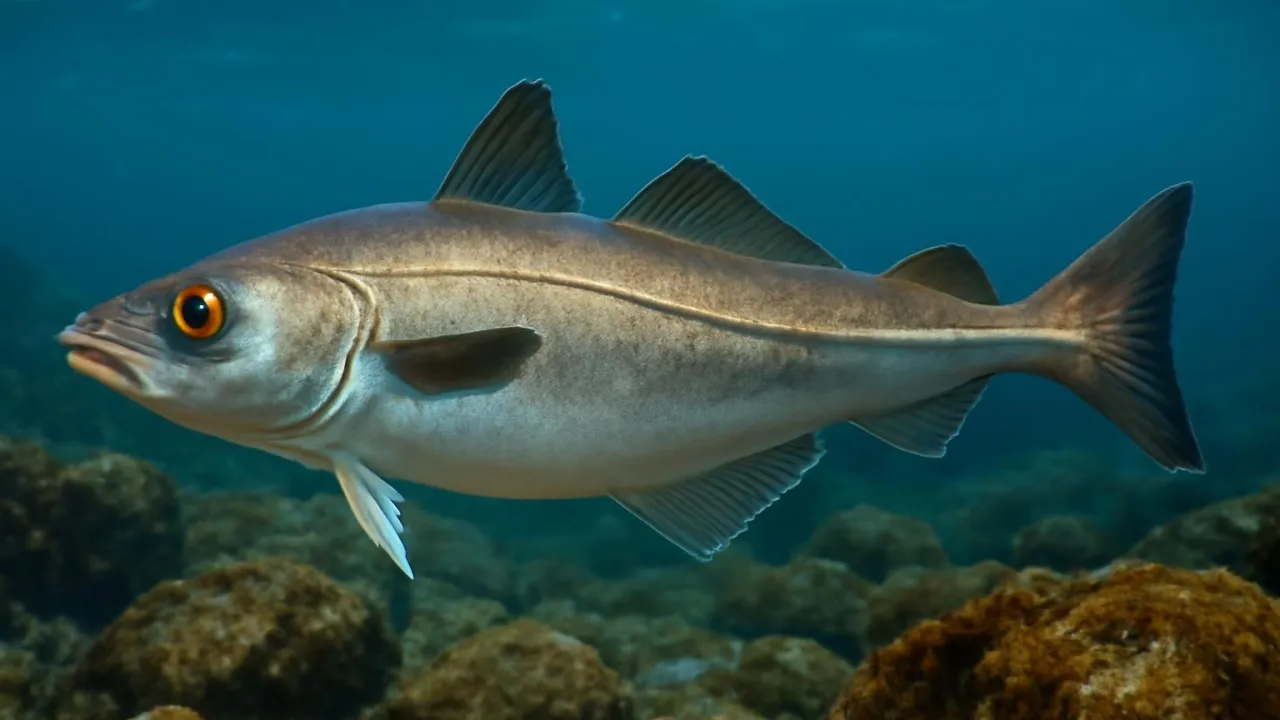
Haddock’s lateral line is a special sensory system that detects water vibrations and nearby movement.
✨ Word Sparks (Grade 3 Glossary)
Tap 🔊 to hear
camouflage
Colors that help animals hide in their home
predator
An animal that hunts other animals for food
lateral line
A line that helps fish sense water movements
🪝
Did you know the haddock’s black stripe helps it survive in the ocean?
1
Haddock’s Appearance
Haddock have silver scales and a white belly that help with . Their black runs from head to tail along their sides. This stripe helps them sense vibrations in the water. Their fins allow quick movements to escape .
2
Where Haddock Live
Haddock live in the cold North Atlantic Ocean, mostly near the sea floor. They prefer rocky and sandy bottoms where they can hide easily. These habitats provide nutrients and shelter from larger . Haddock use to blend with the ocean floor.
3
Diet and Feeding
Haddock eat small fish, crustaceans, and marine worms found on the ocean floor. They use their to detect prey movements nearby. Their mouths open wide to catch food quickly. This adaptation helps them survive in dark, cold waters.
4
Survival Adaptations
The is a sensory organ that detects water pressure changes and . Haddock’s coloring helps them avoid predators by blending into their environment. Their body shape allows fast swimming to escape danger. These adaptations improve their chances of survival.
Haddock use their black lateral line to sense tiny water vibrations, helping avoid predators and find food.
✨ Word Sparks (Grade 4 Glossary)
Tap 🔊 to hear
ecosystem
A community of plants and animals living together
migration
Moving from one place to another seasonally
conservation
Protecting animals and their homes from harm
🪝
How does the haddock’s black lateral line help it live in cold ocean waters?
1
Physical Features and Adaptations
Haddock have a distinct black lateral line that runs along their sides, which helps detect water vibrations and nearby predators. Their silver scales and white belly provide camouflage against the ocean floor, protecting them from predators. Their streamlined body shape allows quick bursts of speed to escape danger. These physical traits help haddock survive in their cold marine environment.
2
Habitat and Geographic Range
Haddock are found primarily in the North Atlantic Ocean, especially near coastal regions of Europe and North America. They prefer cold, deep waters close to the sea floor with rocky or sandy bottoms. This habitat provides abundant food sources and shelter from larger predators. Seasonal occur as haddock move to shallower waters to spawn.
3
Role in the Ecosystem
As a mid-level predator, haddock play an important role in the ocean food web by controlling populations of small fish and invertebrates. They are also prey for larger fish, seals, and humans. Haddock contribute to nutrient cycling by feeding on benthic organisms and helping maintain balance in their . Overfishing has impacted their populations, making sustainable fishing practices important.
4
Human Impact and Conservation
Haddock are a popular fish for commercial fishing due to their mild flavor and flaky meat. Overfishing has led to population declines in some areas, prompting regulations to protect stocks. efforts include fishing quotas and protected marine areas to allow haddock populations to recover. Understanding their habitat needs and life cycle helps support these efforts.
Haddock blood contains antifreeze proteins that prevent freezing in icy cold ocean waters.
✨ Word Sparks (Grade 5 Glossary)
Tap 🔊 to hear
physiology
How an animal’s body works and functions
antifreeze proteins
Special proteins that stop blood from freezing
benthic
Living on or near the ocean floor
🪝
How does the haddock’s unique physiology help it thrive in the cold North Atlantic Ocean?
1
Scientific Classification and Physical Traits
The haddock, scientifically named Melanogrammus aeglefinus, belongs to the Gadidae family known for cod-like fishes. It reaches lengths up to 28 inches and weighs around 6 pounds. Its most distinctive feature is the black lateral line stripe running from its head to tail. This stripe functions as a sensory organ detecting water pressure changes and nearby movements, crucial for survival in murky ocean environments.
2
Physiological Adaptations for Cold Water
Haddock possess in their blood, preventing ice crystal formation in subzero temperatures. Their body shape is streamlined for efficient swimming, enabling quick escapes from predators. The lateral line system enhances spatial awareness by sensing vibrations and pressure gradients. These adaptations allow haddock to thrive in the cold, deep waters of the North Atlantic Ocean where few fish can survive.
3
Ecological Role and Human Interaction
As a mid-level predator, haddock control populations of invertebrates and small fish, maintaining ecosystem balance. They are preyed upon by larger fish, seals, and humans who fish haddock commercially for their mild, flaky meat. Overfishing has caused population declines, leading to strict fishing quotas and marine protected areas. Sustainable management is vital to preserving haddock stocks and ocean biodiversity.
4
Conservation and Historical Importance
Historically, haddock has been an important food source in North Atlantic coastal communities. Conservation efforts focus on habitat protection and regulated fishing seasons to allow population recovery. Scientific monitoring uses population surveys and catch data to inform policies. Public awareness campaigns promote sustainable seafood choices to support haddock conservation.
5
Quantitative Comparisons and Facts
Haddock can swim at speeds up to 5 miles per hour when escaping predators. They typically inhabit depths between 100 and 600 feet, where water temperatures range from 28 to 50 degrees Fahrenheit. Their lateral line can detect vibrations as small as a few micrometers per second. Compared to related cod species, haddock have a more pronounced black lateral line and slightly smaller size.