1. Why might a builder ask a geologist for help before constructing a big bridge?
2. What hides inside a bumpy round rock called a geode?
🤯 Mind-Blowing Fact • Grade 2
Earth's continents creep along at about the exact same speed your fingernails grow—roughly one to two inches every year!
✨ Word Sparks (Grade 2 Glossary)
Tap 🔊 to hear
bedrock
Solid rock lying beneath loose surface soil
tectonic plate
A giant moving slab of Earth's crust
fault
A giant crack where rock blocks slide
🪝
How can a rock made at the bottom of an ocean end up on top of a tall mountain?
1
Clues on the Mountain Trail
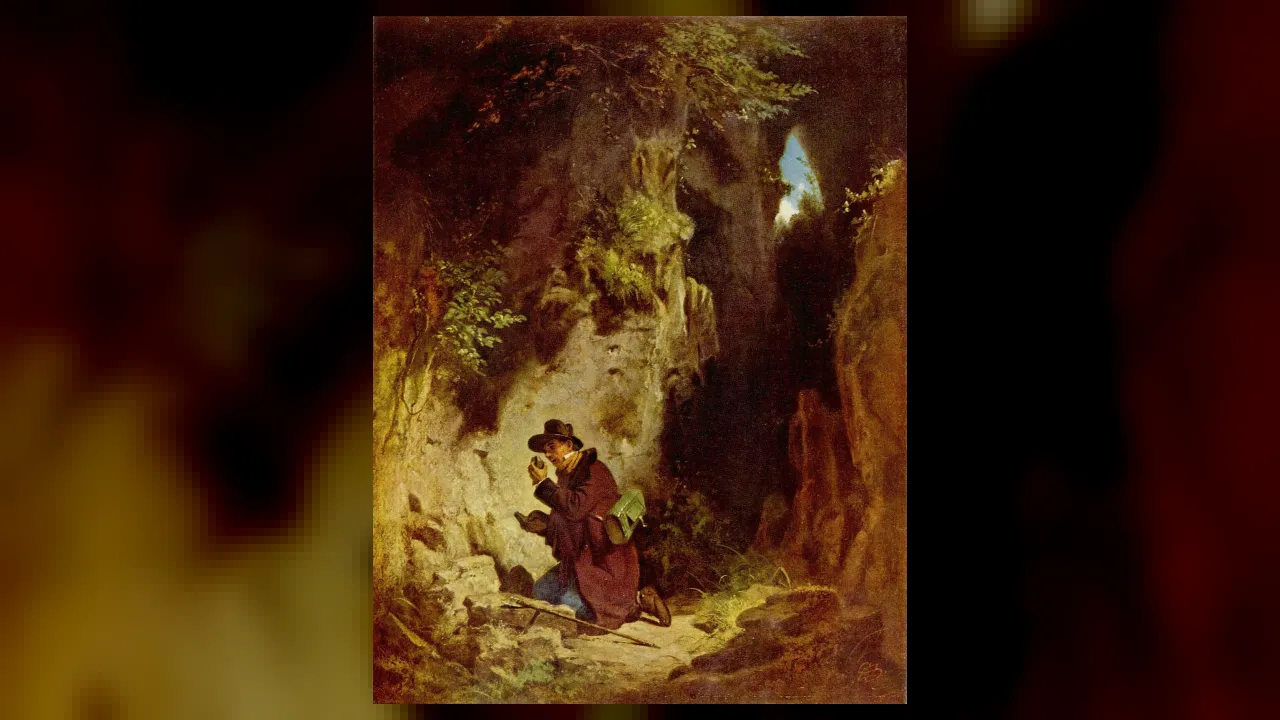
Hike along a rocky cliff in Shenandoah National Park and you will spot tilted stripes of green and gray stone! With a steel rock hammer, a hand lens, and a field notebook, a geologist reads how those mountains rose long ago.
2
Earth's Giant Puzzle Pieces
Earth's outer rocky shell is broken into giant slow-moving slabs called . When two plates push together over millions of years, flat sea-floor layers crumple upward into towering mountain ranges!
3
Watching Shakes and Lava
Geologists also place sensitive sensors around volcanoes and lines to warn towns before eruptions or landslides happen.
1. How fast do Earth's giant tectonic plates usually move?
2. What happens when two giant tectonic plates slowly push into each other?
🤯 Mind-Blowing Fact • Grade 3
Apollo 17 astronaut Harrison Schmitt was a trained geologist who hopped across the Moon in 1972 and spotted orange volcanic glass beads on the lunar surface!
✨ Word Sparks (Grade 3 Glossary)
Tap 🔊 to hear
igneous
Rock formed when melted magma cools solid
metamorphic
Rock changed by intense heat and pressure
Mohs scale
One-to-ten scale ranking mineral scratch hardness
🪝
How does Earth recycle old mountains into brand-new rocks over and over again?
1
Scratch Testing Minerals
Rubbing a mystery crystal across an unglazed white tile, a geologist checks the colored powder streak and tests whether a copper penny or steel nail can scratch it! Using the Mohs hardness scale—from soft talc at 1 to diamond at 10—every mineral reveals its identity.
2
The Nonstop Rock Cycle
Rocks never stay the same forever. Melted magma cools into rock like granite or basalt. Wind and rain weather cliffs into sand and mud that cement into sedimentary sandstone and limestone. Deep underground heat and squeezing transform rocks into marble or slate!
3
Finding Everyday Necessities
Look around your classroom: pencil graphite, window glass from quartz sand, drywall gypsum, and copper wires all started out in the ground! Geologists locate these minerals responsibly and map clean underground water aquifers.
4
Planetary Geologists
Some geologists even drive rovers across Mars by remote control, testing red canyon rocks for signs of ancient rivers!
1. On the Mohs hardness scale from 1 to 10, which natural mineral ranks hardest at 10?
2. Which classroom item comes from minerals discovered by geologists?
🤯 Mind-Blowing Fact • Grade 4
The Blue Ridge Mountains of Virginia hold ancient basement rocks over one billion years old—more than four times older than the earliest dinosaurs!
✨ Word Sparks (Grade 4 Glossary)
Tap 🔊 to hear
karst
Limestone land with caves and sinkholes
aquifer
Underground rock layer holding fresh drinking water
weathering
Wind, water, and ice breaking rock down
🪝
Why does Virginia have flat sandy beaches in the east, rolling hills in the middle, and limestone caves in the west?
1
Five Provinces Under Your Feet
Drive west from Virginia Beach to the Cumberland Gap and the scenery transforms five times! Explaining that dramatic journey, a geologist maps Virginia's five physiographic provinces: the Coastal Plain, Piedmont, Blue Ridge, Valley and Ridge, and Appalachian Plateau.
2
Ancient Collisions and Karst Caves
Over 300 million years ago, ancestral Africa and North America collided to form the supercontinent Pangaea, pushing the ancient Appalachian Mountains as high as today's Himalayas! Centuries of eroded those peaks, washing sand eastward to build the Coastal Plain while leaving hard billion-year-old granite in the Blue Ridge. Meanwhile, slightly acidic rainwater dissolved Valley and Ridge limestone to carve breathtaking underground caverns like Luray Caverns!
3
Hydrogeology and Clean Water
Environmental geologists and hydrogeologists drill deep rock cores to track how fresh groundwater flows through porous sandstone and fractured bedrock . Their underground maps protect town drinking wells from pollution, guide safe dam construction, and warn communities before sinkholes open.
4
Slicing Rocks Thinner Than Hair
Back inside the university mineral laboratory, geologists grind and polish solid rock slices down to just 0.03 millimeters—thinner than a single human hair—so polarized microscope light makes hidden quartz, feldspar, and mica crystals glow like dazzling stained-glass windows!
1. How did Virginia's famous Valley and Ridge caverns—like Luray Caverns—form?
2. Why are the Appalachian Mountains rounder and lower today than the jagged Himalayas?
🤯 Mind-Blowing Fact • Grade 5
In 1936, Danish seismologist Inge Lehmann analyzed earthquake waves traveling clear through the planet and discovered that Earth has a solid inner iron core spinning inside its liquid outer core!
✨ Word Sparks (Grade 5 Glossary)
Tap 🔊 to hear
seismic wave
Energy vibration traveling through Earth from earthquakes
mantle
Thick hot rock layer beneath Earth's crust
subduction
One tectonic plate diving beneath another plate
🪝
How do geologists peer 4,000 miles to Earth's iron core without ever drilling more than eight miles deep?
1
X-Raying Planet Earth with Sound Waves
Humanity's deepest borehole—the Kola Superdeep Borehole—reached just 7.6 miles down, barely scratching Earth's 3,959-mile radius! Yet a geologist and geophysicist know Earth has a brittle crust, a convecting silicate , a swirling liquid-iron outer core, and a solid-iron inner core. Their secret tool? Tracking earthquake (P-waves and S-waves) as they bend, speed up, or stop dead at liquid boundaries deep inside our planet!
2
Deep Time and Plate Tectonics
In 1788, Scottish geologist James Hutton observed tilted sandstone meeting vertical shale at Siccar Point and realized slow everyday processes—erosion, sedimentation, and uplift—operating across vast 'deep time' shaped Earth. By the 1960s, seafloor magnetic stripes, Alfred Wegener's continental-drift clues, and -zone earthquakes united geology under plate tectonics: heat-driven convection continually recycles oceanic crust while rafting continents across the globe.
3
Zircon Time Capsules
To pin exact dates onto geologic eras, geochronologists fire microscopic ion beams at tough zircon crystals harvested from granite. Because zircon traps uranium atoms when it crystallizes but rejects lead, measuring the uranium-to-lead decay ratio dates Australia's Jack Hills zircons to 4.4 billion years ago—proving liquid oceans existed on young Earth!
4
Critical Minerals for Clean Energy
Transitioning society to solar grids, wind turbines, and electric vehicles requires geologists to locate sustainable deposits of lithium, cobalt, copper, and rare-earth elements while designing strict mine reclamation and groundwater safeguards.
5
Hazard Resilience
On volcano slopes from Hawaii to Cascade peaks, tiltmeters and gas spectrometers operated by U.S. Geological Survey teams detect rising magma days ahead—saving thousands of lives.