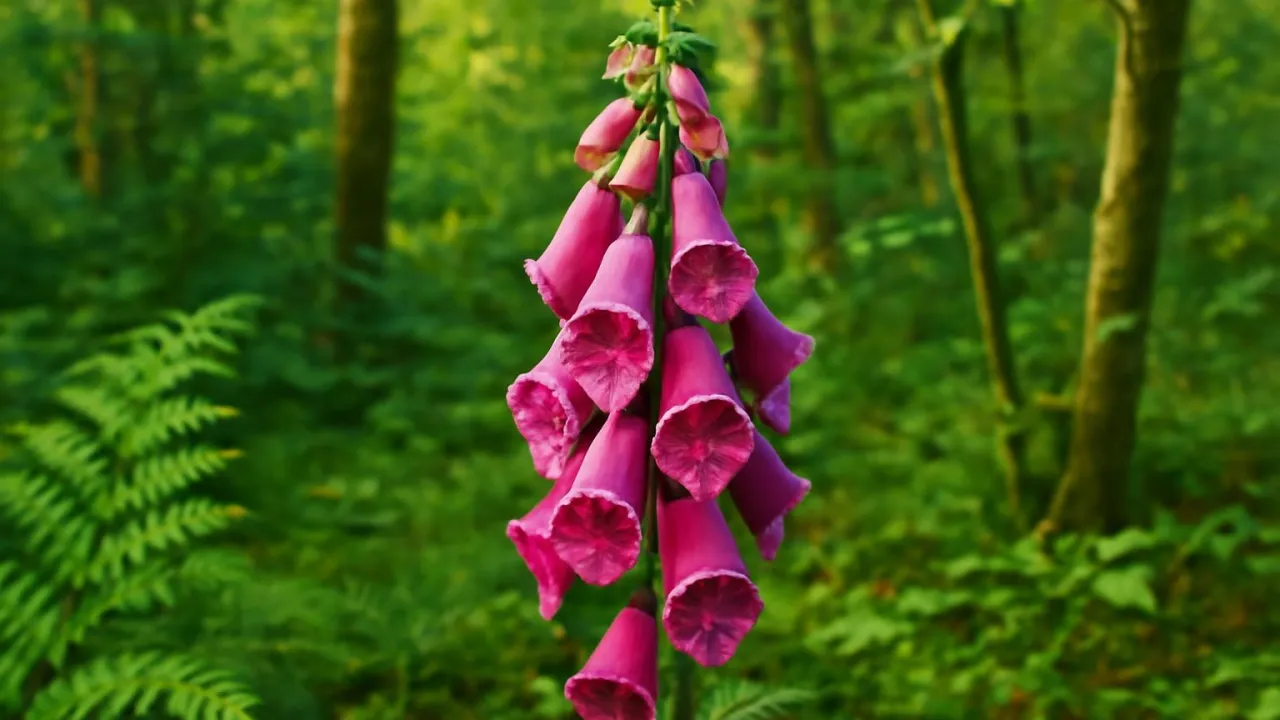
Foxglove flowers have spots that guide bees to nectar inside each bell.
✨ Word Sparks (Grade 2 Glossary)
Tap 🔊 to hear
nectar
Sweet juice inside flowers that bees drink
moist
A little wet, not too dry or too wet
poisonous
Something that can make you very sick
🪝
Have you ever seen flowers shaped like tiny spotted bells?
1
Colorful Bell-Shaped Flowers
Foxglove flowers hang down like little bells and have purple spots inside. These spots help bees find hidden deep inside the flower. The flowers grow in tall spikes that can reach over five feet high. Bees love visiting foxgloves to collect pollen and nectar.
2
Where Foxgloves Live and Grow
Foxgloves grow best in woodlands or on hillsides where the soil is but well-drained. They need both sunlight and some shade to thrive during spring and summer. These plants often appear in wild gardens and sometimes near old stone walls. Foxgloves can grow from seeds or from young plants.
3
A Flower That Can Help Hearts
Foxgloves contain chemicals that can help people with heart problems if used carefully. However, the plant is if eaten the wrong way. Animals usually avoid eating foxgloves because of their bitter taste. People must never touch or eat foxgloves without expert advice.
1. What helps bees find nectar in foxglove flowers?
2. Why do animals avoid eating foxgloves?
🤯 Mind-Blowing Fact • Grade 3
Foxgloves produce heart medicine chemicals but are deadly if eaten carelessly.
✨ Word Sparks (Grade 3 Glossary)
Tap 🔊 to hear
pollination
When bees move pollen to help plants make seeds
adaptation
A special trait that helps plants survive
toxin
A poison that can hurt animals or people
🪝
Did you know foxgloves use spots to help bees find nectar inside?
1
Foxglove’s Bell-Shaped Flowers
Foxglove flowers are shaped like bells and have purple spots inside to guide pollinators. These spots act as visual cues for bees searching for nectar. The plant’s tall flower spikes can grow up to five feet high. This shape helps protect nectar from rain and attracts pollinators.
2
Growing in Woodland Habitats
Foxgloves thrive in temperate woodlands and hills where the soil is moist and well-drained. They grow best in partial sunlight, which helps prevent their leaves from drying out. This plant produces many seeds that spread to new areas by wind. Their tall stems help them compete for sunlight.
3
Camouflage and Protection
Foxgloves have a natural that protects them from predators like deer and rabbits. Their leaves and flowers contain poisonous chemicals called cardiac glycosides. These make the plant dangerous to eat, so animals avoid them. This adaptation helps foxgloves survive in the wild.
4
Pollination and Survival
Bees are the main pollinators of foxgloves, transferring pollen from flower to flower. The flower’s bell shape and spots help guide bees to the nectar inside. This process helps the plant produce seeds for new growth. Foxgloves play an important role in their ecosystem by supporting pollinators.
2. What helps protect foxgloves from animals eating them?
🤯 Mind-Blowing Fact • Grade 4
Foxgloves produce poison that protects them and medicine that helps people’s hearts.
✨ Word Sparks (Grade 4 Glossary)
Tap 🔊 to hear
ecosystem
All living things and their homes working together
symbiosis
When two living things help each other survive
herbivore
An animal that eats only plants
🪝
How do foxgloves use their spotted flowers to survive and help others?
1
The Role of Spotted Flowers
Foxgloves produce tall spikes of bell-shaped flowers covered with spots that guide pollinators like bees directly to nectar. These visual cues increase pollination success because bees can easily find the flower’s reward. This cause-and-effect relationship helps foxgloves reproduce and spread their seeds effectively. The flowers’ shape also protects nectar from rain, preserving its quality.
2
Foxgloves in Their Ecosystem
Foxgloves are important in woodland and hillside because they provide nectar for many pollinators, including bees and hummingbirds. Their presence supports a healthy food web by helping pollinators survive and reproduce. However, the plant’s poisonous chemicals protect it from , maintaining balance in the ecosystem. Humans also use foxgloves to create heart medicines, showing a unique .
3
Where Foxgloves Grow
Native to Europe, foxgloves thrive in temperate regions with moist, well-drained soil and partial shade. They often grow in forests, clearings, and along roadsides where sunlight filters through trees. Their ability to grow in these varied habitats shows their adaptation to different environments. Foxgloves can spread quickly by wind-dispersed seeds, colonizing new areas rapidly.
4
Human Impact and Conservation
Humans have cultivated foxgloves for centuries because of their medicinal properties, but wild populations sometimes decline due to habitat loss. Conservation efforts focus on protecting natural habitats and encouraging sustainable harvesting. Educating people about foxglove’s poisonous nature helps prevent accidental poisonings. Protecting foxgloves also supports pollinator populations essential for many .
2. Why is foxglove important to humans and nature?
🤯 Mind-Blowing Fact • Grade 5
Foxglove’s heart medicine comes from deadly toxins, showing nature’s powerful chemistry.
✨ Word Sparks (Grade 5 Glossary)
Tap 🔊 to hear
cardiac glycosides
Chemicals from plants that help the heart beat strong
pollination
When pollen moves to help plants make seeds
toxic
Something very poisonous and dangerous to living things
🪝
Did you know foxgloves produce powerful heart medicine but are deadly if misused?
1
Scientific Classification and Botanical Features
Foxglove, scientifically named Digitalis purpurea, belongs to the Plantaginaceae family and is native to western Europe. This biennial or short-lived perennial grows tall flower spikes reaching up to 1.5 meters in height. Its tubular, bell-shaped flowers are typically purple with distinctive dark spots inside, which serve as nectar guides for pollinators. The plant’s leaves are large and hairy, helping reduce water loss in its native woodland habitats.
2
Physiological Mechanics and Chemical Compounds
Foxglove produces , powerful compounds that affect heart muscle contractions by increasing calcium levels in cells. These chemicals have been used medicinally to treat heart failure and arrhythmias for centuries. However, the plant is highly if ingested improperly, causing nausea, dizziness, or even death. The flower’s bell shape and spotted interior efficiently attract bees, ensuring effective and reproduction.
3
Ecological Role and Pollinator Interactions
In its native ecosystems, foxglove serves as a vital nectar source for bees, hummingbirds, and other pollinators, supporting biodiversity. Its tall flower spikes allow it to compete for sunlight in shaded woodlands, while its compounds deter herbivores such as deer and rabbits. This balance helps maintain healthy food webs and plant communities. Foxglove’s seed dispersal by wind enables colonization of disturbed areas, contributing to ecosystem resilience.
4
Conservation and Human Use History
Humans have cultivated foxgloves since the 18th century for their medicinal properties, particularly for producing digitalis drugs. While cultivation is widespread, wild populations face threats from habitat destruction and overharvesting. Conservation programs aim to protect natural habitats and promote sustainable use. Public education about foxglove’s toxicity helps prevent accidental poisonings and encourages respect for wild plants.
5
Quantitative Comparisons and Interesting Facts
Foxglove flowers can grow up to five feet tall and produce hundreds of seeds per plant each year. The found in foxglove are effective in minute doses, with therapeutic doses measured in micrograms. The plant thrives in temperatures between 50 and 75 degrees Fahrenheit and prefers moist, well-drained soils. Its unique spotted flowers are a remarkable example of evolutionary adaptation to attract specific pollinators efficiently.