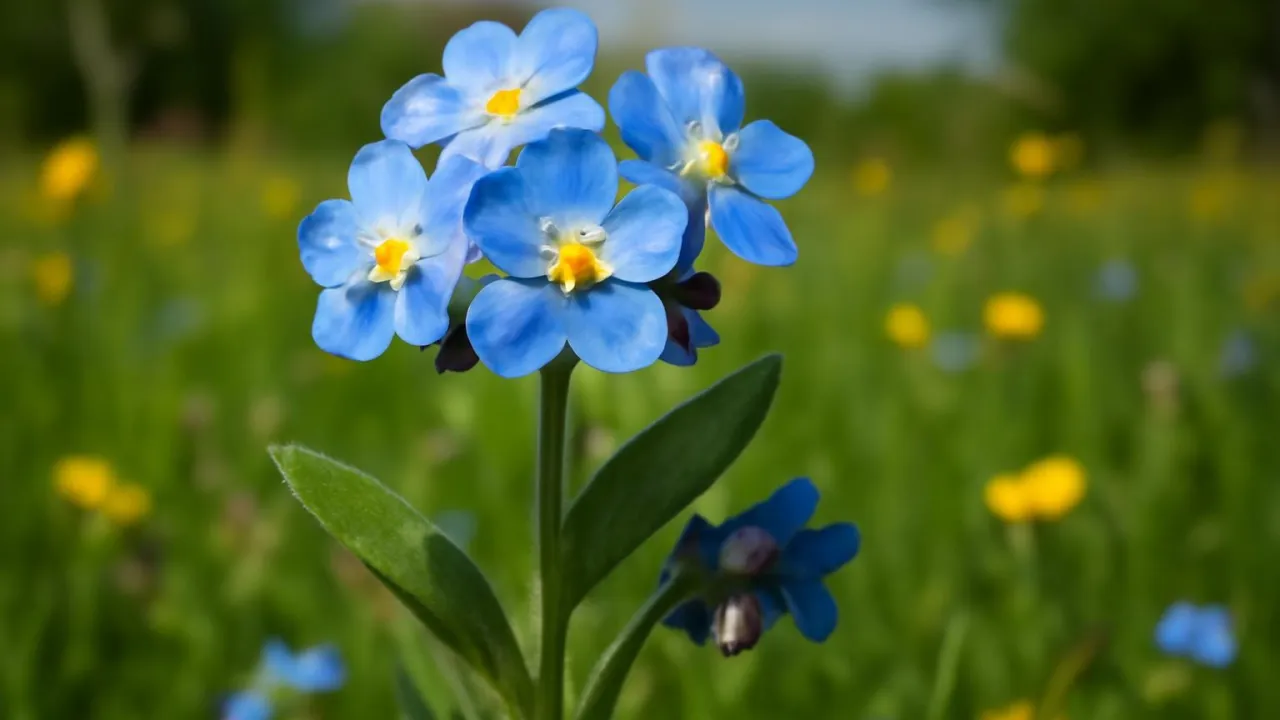
Forget-me-nots bloom early in spring to welcome pollinators like bees.
✨ Word Sparks (Grade 2 Glossary)
Tap 🔊 to hear
nectar
Sweet juice inside flowers for bees
pollinators
Animals that help flowers make seeds
seed pods
Parts of flowers that hold seeds
🪝
Have you ever seen tiny blue flowers that help bees find food?
1
Bright Blue Petals
Forget-me-nots have bright blue petals that attract many busy bees. Their small size makes them easy to spot in meadows. Bees visit these flowers to collect sweet and pollen.
2
Where They Grow
These flowers grow best in cool, moist places near streams or forests. They need sunlight and wet soil to grow well. You can find them in parts of Europe and Asia.
3
Life Cycle and Seeds
After bees collect , forget-me-nots make tiny seeds inside . These seeds fall to the ground and grow into new plants the next year. This helps the flowers spread and grow again.
Forget-me-nots’ blue color is caused by tiny structures that reflect light uniquely.
✨ Word Sparks (Grade 3 Glossary)
Tap 🔊 to hear
pollination
When pollen moves to help make seeds
adaptation
A change that helps plants survive
habitat
The natural home where a plant lives
🪝
Did you know forget-me-nots use bright blue petals to survive and grow?
1
Color and Camouflage
Forget-me-nots have bright blue petals that attract pollinators like bees and butterflies. Their small size and color help them stand out in green meadows. This helps the flowers get pollinated quickly.
2
Pollination and Growth
happens when bees carry pollen between flowers, helping seeds form inside seed pods. These seeds drop to the soil and grow new plants in the next season. This cycle helps forget-me-nots spread across their .
3
Habitat and Needs
Forget-me-nots grow in temperate zones with moist soil and partial sunlight. They often live near streams or shaded forests where water is plentiful. These conditions provide nutrients and water needed for survival.
4
Survival and Adaptation
Their bright petals act like signals to pollinators, increasing chances of reproduction. This flower’s structure protects seeds until they are ready to grow. These help forget-me-nots survive predators and changing weather.
Forget-me-nots support ecosystems by feeding pollinators and small animals with nectar and seeds.
✨ Word Sparks (Grade 4 Glossary)
Tap 🔊 to hear
symbiosis
When two living things help each other
pollinators
Animals that help flowers make seeds
ecosystem
A community of plants and animals living together
🪝
Have you wondered how forget-me-nots play a role in their ecosystem?
1
Bright Petals and Pollination
Forget-me-nots use their bright blue petals to attract such as bees and butterflies, which help transfer pollen between flowers. This cause-and-effect relationship ensures the flowers produce seeds for the next generation. Without pollinators, forget-me-nots would struggle to reproduce successfully. The bright color acts as a signal to many insects searching for nectar.
2
Ecosystem Role and Food Webs
These flowers provide nectar for many insects, supporting local food webs by feeding that birds and other animals eat. Their seeds also serve as food for small animals, creating symbiotic relationships within their habitat. This interaction helps maintain balance and biodiversity. Forget-me-nots thus play a key role in their natural communities.
3
Habitat and Geographic Range
Forget-me-nots thrive in temperate regions across Europe and Asia, especially near streams and moist forests. They prefer cool, shady areas with rich soil, which provide the nutrients and water necessary for their growth. Human activities like gardening have spread them to other parts of the world, sometimes making them naturalized outside their native range.
4
Human Impact and Conservation
While forget-me-nots are common garden plants, habitat loss and pollution can threaten wild populations. Conservation efforts focus on protecting natural wetlands and forests where these flowers grow. Gardening with native plants like forget-me-nots helps support and biodiversity. Educating people about their ecological role encourages environmental stewardship.
1. What do forget-me-nots provide for pollinators?
2. Why are forget-me-nots important in food webs?
🤯 Mind-Blowing Fact • Grade 5
Forget-me-nots’ vivid blue color comes from microscopic petal structures, not pigments.
✨ Word Sparks (Grade 5 Glossary)
Tap 🔊 to hear
taxonomy
How scientists group and name living things
structural coloration
Color made by tiny petal structures, not paint
dormant
Sleeping seed that waits to grow later
🪝
Did you know the forget-me-not belongs to a large plant family with fascinating biological traits?
1
Scientific Classification and Taxonomy
Forget-me-nots belong to the genus Myosotis within the Boraginaceae family, which includes many flowering plants with hairy leaves and stems. The scientific name Myosotis means 'mouse ear' in Greek, referring to the shape of the leaves. This genus contains over 50 species distributed mostly in temperate zones. These plants share many common traits that help them survive in cool climates.
2
Physiological Mechanics and Flower Structure
The bright blue petals of forget-me-nots contain microscopic structures that reflect light to produce their vivid color, a phenomenon called . Their flowers have five petals fused at the base, forming a tube that guides pollinators toward nectar. The hairy stems reduce water loss and protect against herbivores. These features improve survival and reproduction in their natural habitats.
3
Life Cycle and Reproduction
Forget-me-nots reproduce through pollination by insects, which transfer pollen between flowers, enabling seed formation inside small seed pods. Seeds can remain through winter and germinate in spring, ensuring survival across seasons. This reproductive strategy helps maintain genetic diversity. The timing of blooming early in spring gives forget-me-nots a competitive advantage for pollinator visits.
4
Conservation and Human Interaction
While some species of forget-me-nots are common in gardens, others are rare and threatened due to habitat destruction and climate change. Conservation programs aim to protect natural habitats and promote native plant gardening to support pollinators. Historically, forget-me-nots have symbolized remembrance and love in many cultures. These cultural connections help raise awareness about protecting wild plants.
5
Quantitative Comparisons and Environmental Adaptations
Forget-me-nots typically grow between 10 and 30 centimeters tall and can produce hundreds of seeds per plant annually. They thrive in temperatures ranging from 50 to 75 degrees Fahrenheit and prefer soils with consistent moisture. Their ability to bloom early in spring gives them a competitive advantage in temperate ecosystems. These adaptations allow forget-me-nots to colonize moist meadows and forest edges efficiently.