1. Where do food-snipping enzymes start working on a cracker first?
2. What happens to an enzyme right after it finishes snipping one food bit?
🤯 Mind-Blowing Fact • Grade 2
One single catalase enzyme in your liver can break down forty million harmful fizzing molecules in just one second!
✨ Word Sparks (Grade 2 Glossary)
Tap 🔊 to hear
Amylase
Saliva enzyme that turns starch into sugar
Lactase
Gut enzyme that breaks down milk sugar
Protein
Folded chain of building blocks in cells
🪝
Why does fresh pineapple sometimes make your tongue tingle?
1
Super-Fast Protein Workers
Imagine trying to untie a hundred tight shoelaces before recess ends! Inside your body, chemical jobs would move way too slowly without special folded called enzymes. Even juicy pineapples contain fruit enzymes that gently tingle your tongue!
2
Like a Lock and Key
Each enzyme has a special pocket shaped for just one matching partner, almost like a lock and key. An enzyme in your saliva called unlocks starch in bread, while in your gut unlocks milk sugar.
3
More Than Digestion
Breaking down lunch is only part of the story! Thousands of different enzymes live inside your cells, where they copy DNA, build strong muscles, and help firefly bellies glow in the summer night.
1. Why can't one enzyme do every single job in the body?
2. Which enzyme in your saliva turns bread starch into sweet sugar?
🤯 Mind-Blowing Fact • Grade 3
Fireflies light up warm summer nights using an enzyme named luciferase that turns chemical energy into cool glowing light!
✨ Word Sparks (Grade 3 Glossary)
Tap 🔊 to hear
Catalyst
Something speeding reactions without getting used up
Active Site
Special enzyme pocket where molecules fit inside
Substrate
Specific molecule an enzyme grabs and changes
🪝
Why does hydrogen peroxide bubble into white foam the instant it touches a scraped knee?
1
Watch the Bubbles Fizz!
Fizzzz! Drop hydrogen peroxide onto a tiny cut or even a slice of raw potato, and white bubbles burst out instantly. That foam is pure oxygen gas! An enzyme inside cells called catalase just split hydrogen peroxide into safe water and oxygen at lightning speed.
2
Biological Catalysts
Scientists call enzymes biological because they speed up chemical reactions millions of times without getting used up themselves. Notice how enzyme names often end in '-ase,' such as protease for proteins, lipase for fats, and lactase for milk lactose!
3
The Active Site Hug
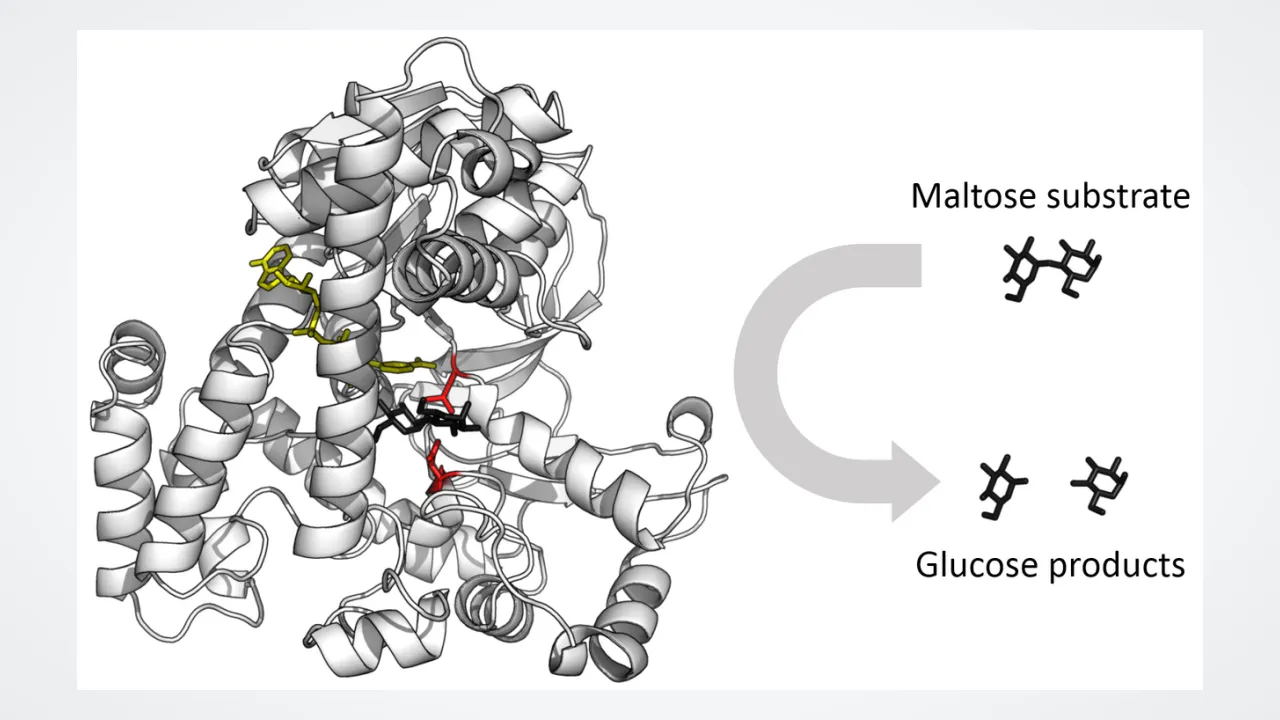
Every enzyme folds into a 3D shape with a groovy pocket called an . Only a matching molecule, called a , fits inside. The enzyme gently hugs the substrate, snaps or joins chemical bonds, and releases the finished products.
4
Just-Right Conditions
Human enzymes work best right around normal body temperature, about thirty-seven degrees Celsius. If a fever climbs way too high, enzymes can lose their folded shape, which is one big reason your body works hard to cool down!
1. What do scientists call the special pocket on an enzyme where a substrate fits?
2. What three letters do many enzyme names end with?
🤯 Mind-Blowing Fact • Grade 4
Without a blood enzyme called carbonic anhydrase, carbon dioxide would trickle out of your blood so slowly you could not breathe fast enough to run across a playground!
✨ Word Sparks (Grade 4 Glossary)
Tap 🔊 to hear
Activation Energy
Starting energy push needed to begin reactions
Induced Fit
Enzyme flexing snugly around its target molecule
Denaturation
When heat or acid unravels protein shape
🪝
How do enzymes push stubborn molecules over energy hurdles millions of times faster without raising your body temperature?
1
Lowering the Energy Hill
In a chemistry lab, scientists often heat test tubes over roaring flames to make molecules react faster. Your cells would cook if they tried that trick! Instead, cells deploy over three thousand types of enzymes—specialized protein catalysts that lower , the invisible energy hill molecules must climb before reacting.
2
Induced Fit: A Molecular Handshake
Early scientists pictured an enzyme's active site as a rigid metal lock waiting for a key. Today we know enzymes are flexible! When a matching substrate slips into the active site, the protein flexes snugly around it like a handshake—a mechanism called . That precise squeeze strains old bonds or aligns two substrates face-to-face so reactions finish in milliseconds.
3
Temperature and pH Specialists
Every enzyme thrives in its own home environment. Pepsin, a protein-chopping enzyme in your stomach, loves super-sour acid with a pH near two. Moments later, when food enters the small intestine, pancreatic enzymes like trypsin take over in mildly alkaline fluid. Excessive heat or wrong acidity unravels an enzyme's 3D folds—a shape loss called .
4
Everyday Helpers Inside and Out
Inside cells, DNA polymerase proofreads genetic letters while ATP synthase spins like a waterwheel to build cellular fuel. Humans even borrow enzymes outside the body: laundry detergents use cold-water proteases and lipases to lift grass and grease stains without hot water!
1. How do enzymes speed up chemical reactions inside cool living cells?
2. What happens during denaturation if an enzyme gets way too hot?
🤯 Mind-Blowing Fact • Grade 5
Biotechnologists copy DNA in crime and medical labs using Taq polymerase, a heat-loving enzyme discovered inside boiling hot springs in Yellowstone National Park!
✨ Word Sparks (Grade 5 Glossary)
Tap 🔊 to hear
Cofactor
Mineral or vitamin helper an enzyme needs
Allosteric Site
Side switch on an enzyme controlling speed
Polymerase
Enzyme that assembles long chains of DNA
🪝
How can a single folded chain of amino acids accelerate a reaction that would otherwise take millions of years into a fraction of a second?
1
Architects of Metabolic Speed
Left to random collisions at thirty-seven degrees Celsius, the chemical reactions sustaining human life would crawl at glacial paces—one enzyme-assisted step in building DNA building blocks would take roughly seventy-eight million years on its own! Living cells conquer this barrier with enzymes: macromolecular catalysts folded primarily from long polypeptide chains of amino acids that accelerate reactions by factors of millions or trillions while emerging unchanged.
2
Active Sites, Induced Fit, and Cofactors
An enzyme's catalytic power stems from its intricate three-dimensional folding, which brings distant amino acid side chains together into a sculpted pocket called the active site. As biochemist Daniel Koshland proposed in 1958, substrate binding triggers an induced-fit conformational shift that stabilizes the fleeting transition state and slashes activation energy. Many enzymes also recruit non-protein helpers: mineral like zinc or iron ions, and vitamin-derived coenzymes that shuttle electrons or chemical groups.
3
Precision Tuning Across Organ Systems
Because weak hydrogen and ionic bonds maintain protein structure, enzymes respond sharply to temperature and pH. Gastric pepsin operates optimally near pH 1.5–2.0 inside stomach acid, whereas salivary amylase and intestinal lipase require near-neutral or slightly alkaline conditions; outside its window, an enzyme denatures as its active site distorts.
4
Cellular Feedback Switches
Cells never leave three thousand enzyme pathways running wide open at once. Through feedback inhibition, when a cell manufactures plenty of an end product, excess product molecules bind to a regulatory on the pathway's first enzyme, temporarily dimming its activity like a smart thermostat.
5
From Yeast Extracts to Biotechnology
The word enzyme—Greek for 'in yeast'—was coined in 1877, and in 1926 James Sumner crystallized urease from jack beans, proving enzymes are pure proteins and earning a Nobel Prize. Today, heat-proof Taq borrowed from Yellowstone hot-spring microbes copies DNA in medical labs worldwide, while lactase tablets help lactose-intolerant kids enjoy ice cream comfortably!