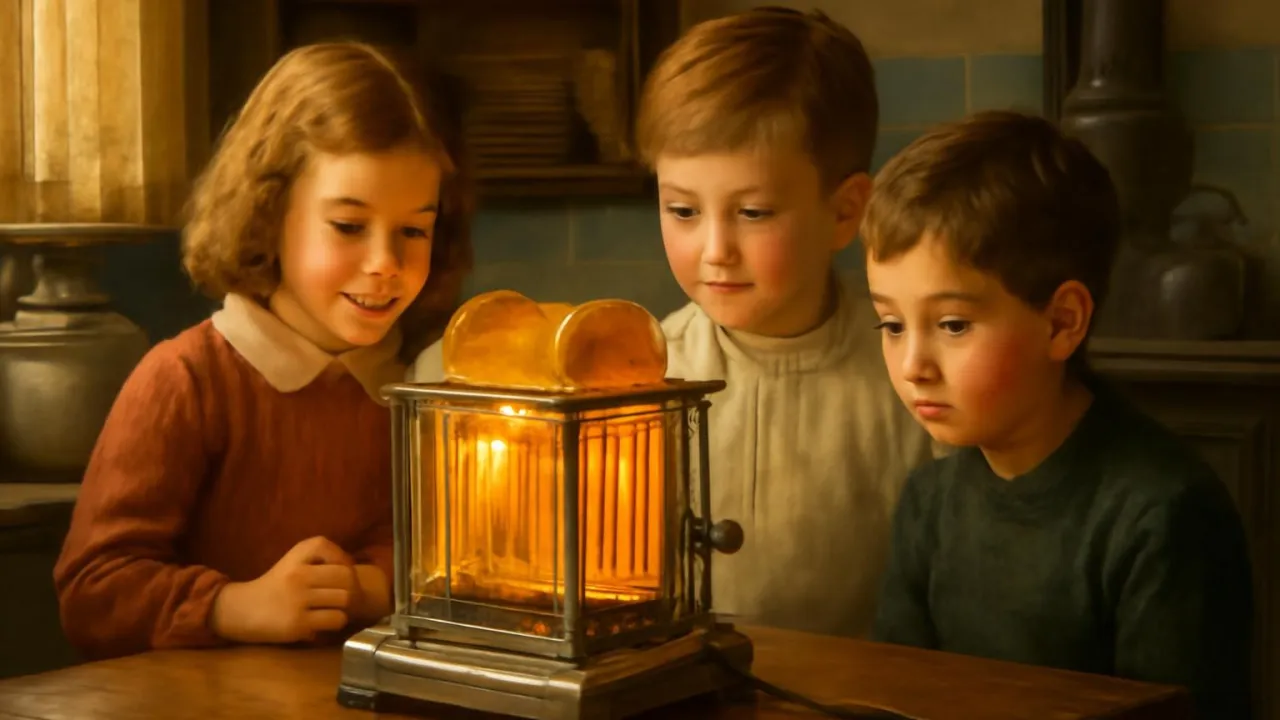
The very first electric toasters could only toast one side of bread at a time!
✨ Word Sparks (Grade 2 Glossary)
Tap 🔊 to hear
nichrome
A strong wire that gets hot
electric
Using power from wires or plugs
pop-up
Something that jumps up quickly
🪝
Have you ever heard the toaster pop and smelled fresh toast?
1
How Toast Gets Made
When you put bread in the toaster, it slides between metal wires. The wires heat up and glow, making the bread turn brown and crispy. People watch and wait for the toast to pop up. It is fun to see and smell the change.
2
The First Toasters
Long ago, toasters did not pop up by themselves, so people had to flip the bread. The first toaster was made in 1905 by Albert Marsh in Chicago. His toaster used a special wire called , which could get very hot without melting. This made toasting bread much safer and easier.
3
Why Toast Is Special
Toasters make breakfast fast and fun for families everywhere. You can add jam, butter, or honey to your toast. Toast is crunchy on the outside but soft inside, making it a favorite morning treat.
The Maillard reaction, which browns toast, is the same process that makes cookies and grilled meat tasty!
✨ Word Sparks (Grade 3 Glossary)
Tap 🔊 to hear
filament
A thin wire that gets hot
Maillard reaction
A change that makes food brown
thermostat
A part that senses heat
🪝
Why does bread get crispy and brown inside a toaster, and how does it pop up?
1
The Science of Toasting
When you push down the toaster lever, electricity flows through thin wires called . These filaments are made of nichrome, a metal that resists electricity and gets very hot. The heat causes the bread to lose moisture and turn golden brown. This process is called the , which makes toast taste and smell delicious.
2
A Toasty Invention
The first electric toaster was invented by Albert Marsh in 1905. Before electric toasters, people toasted bread over fire or on metal racks. Early toasters did not have timers or pop-up features, so users had to watch carefully and flip the bread. The pop-up toaster was invented later, making breakfast safer and easier.
3
How the Pop-Up Works
Inside the toaster, a spring mechanism holds the bread down while it heats. When the timer or senses the right temperature, the spring releases, and the toast pops up. This clever design keeps the bread from burning and lets you grab your toast safely.
4
Toasters Around the World
Today, toasters are found in kitchens everywhere, from busy cities to quiet villages. People enjoy toast with butter, jam, or even avocado. The invention of the toaster changed breakfast forever, making it quick, easy, and fun.
If you lined up every toaster ever made, they could circle the Earth more than once!
✨ Word Sparks (Grade 4 Glossary)
Tap 🔊 to hear
resistance
How hard it is for electricity to flow
alloy
A mix of different metals
insulation
Material that keeps heat or electricity in
🪝
What scientific secrets help a toaster transform plain bread into a golden, crunchy treat every morning?
1
How Electricity Creates Toast
When you press the lever on a toaster, electricity flows through coils of nichrome wire, which resist the flow and become extremely hot. This heat radiates outward, causing the bread’s surface to dry and brown through the Maillard reaction, a chemical process that creates new flavors and aromas. The toaster’s metal body helps reflect heat evenly onto both sides of the bread. This clever use of and radiant heat makes toasting quick and efficient.
2
From Fire to Filaments
Before electric toasters, people toasted bread over open flames or on heavy metal racks, which was slow and uneven. In 1905, Albert Marsh invented the first electric toaster in Chicago by using nichrome, a special that could withstand high temperatures without melting. Early models required users to flip the bread manually, but the invention of the pop-up mechanism in the 1920s made toasting safer and more convenient.
3
Engineering the Pop-Up
Modern toasters use a thermostat or timer to control how long the bread heats. When the set temperature or time is reached, a spring-loaded mechanism releases, causing the toast to pop up. This design prevents burning and allows families to enjoy evenly toasted slices every time. Engineers continue to improve toaster safety and efficiency with better and automatic shut-off features.
4
A Breakfast Revolution
The electric toaster changed how people eat breakfast around the world, making it fast and fun to prepare. Toast is now enjoyed with countless toppings, from butter and jam to peanut butter and eggs. The invention spread quickly, and today, more than a billion toasters are used in homes, hotels, and restaurants everywhere.
1. Why is nichrome used in toasters instead of regular wire?
2. What does the thermostat do in a toaster?
🤯 Mind-Blowing Fact • Grade 5
The world’s most expensive toaster, made of solid gold, was auctioned for over $30,000!
✨ Word Sparks (Grade 5 Glossary)
Tap 🔊 to hear
bimetallic
Made of two different metals together
microprocessor
A tiny computer that controls machines
Maillard reaction
A process that browns and flavors food
🪝
What if you could design a machine that transforms plain bread into a perfectly golden, crispy slice with just the push of a lever?
1
Engineering the Perfect Toast
When you insert bread and press the lever, electricity from the outlet flows into the toaster’s circuit. The current passes through nichrome filaments, which are engineered to have high electrical resistance, causing them to heat up to temperatures between 500 and 600 degrees Fahrenheit. This radiant heat quickly evaporates water from the bread’s surface and triggers the , a complex chemical process that produces hundreds of new flavor and aroma compounds. The toaster’s reflective metal interior ensures even distribution of heat, guaranteeing a uniform golden-brown crust.
2
From Manual to Automatic: A Timeline
Before the electric toaster, bread was toasted over open flames or in stovetop wire racks, which often resulted in burnt or uneven slices. In 1905, Albert Marsh revolutionized breakfast by inventing the first electric toaster using nichrome, a durable nickel-chromium alloy. Early toasters required users to flip bread by hand, but in 1921, Charles Strite patented the first automatic pop-up toaster, which used a timer and spring mechanism to eject the toast at the perfect moment. This innovation made toasting safer, faster, and more consistent.
3
Mechanics of the Pop-Up System
Modern toasters are equipped with a thermostat or electronic timer that monitors the temperature or elapsed time. When the set point is reached, the circuit breaks, releasing a spring-loaded carriage that lifts the toast. This mechanism prevents overheating and burning, while crumb trays and insulated casings enhance safety and cleanliness. Some advanced toasters even use to adjust toasting time based on bread type and moisture content.
4
Global Impact and Cultural Evolution
The electric toaster has transformed breakfast habits worldwide, making quick, consistent toast accessible to families in nearly every country. Over a billion toasters are estimated to be in use today, supporting a vast industry of bread, spreads, and breakfast foods. Toast has become a cultural staple, enjoyed with regional toppings like Vegemite in Australia or Nutella in Europe, and is even used in creative recipes from avocado toast to French toast.
5
Innovations and the Future of Toasting
Engineers continue to refine toaster design, introducing features such as digital browning controls, wider slots for bagels, and energy-efficient heating elements. Some modern toasters integrate smart technology, allowing users to control settings via smartphone apps or voice assistants. As sustainability becomes more important, manufacturers are developing recyclable materials and energy-saving modes, ensuring that the humble toaster remains a key part of kitchens for generations to come.