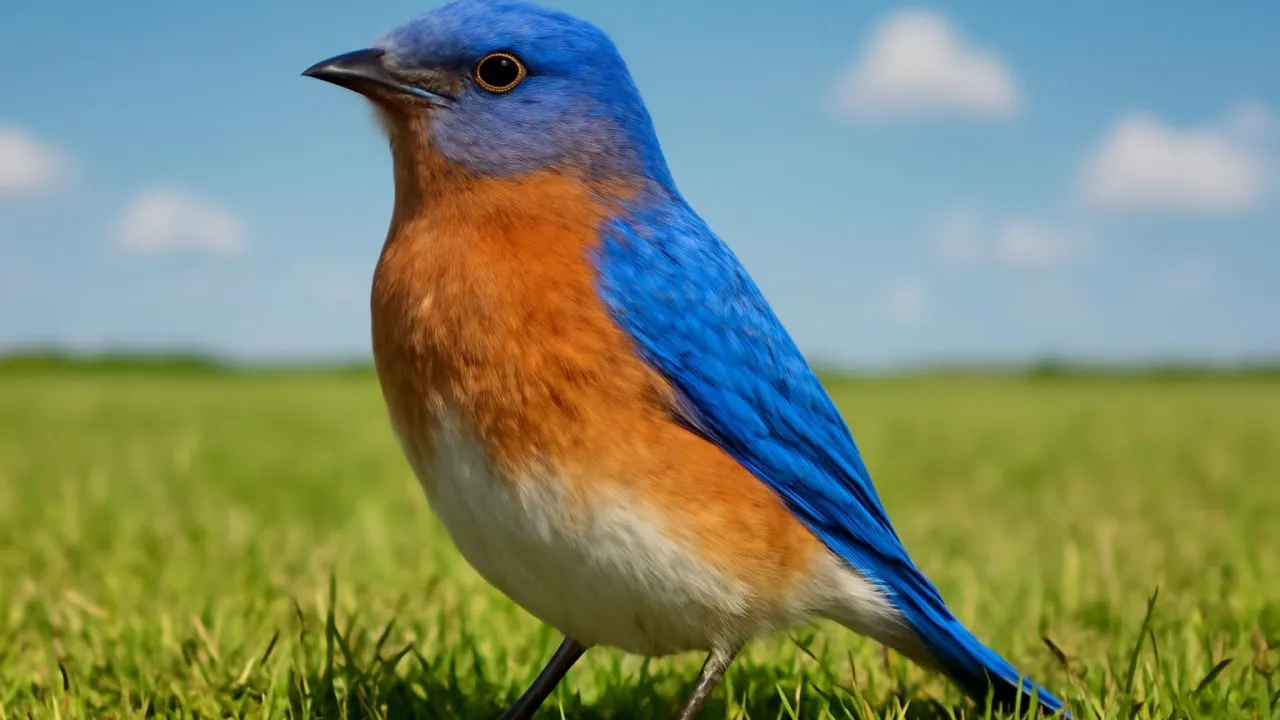
Eastern Bluebirds can spot tiny insects from far away to catch them easily.
✨ Word Sparks (Grade 2 Glossary)
Tap 🔊 to hear
orchards
Places where fruit trees grow
insects
Small animals with six legs and wings
nest
A home birds build for their eggs
🪝
Have you ever heard the cheerful song of an Eastern Bluebird?
1
Colorful Feathers
The Eastern Bluebird has bright blue feathers and a rusty orange chest. It shines in the sunlight and is easy to spot in open fields. Its colors help it find a mate during springtime.
2
Where It Lives
This bird lives in open woodlands, fields, and . It builds inside tree holes or birdhouses to keep its eggs safe. People often help by putting up special boxes for them.
3
What It Eats
Eastern Bluebirds eat like beetles and caterpillars. They also enjoy eating berries during cold months when bugs are scarce. This helps them survive all year long.
Eastern Bluebirds can spot tiny insects from far away using sharp eyesight.
✨ Word Sparks (Grade 3 Glossary)
Tap 🔊 to hear
camouflage
Colors that help animals hide
adaptation
A change that helps animals survive
nutrients
Food parts that help animals grow
🪝
Did you know the Eastern Bluebird uses its bright colors to attract mates?
1
Bright Colors Help Survival
The male Eastern Bluebird has bright blue feathers that help attract a mate. The orange chest contrasts with the blue, making it easier to spot. This bright coloring is an to their open habitat. Females have duller colors to from predators.
2
Habitat and Nesting
Eastern Bluebirds live in open woodlands and fields where trees have holes. They use these holes for nesting to protect their eggs from predators. Sometimes, they nest in birdhouses made by people. This helps them survive in changing environments.
3
Diet and Hunting
These birds eat insects like beetles and caterpillars, which provide . They hunt by spotting prey from a perch and swooping down quickly. In winter, they switch to eating berries when insects are scarce. This diet flexibility helps them survive year-round.
4
Protecting Their Young
Eastern Bluebirds fiercely protect their nests from predators like snakes and raccoons. They use loud calls to warn others and drive threats away. This behavior increases their young’s chance of survival. Their nesting strategy is a key part of their life cycle.
1. Why do female Eastern Bluebirds have dull colors?
2. What do Eastern Bluebirds eat when insects are scarce?
🤯 Mind-Blowing Fact • Grade 4
Eastern Bluebirds help plants grow by spreading seeds from the berries they eat.
✨ Word Sparks (Grade 4 Glossary)
Tap 🔊 to hear
symbiosis
When two living things help each other
ecosystem
All plants and animals in one place
urbanization
Building cities where nature once was
🪝
How does the Eastern Bluebird’s bright color affect its role in the ecosystem?
1
Color and Mating Success
The bright blue and orange colors of the male Eastern Bluebird increase its chances of attracting a mate, which helps continue the species. Females prefer males with vivid colors, showing a cause-and-effect relationship in reproduction. This coloring also signals health and vitality to other birds. Bright colors can sometimes attract predators, so males must balance risk and reward.
2
Role in Food Webs
Eastern Bluebirds play an important role by controlling insect populations, eating beetles and caterpillars that could harm plants. They also spread seeds by eating berries, helping plants grow in their habitat. This symbiotic relationship benefits both the birds and the environment. Human activities like farming can affect their food sources and nesting sites.
3
Habitat and Geographic Range
These birds are found in eastern North America, from Canada down to Florida and Texas. They prefer open woodlands, farmlands, and orchards where nesting holes are available. Habitat loss due to threatens their populations in some areas. Conservation efforts include providing birdhouses to support nesting.
4
Human Impact and Conservation
Farmers and bird lovers help Eastern Bluebirds by putting up nest boxes, which increase breeding success. Pesticide use can reduce insect food, negatively impacting bluebird survival. Protecting open habitats and educating people about bluebirds help maintain their populations. These efforts show how humans can positively affect wildlife.
Eastern Bluebirds can spot insects from 30 feet away and fly up to 20 miles per hour to catch them.
✨ Word Sparks (Grade 5 Glossary)
Tap 🔊 to hear
taxonomy
How scientists group living things
carotenoids
Pigments that make feathers bright colors
invasive species
Animals that harm native plants or animals
🪝
What unique adaptations allow the Eastern Bluebird to thrive across eastern North America?
1
Taxonomy and Scientific Classification
The Eastern Bluebird belongs to the family Turdidae and genus Sialia, known for thrushes with melodious songs. Its scientific name is Sialia sialis, reflecting its distinct blue coloration and eastern range. This species is closely related to the Western and Mountain Bluebirds, which differ in habitat and plumage. Understanding its helps scientists study its behavior and ecology.
2
Physiological Adaptations and Mechanics
Eastern Bluebirds have keen eyesight that allows them to spot small insects from over 30 feet away, aiding precise hunting. Their wings are designed for quick, agile flight, enabling swift dives to capture prey. The orange breast feathers contain that indicate health and attract mates. Seasonal changes in diet from insects to berries demonstrate physiological flexibility.
3
Conservation History and Human Interaction
Once declining due to habitat loss and competition from , Eastern Bluebird populations have rebounded thanks to nest box programs started in the 20th century. Conservationists monitor populations and educate the public about reducing pesticide use to protect insect food sources. These efforts show how human actions directly impact species survival and ecosystem health.
4
Ecological Role and Geographic Distribution
Eastern Bluebirds inhabit eastern North America, ranging from southern Canada to the Gulf Coast and Texas, favoring open woodlands and farmlands. They control insect populations, helping maintain balanced ecosystems, and disperse seeds from berries, promoting plant diversity. Their presence indicates healthy habitats with sufficient nesting sites and food availability.
5
Quantitative Comparisons and Records
Eastern Bluebirds measure about 7 inches (18 centimeters) in length and weigh roughly 27 grams. They can fly at speeds up to 20 miles per hour during short flights. Their nests typically contain 3 to 7 eggs, which hatch after about 14 days. Temperature tolerance allows them to survive winters as cold as 20 degrees Fahrenheit (-6 degrees Celsius) by switching diets.