Dragon fruit plants bloom large white flowers that open only at night!
✨ Word Sparks (Grade 2 Glossary)
Tap 🔊 to hear
scales
Small flat parts like fish skin
edible
Safe and good to eat
tropical
Warm places near the equator
🪝
Did you know dragon fruit grows on a cactus in warm places?
1
Bright Colors and Shapes
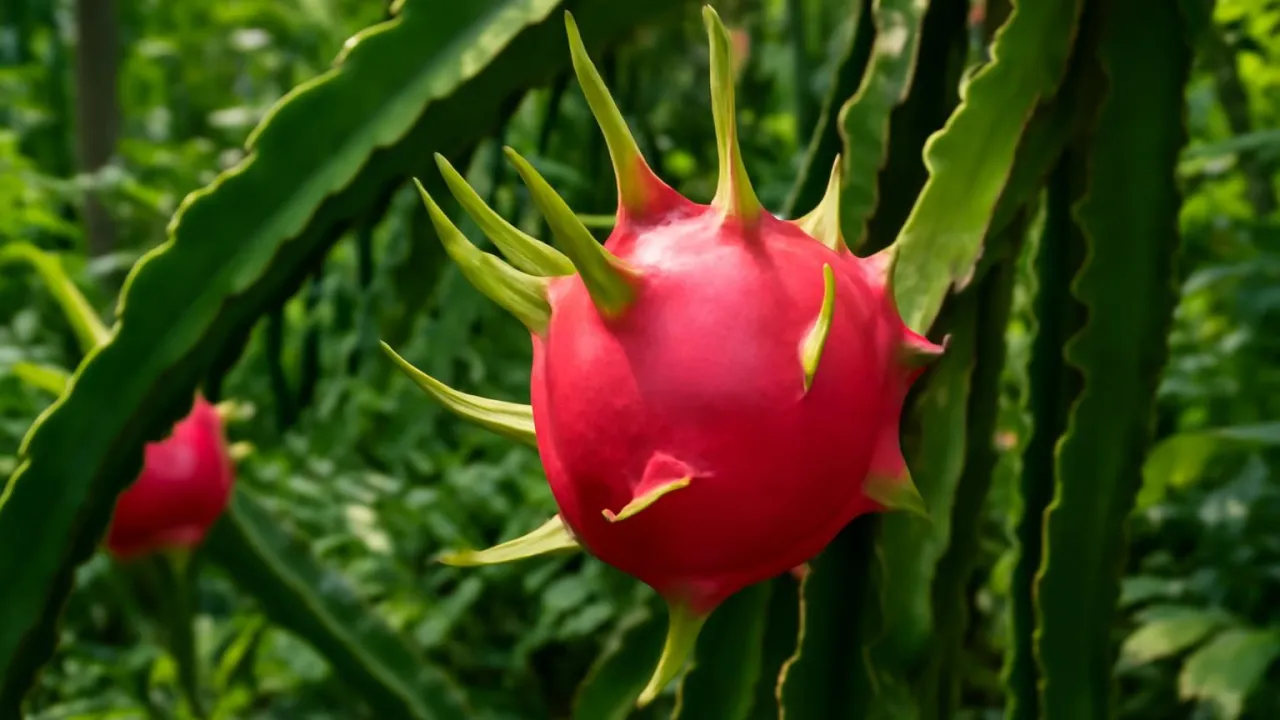
Dragon fruit has bright pink skin with green that look like flames. It grows on cactus plants that climb and spread. The fruit is oval and about the size of a hand.
2
Sweet Inside and Seeds
Inside, the fruit is white or red with many tiny black seeds. The seeds are and crunchy. The fruit tastes sweet and juicy like a mix of kiwi and pear.
3
Warm Places and Care
Dragon fruit plants grow best in warm, sunny places with little frost. They need regular watering but well-drained soil. Farmers often grow them in and subtropical regions.
Dragon fruit’s night-blooming flowers rely on bats for pollination!
✨ Word Sparks (Grade 3 Glossary)
Tap 🔊 to hear
pollination
When pollen moves to make seeds
camouflage
Colors that help hide or warn
dispersal
Spreading seeds far from the plant
🪝
Have you ever wondered how dragon fruit’s bright skin helps it survive?
1
Amazing Appearance and Camouflage
Dragon fruit has bright pink skin with green scales that look like flames. This colorful appearance helps attract animals for seed . The scales also protect the fruit from some predators. Bright colors act as a warning in nature.
2
Pollination by Night Creatures
The plant produces large white flowers that open at night. Night pollinators like bats and moths visit these flowers to collect nectar. helps the plant make fruit and seeds. This adaptation ensures reproduction in its environment.
3
Cactus Adaptations for Survival
Dragon fruit grows on climbing cactus plants with thick stems that store water. This adaptation helps the plant survive dry periods. The cactus has spines to protect itself from animals. These features help it thrive in tropical dry forests.
4
Seeds and Growth Cycle
The fruit contains many tiny black seeds that animals eat and spread. When seeds land in good soil, they grow into new cactus plants. This seed helps the species spread over wide areas. The cycle continues as new plants bloom and fruit.
2. What helps dragon fruit flowers get pollinated?
🤯 Mind-Blowing Fact • Grade 4
Dragon fruit farming boosts local economies in many tropical countries!
✨ Word Sparks (Grade 4 Glossary)
Tap 🔊 to hear
ecosystem
All living things in one place
nocturnal
Active at night, like bats
sustainable
Using resources without harm
🪝
How do dragon fruit plants affect their ecosystems and people?
1
Bright Colors and Animal Interactions
Dragon fruit’s bright pink skin with green scales attracts many animals that eat the fruit and spread seeds. This seed dispersal helps maintain plant diversity in tropical . The colorful fruit also warns some predators with its tough skin. These interactions support a balanced food web and healthy habitats.
2
Night Pollination and Plant Survival
The dragon fruit cactus produces large, fragrant white flowers that bloom only at night, attracting pollinators like bats and moths. This specialized pollination strategy increases the plant’s chances of reproduction. Without these pollinators, fruit production would decline, affecting the species’ long-term survival.
3
Agricultural Importance and Human Use
Farmers cultivate dragon fruit in tropical and subtropical regions because it is a nutritious and popular fruit. It provides income and food for many communities worldwide. farming practices help protect soil and water resources while supporting local economies and preserving biodiversity.
4
Geographic Distribution and Climate Needs
Native to Central and South America, dragon fruit is now grown in Asia and other warm regions. It thrives in tropical climates with warm temperatures and well-drained soil. The plant is sensitive to frost and requires moderate watering to avoid root rot and disease.
2. What role do bats play for dragon fruit plants?
🤯 Mind-Blowing Fact • Grade 5
Dragon fruit flowers bloom just one night, relying on bats for pollination success!
✨ Word Sparks (Grade 5 Glossary)
Tap 🔊 to hear
succulent
Plants that store water in stems
pollinators
Animals that help plants make seeds
biodiversity
Many different living things together
🪝
What makes dragon fruit a fascinating species in tropical botany and agriculture?
1
Taxonomy and Botanical Classification
Dragon fruit belongs to the cactus family Cactaceae and the genus Hylocereus. Its scientific name is Hylocereus undatus. Unlike many cacti, it produces large, edible fruits with vibrant skin and sweet pulp. It is closely related to other climbing cacti native to tropical America. These botanical traits help classify and understand its unique biology.
2
Physiological Adaptations and Mechanics
The dragon fruit cactus has stems that store water, allowing survival during droughts. Its nocturnal flowers open at night to attract specific like bats, which transfer pollen efficiently. The fruit’s thick skin with scales protects it from pests and sun damage while attracting seed dispersers. These adaptations optimize survival in harsh tropical environments.
3
Conservation and Agricultural History
Originally native to Central and South America, dragon fruit cultivation has spread globally due to its commercial value. Sustainable farming practices are important to prevent soil depletion and water overuse. Conservation efforts focus on protecting native habitats and encouraging in cultivated areas. Understanding this history helps balance human use with ecological health.
4
Quantitative Comparisons and Growth
Dragon fruit fruits typically measure 4 to 6 inches long and weigh between 150 to 600 grams. The cactus stems can grow up to 20 feet in length. Flowers bloom only one night and can reach up to 12 inches in diameter. Optimal growth occurs at temperatures between 65 and 85 degrees Fahrenheit. These measurements show how the plant adapts to its environment.
5
Economic and Nutritional Importance
Dragon fruit is rich in vitamin C, fiber, and antioxidants, making it a nutritious food source. It supports local economies through farming in tropical countries like Vietnam, Thailand, and Mexico. The fruit’s unique appearance and health benefits have increased its popularity worldwide. Its cultivation combines economic growth with healthy diets and cultural value.