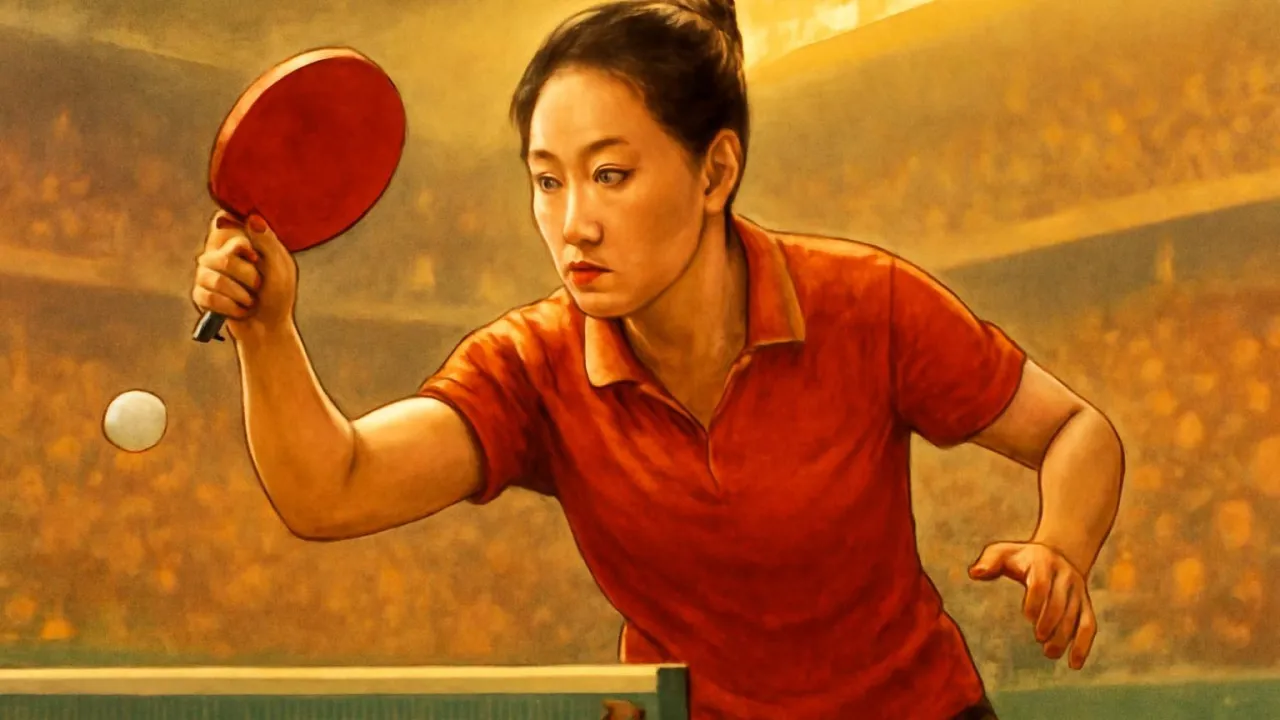
Ding Ning is one of only a few women to win three World Singles Championships!
✨ Word Sparks (Grade 2 Glossary)
Tap 🔊 to hear
opponent
The person you play against
coach
A teacher for sports skills
champion
The best player who wins
🪝
What does it take to become a table tennis champion?
1
Learning to Love the Game
Ding Ning started playing table tennis as a young girl in China. She practiced with her friends every day, learning to move her feet quickly. Her family cheered as she dreamed of becoming a .
2
Training Hard Every Day
Ding Ning worked hard to get better, hitting thousands of balls each week. She learned to use spin and speed to trick her . helped her build strong skills and stay focused.
3
Winning for Her Country
Ding Ning won big matches and became a hero in China. She earned an Olympic gold medal and many world titles. Her smile showed how proud she was to play for her team.
Ding Ning is left-handed, which made her spin shots even trickier to return!
✨ Word Sparks (Grade 3 Glossary)
Tap 🔊 to hear
forehand
A hit with the palm facing forward
perseverance
Not giving up, even when it's hard
serve
The first hit to start the game
🪝
Can you imagine spinning a tiny ball so fast it fools everyone?
1
Early Dreams and Quick Moves
As a child, Ding Ning watched older players and wondered how they made the ball spin. She practiced in her hometown, learning to move her feet and paddle together. Her quick hands and sharp eyes helped her win matches. Ding Ning’s family supported her dream to become a table tennis star.
2
Mastering Spin and Strategy
Ding Ning trained for hours every day, focusing on spin and control. She studied her opponents’ moves and invented clever ways to return tricky shots. Her signature spin made the ball curve and bounce unexpectedly. Coaches admired her and creative strategies.
3
Reaching the Top of the World
Ding Ning won her first world title at just 21 years old. She became famous for her powerful and calm under pressure. At the 2016 Olympics, she won the gold medal in women’s singles. Her victories inspired young athletes all over China.
4
A Champion’s Legacy
Ding Ning showed great sportsmanship, always respecting her opponents. She encouraged kids to work hard and believe in themselves. After retiring, she helped coach new players and shared her love for table tennis. Her story proves that dedication and kindness can change the game.
Ding Ning is one of the few players to win Olympic, World, and World Cup singles titles in table tennis history!
✨ Word Sparks (Grade 4 Glossary)
Tap 🔊 to hear
tactical
Smart planning to win a game
integrity
Doing what is right and fair
rally
A fast back-and-forth in table tennis
🪝
What does it take to become a legend in one of the world’s fastest sports?
1
A Spark in Daqing
In the bustling city of Daqing, young Ding Ning watched local table tennis stars and wondered how they made the ball dance. Inspired by their fast rallies, she began training at a local sports school, where her left-handed style quickly stood out. Her family encouraged her, and she soon joined competitive teams. By her early teens, Ding Ning was already winning youth tournaments across China.
2
Building a Champion’s Skillset
Ding Ning’s daily routine included hours of drills, footwork exercises, and mental training. She became famous for her fierce forehand spin, which made her shots unpredictable. Coaches praised her ability to adapt strategies during tough matches, showing intelligence beyond her years. Her perseverance helped her overcome defeats and return stronger each season.
3
Olympic Glory and World Titles
Ding Ning’s breakthrough came at the 2011 World Table Tennis Championships, where she claimed her first singles gold. She later triumphed at the 2016 Rio Olympics, earning the coveted singles gold medal for China. Over her career, she captured three World Singles Championships and became a role model for young athletes. Her calm focus under pressure set her apart on the global stage.
4
Inspiring the Next Generation
After retiring from competition, Ding Ning dedicated herself to coaching and promoting table tennis. She encouraged children to work hard, respect their opponents, and enjoy the game’s challenges. Her leadership extended beyond sports as she advocated for women’s participation in athletics. Ding Ning’s story continues to inspire players around the world to chase their dreams with passion and .
2. How did Ding Ning help table tennis after retiring?
🤯 Mind-Blowing Fact • Grade 5
Ding Ning is one of only five women in history to win three World Singles Championships in table tennis!
✨ Word Sparks (Grade 5 Glossary)
Tap 🔊 to hear
topspin
A fast spin that makes the ball dip
resilience
Bouncing back after tough times
legacy
What someone is remembered for
🪝
What drives an athlete to become one of the greatest champions in table tennis history?
1
A Childhood Spark and Early Dedication
As a young girl in Daqing, China, Ding Ning was captivated by the lightning-fast rallies and clever spins of local table tennis stars. Driven by curiosity and ambition, she joined a sports school where her natural left-handed grip and quick reflexes made her stand out among her peers. Ding Ning’s early training involved countless hours of footwork drills and paddle control, building the foundation for her future success. Her family’s encouragement and her own determination fueled her dream to compete at the highest level. By her teenage years, she was already collecting national youth titles and preparing for international competition.
2
Mastering Technique and Mental Strength
Ding Ning’s rise to the top was marked by relentless practice and a scientific approach to the mechanics of spin. She became renowned for her signature forehand , which she executed with exceptional precision and deceptive angles, making her shots extremely difficult to return. Coaches and analysts noted her ability to adapt her tactics mid-match, using psychological to stay calm during high-pressure points. Ding Ning’s training regimen included not only physical drills but also mental exercises to sharpen her focus and strategic thinking. This combination of technical mastery and mental toughness became her hallmark on the world stage.
3
Record-Breaking Achievements and Olympic Triumph
Ding Ning’s career is decorated with some of the most prestigious honors in table tennis. She won the women’s singles gold medal at the 2016 Rio Olympics, overcoming fierce competition and avenging a previous Olympic final loss. In addition, she secured three World Table Tennis Championships singles titles (2011, 2015, 2017), joining a select group of players to achieve this feat. Her impressive record includes multiple World Cup victories and team gold medals, contributing to China’s dominance in the sport. Throughout her career, Ding Ning was celebrated for her sportsmanship and ability to perform under immense pressure.
4
Leadership, Advocacy, and Lasting Legacy
After retiring from international competition in 2021, Ding Ning transitioned into coaching and sports leadership, focusing on developing young talent and promoting gender equality in athletics. She became a vocal advocate for women’s participation in sports, encouraging girls to pursue their athletic dreams with confidence and . Ding Ning’s leadership extended to community outreach programs, where she emphasized the values of perseverance, respect, and teamwork. Her influence continues to shape the next generation of table tennis players both in China and around the world.
5
Inspiration Beyond the Table
Ding Ning’s journey from a curious child to a world-renowned champion offers powerful lessons in dedication, adaptability, and integrity. Her story demonstrates how technical skill, mental strength, and ethical leadership can create a lasting impact both within and beyond the arena of sports. By mentoring young athletes and advocating for positive change, Ding Ning has ensured her as not just a table tennis legend, but a role model for aspiring champions everywhere. Her life reminds us that true greatness is built on hard work, humility, and a passion for inspiring others.