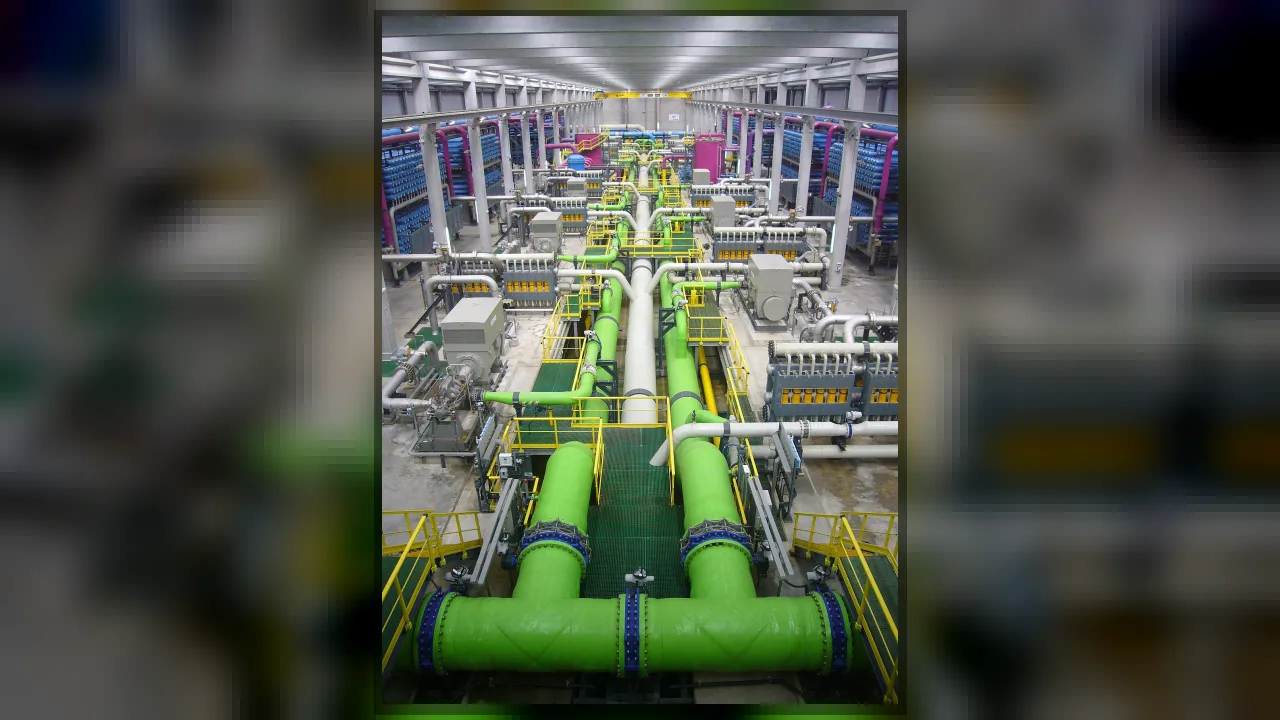
Some desalination plants make over 100 million bottles of water every single day!
✨ Word Sparks (Grade 2 Glossary)
Tap 🔊 to hear
filter
A tool that catches tiny things
engineer
A person who builds and fixes machines
desalination
Taking salt out of water
🪝
Have you ever wondered how ocean water becomes drinkable?
1
From Salty to Sweet
plants use big machines to clean salty ocean water. The machines spin, heat, or push water through special . These steps remove the salt, making fresh water. Now, people can drink it safely.
2
Why Do We Need Them?
Some countries do not have enough rain or rivers. These places need fresh water to drink and grow food. plants help by making new water from the sea. This keeps people and plants healthy.
3
A Cool Water Factory
The plant is full of pipes and tanks. check the machines every day to keep water clean. The plant works day and night for the city. It is like a giant water helper!
The world’s largest desalination plant in Saudi Arabia can make over 1.5 billion liters of fresh water each day!
✨ Word Sparks (Grade 3 Glossary)
Tap 🔊 to hear
reverse osmosis
A process that pushes water through a filter
distillation
Heating water to make clean steam
engineer
A person who designs and builds things
🪝
Can you imagine turning ocean water into fresh water with science?
1
The Salty Challenge
Most of Earth's water is salty and not safe to drink. Desalination plants use special technology to solve this problem. They use processes like and to remove salt. These methods let us use ocean water for drinking and farming.
2
How It Works Inside
uses strong pumps to push water through a filter. The filter traps salt and lets only water pass through. In , water is heated until it changes to steam. The steam cools and becomes clean, fresh water.
3
Why Desalination Matters
Many places near the sea have little rain or rivers. Desalination plants help these places get enough clean water. They are especially important in desert cities and islands. Without them, people might not have enough water to drink.
4
A Growing Invention
The first big desalination plants were built in the 1950s. Today, thousands of plants work around the world. keep inventing new ways to save energy and water. Desalination plants are becoming more important as cities grow.
2. Why are desalination plants important for desert cities?
🤯 Mind-Blowing Fact • Grade 4
Some modern desalination plants use solar panels or wind turbines to help power their water-making machines.
✨ Word Sparks (Grade 4 Glossary)
Tap 🔊 to hear
membrane
A thin filter that blocks salt
evaporate
When water turns into invisible steam
renewable energy
Power from sun, wind, or water
🪝
What if you could watch machines turn salty ocean water into pure, drinkable water?
1
Solving the Saltwater Puzzle
Desalination plants are incredible inventions that help solve the problem of water scarcity in many regions. These plants use advanced engineering to separate salt and minerals from seawater, making it safe to drink. The two main methods, reverse osmosis and distillation, each use different scientific principles. Both methods require careful control to ensure the water is clean and healthy.
2
Inside the Plant: Engineering at Work
In reverse osmosis, powerful pumps force seawater through special that trap salt molecules but let water pass through. Distillation heats seawater until it , then cools the steam so it condenses into fresh water, leaving salt behind. Both methods need lots of energy and strong materials to handle the salty water. Engineers monitor the systems to keep everything running smoothly and efficiently.
3
A Lifeline for Dry Places
Desalination plants are especially important in dry countries like Saudi Arabia, Israel, and parts of California. These areas have limited rainfall and few rivers, so they rely on desalinated water for drinking, farming, and industry. By providing a steady supply of fresh water, these plants help cities grow and stay healthy even in harsh climates.
4
Innovation and Impact
The first large desalination plant was built in 1957, and now there are thousands worldwide. Newer plants use advanced and to reduce costs and environmental impact. Desalination technology is vital as the world’s population grows and fresh water becomes more precious. These plants show how science and engineering can solve real-world problems.
1. Why do desalination plants need strong materials?
2. How do new plants help the environment?
🤯 Mind-Blowing Fact • Grade 5
The world’s largest desalination plant, Ras Al Khair, uses enough pipes to stretch over 1,000 miles if laid end-to-end.
✨ Word Sparks (Grade 5 Glossary)
Tap 🔊 to hear
brine
Very salty water left after desalination
semi-permeable membrane
A filter that lets only water pass
corrosive
Able to wear away metals or materials
🪝
Imagine standing by the ocean, listening to the roar of machines as they transform salty waves into life-saving fresh water—how does this engineering marvel work?
1
The Science Behind Desalination
Desalination plants are complex facilities that use advanced engineering to convert seawater into potable water. The two most common methods are reverse osmosis and multi-stage flash distillation, each relying on distinct scientific principles. Reverse osmosis uses high-pressure pumps to force seawater through , which block dissolved salts and impurities. Multi-stage flash distillation rapidly heats seawater, causing it to vaporize in stages and then condense as pure water, leaving salt behind. Both processes require precise control of temperature, pressure, and flow rates to ensure efficiency and safety.
2
Engineering Challenges and Innovations
Desalination plants must withstand highly saltwater, so engineers use specialized alloys and coatings to protect pipes and tanks. Energy consumption is a major concern, as both reverse osmosis and distillation require significant amounts of power. Modern plants increasingly employ energy recovery devices, pressure exchangers, and renewable energy sources like solar and wind to reduce operational costs and environmental impact. Engineers continuously refine membrane materials and system designs to improve water output and minimize waste.
3
Global Impact and Water Security
Desalination technology has become crucial for arid regions such as the Middle East, North Africa, and parts of Australia and California. In places where rainfall is scarce and rivers are limited, desalination provides a reliable source of fresh water for millions of people. The world’s largest plant, Ras Al Khair in Saudi Arabia, produces over 1.5 billion liters of potable water daily, supporting both city populations and agriculture. As climate change intensifies droughts, desalination is increasingly vital for global water security.
4
Environmental and Societal Challenges
Despite its benefits, desalination presents environmental challenges, including high energy use and the disposal of concentrated waste. Brine, which contains leftover salt and chemicals, must be carefully managed to avoid harming marine ecosystems. Researchers are developing new techniques to reduce brine volume, recycle minerals, and use less harmful cleaning agents. Balancing water needs with environmental protection is a key focus for future desalination projects.
5
The Future of Fresh Water
Ongoing innovation is making desalination more sustainable and accessible worldwide. Scientists are experimenting with graphene membranes, forward osmosis, and solar-powered systems to further reduce costs and energy demands. As urban populations grow and freshwater sources dwindle, desalination will play a central role in ensuring safe, reliable water for future generations. This remarkable invention demonstrates how science, engineering, and creativity can solve some of humanity’s most urgent challenges.