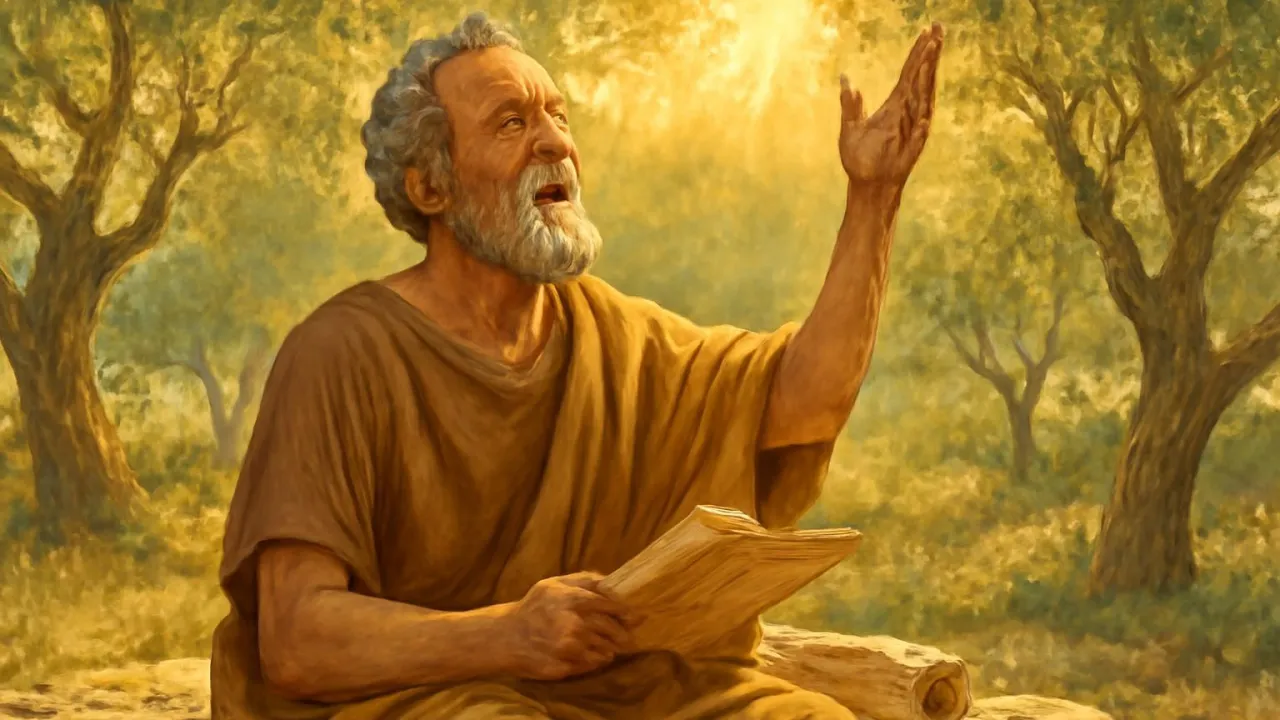
Democritus thought there were endless kinds of atoms, each with different shapes!
✨ Word Sparks (Grade 2 Glossary)
Tap 🔊 to hear
atoms
Tiny pieces that make up everything
invisible
Something you cannot see
science
Learning about how things work
🪝
Have you ever wondered what things are made of?
1
A Curious Boy
Democritus liked to explore the world around him. He asked questions about rocks, water, and everything he saw. He wanted to know what made up all things.
2
Tiny Building Blocks
He imagined everything was made of tiny, pieces called . He could not see atoms, but he believed they were always moving. He used pebbles to help explain his big idea.
3
The Laughing Thinker
Democritus was known for his happy spirit and big smile. He loved sharing ideas with others and teaching them to wonder. His thinking helped people learn about and the world.
2. Why did people call Democritus the 'Laughing Philosopher'?
🤯 Mind-Blowing Fact • Grade 3
Democritus thought the universe was endless, filled with countless atoms swirling everywhere!
✨ Word Sparks (Grade 3 Glossary)
Tap 🔊 to hear
matter
Anything that takes up space
philosophy
Thinking deeply about big ideas
legacy
What someone leaves behind for others
🪝
Can you imagine a world made of tiny, invisible parts?
1
A World Full of Questions
As a young boy in ancient Greece, Democritus was curious about everything he saw. He wondered what made up rocks, water, and even the air around him. He asked questions that no one else thought to ask. His curiosity made him want to discover the secrets of nature.
2
Inventing the Atom Idea
Democritus imagined that all things were made of tiny, invisible building blocks called atoms. He used pebbles to show how big things could be made from many small pieces. Although he could not see atoms, he believed they were always moving and never stopped. This idea was new and exciting for his time.
3
Sharing and Smiling
Democritus was famous for his cheerful attitude and love of laughter. People called him the 'Laughing Philosopher' because he believed happiness was important. He enjoyed teaching others and sharing his big ideas about the world. His way of thinking helped inspire early science and .
4
A Legacy of Wonder
Although many people did not believe him at first, Democritus’s ideas lasted for centuries. Later scientists proved that atoms really do exist, just like he imagined. His questions and discoveries changed how people think about forever. Today, Democritus is remembered as a pioneer in science and .
Democritus wrote over seventy books about nature, happiness, and the universe, though most are lost today!
✨ Word Sparks (Grade 4 Glossary)
Tap 🔊 to hear
particles
Tiny pieces that make up matter
theory
An idea that explains something
observation
Looking closely to learn more
🪝
What if everything you touched was made of countless, invisible building blocks?
1
A Young Mind Full of Questions
Growing up in the bustling city of Abdera, Democritus constantly wondered about the world around him and what made up everything he could see, touch, and feel. He asked questions about rocks, water, and even the air, searching for answers that no one else could provide. Inspired by the traditions of Greek philosophy, Democritus believed that understanding the tiniest parts of nature could reveal its greatest secrets. His endless curiosity set him apart from other thinkers of his time.
2
The Birth of the Atom Theory
Democritus boldly imagined that all matter was made of tiny, invisible he called 'atoms.' He explained his using pebbles, showing how large objects could be built from many small pieces. Even though he lacked tools to see atoms, he insisted they were always moving and could not be divided any further. This revolutionary idea challenged older beliefs and laid the foundation for future science.
3
The Laughing Philosopher’s Way
Democritus became known as the 'Laughing Philosopher' because of his cheerful nature and positive outlook on life. He taught that happiness came from understanding the world and living wisely, not from riches or power. His joyful attitude made him a beloved teacher and inspired others to ask questions and seek knowledge. Democritus’s philosophy encouraged people to use reason and to solve mysteries.
4
A Lasting Impact on Science
Although many people doubted his atom during his lifetime, Democritus’s ideas survived through the centuries. Much later, scientists discovered real atoms, proving that his imagination was ahead of its time. His work helped create the field of atomic science and changed how people think about matter forever. Today, Democritus is celebrated as a pioneer who showed the power of curiosity and wonder.
1. Why did Democritus use pebbles to explain atoms?
2. What did Democritus believe brought true happiness?
🤯 Mind-Blowing Fact • Grade 5
Democritus’s atomic theory inspired scientists for over 2,000 years before atoms were finally seen with modern technology!
✨ Word Sparks (Grade 5 Glossary)
Tap 🔊 to hear
indivisible
Cannot be divided into smaller parts
scientific method
A way to test and learn ideas
legacy
What someone leaves for the future
🪝
Imagine holding a stone and wondering if it’s made of countless, invisible pieces—what would you discover?
1
Curiosity in Ancient Greece
In the lively city of Abdera, young Democritus was known for his insatiable curiosity about the world. He spent hours observing nature, asking questions about the origins of matter, and challenging traditional ideas. Unlike many around him, Democritus was not satisfied with simple answers; he wanted to understand what made up everything he could see, touch, and even breathe. This deep desire to uncover the secrets of the universe set him on a path that would change the course of science and philosophy. His early education was shaped by travels to Egypt and Persia, where he learned from other thinkers and gathered new ideas.
2
Inventing the Atom Theory
Democritus’s most groundbreaking idea was that all matter is composed of tiny, particles called atoms. He theorized that atoms differed in shape, size, and arrangement, and that their constant motion explained changes in the natural world. To help others understand, Democritus used pebbles as a model, demonstrating how large objects could be constructed from countless small pieces. Although he could not see atoms, he insisted that everything—from mountains to air—was built from these invisible building blocks. This atomic theory directly challenged the beliefs of philosophers who thought matter could be divided endlessly.
3
The Laughing Philosopher’s Wisdom
Democritus became famous not only for his scientific ideas but also for his joyful spirit and positive outlook. He was called the 'Laughing Philosopher' because he believed that understanding nature and living wisely brought true happiness, not wealth or fame. Democritus taught that a cheerful mind, guided by reason and observation, was the key to a good life. His teachings encouraged people to question what they saw and to seek knowledge through careful study and open-minded discussion. This approach made him a beloved teacher and a respected figure in ancient Greece.
4
Legacy and Scientific Influence
Although Democritus’s atomic theory was not widely accepted in his lifetime, his writings survived through the work of later philosophers and scientists. Centuries later, discoveries in chemistry and physics confirmed that atoms really do exist, validating Democritus’s vision. His ideas laid the groundwork for the , encouraging careful observation, logical reasoning, and the search for evidence. Today, Democritus is recognized as a pioneer whose imagination and curiosity helped shape modern science and our understanding of the universe.
5
Inspiration for Future Thinkers
Democritus’s life reminds us that big questions can lead to amazing discoveries, even if answers are not found right away. His belief in invisible atoms changed the way people think about matter and inspired generations of scientists to look deeper into the natural world. By combining joyful curiosity with careful thinking, Democritus showed that anyone can make a lasting impact by asking 'What if?' His continues to encourage young thinkers to explore, wonder, and never stop learning.